
A fire-resistant coating for energy storage is a passive-protection layer applied to a battery cabinet or enclosure that slows heat transfer and helps keep a cell failure from becoming a system fire. huadaenergy is a pioneer in applying a newly developed fire-resistant coating to energy storage systems: the two-component intumescent coating was jointly developed with affiliated material-science companies, and huadaenergy brought it into storage cabinets first. This article explains what the coating is, why it matters as battery codes tighten, its documented advantages, the fields it serves, and what buyers should verify. Test figures are quoted from third-party reports and are limited to the samples tested.
What Is a Fire-Resistant Coating for Energy Storage?
A fire-resistant coating for energy storage is a passive material that insulates an enclosure from an external flame and delays the temperature rise on the protected surface, buying time for detection and shutdown. Unlike a suppression system that reacts after ignition, the coating works without power or moving parts.
How the intumescent layer works
The MARC coating is a two-component intumescent system. Under high heat the formulation swells into a porous char layer; the development team describes composite intumescent char-layer control and ceramic-phase high-temperature reinforcement as its core technologies. That expanded layer is what separates the steel surface from the flame, rather than simply resisting the fire chemically.
Why passive protection sits beside cell certification
Cell and pack tests describe the battery; a coating describes the installed enclosure. As codes such as the 2026 edition of NFPA 855 move toward system-level fire testing, passive layers are one of the tools designers use to manage propagation between units. They complement, and do not replace, the electrical and thermal protections built into the battery.
Who Developed the Coating and What Is huadaenergy’s Role?
The coating was jointly developed inside a group of affiliated companies, and huadaenergy is the first to apply the new material in the energy storage industry. Hunan Yingsuo Technology is described in its own brochure as the core operating company of TopMaterial Tech’s “AI + New Materials” business, drawing on research from the State Key Laboratory of Powder Metallurgy at Central South University. Changsha Dingcai Technology is the other named developer in the test documents, and Mr. Cai Zhihua — also behind huadaenergy — is a shareholder in the venture.
From materials research to an installed product
Yingsuo’s brochure describes AI-driven formulation optimisation, a pilot production line for fire-resistant and thermal-insulation coatings, and a goal of raising the maximum service temperature beyond conventional products. huadaenergy’s contribution is the application step: specifying the coating for storage equipment and bringing a coated cabinet concept to buyers. It is an application pioneer, not a claim to own the underlying material patents.
What Advantages Does the Coating Offer?
The coating’s advantages are high-temperature resistance, an expanding insulating char, strong substrate adhesion and compliance-friendly chemistry — each supported by a specific test document rather than a marketing claim.
| Advantage | What the source says | Buyer relevance |
|---|---|---|
| Ultra-high-temperature fire resistance | Brochure describes a two-component intumescent coating for harsh environments with ultra-high-temperature resistance | Targets the temperatures reached in a battery or industrial fire, not only ambient heat |
| Composite intumescent char control | Named as a core technology in the Yingsuo brochure | An expanding char layer insulates the substrate instead of only forming a surface film |
| Ceramic-phase high-temperature reinforcement | Named as a core technology in the same brochure | Helps the protective layer stay effective at high temperature |
| AI-driven formulation and pilot production | Brochure cites AI-based R&D and a next-generation pilot line | Supports consistency and customisation for different scenarios |
| Measured fire and adhesion performance | Reports YJ2025060240 and EMT02R000171C01, detailed below | Gives a documented protocol to review, within the stated sample limits |
| RoHS-compatible, non-dangerous-goods transport | RoHS report A2260349272101001C and SDS XG26165519 | Simplifies material compliance and logistics documentation |
Thermal protection under a direct flame
In the fire-resistance test discussed below, a 2.5 mm coated steel plate exposed to an 800–850 °C Bunsen flame for 30 minutes did not burn through, and its peak back-face temperature was 154.8 °C against a 300 °C client criterion. That is evidence for the tested plate under that protocol — not a rating for every enclosure.
Adhesion and chemical compliance
A separate cross-cut test reported adhesion grade 0 against a criterion of grade 1 or better. A RoHS report concluded the sample conformed to EU RoHS 2011/65/EU and (EU) 2015/863, with lead measured at 256 mg/kg against a 1000 mg/kg limit. Both results are sample-specific.
Where Is the Coating Applied?
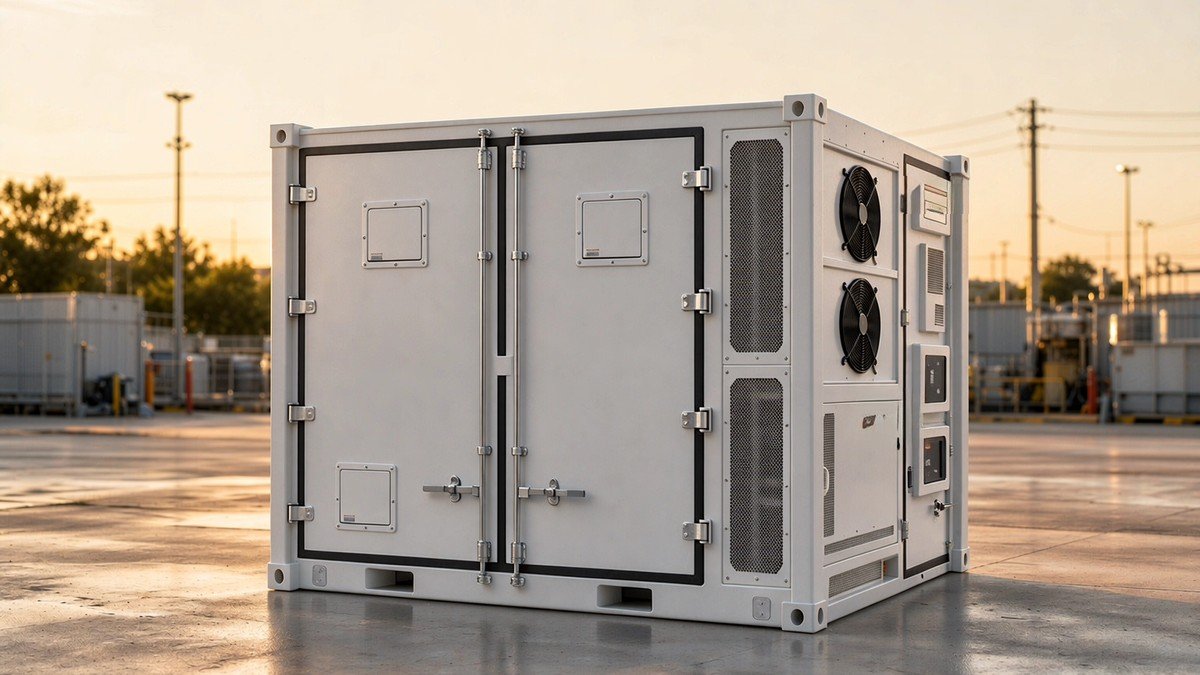
The coating is specified for energy storage cabinets, containerised storage, high-temperature industrial equipment, building steel structures and new-energy vehicle battery enclosures. The source brochure names all four field groups, with storage as the first application huadaenergy pursued.
| Field | Use described in the source brochure |
|---|---|
| Energy storage | Protects storage cabinets and power-storage equipment, helping prevent fire incidents |
| Industrial containerised storage | 500 kWh–3 MWh systems shown in the brochure’s industry applications |
| High-temperature industrial equipment | Boilers, heating furnaces and similar equipment |
| Building steel structures | Fire protection of steel in high-rise commercial buildings |
| New-energy electric vehicles | Battery-pack enclosures, to reduce thermal-runaway risk; also vehicle body components |
| Electric transport | High-speed trains and other electric transport fire protection |
| Magnesium-alloy auto parts | A fire- and corrosion-resistant variant is listed for these components |
What Do the Test Documents Report?
Four third-party documents describe the coating’s fire, adhesion, chemical and safety properties, and each limits its result to the sample tested. They are useful evidence of a defined protocol, not a system certificate for a battery tower.
| Document | Scope | Reported result |
|---|---|---|
| Fire resistance YJ2025060240 — Zhejiang Huace Yuanjian Testing (CTI-FST), 1 Jul 2025 | 2.5 mm coated steel plate, Bunsen flame 800–850 °C, 30 min | No burn-through; back-face under 300 °C throughout, peak 154.8 °C; conclusion “conforms” |
| Adhesion EMT02R000171C01 — CTI Shandong, 3 Jul 2025 | Cross-cut referenced to GB/T 31586-2015, criterion grade ≤1 | Adhesion grade 0, reported as conforming |
| RoHS A2260349272101001C — CTI, 11 May 2026 | EU RoHS 2011/65/EU and (EU) 2015/863; Pb, Cd, Hg, Cr(VI), PBBs, PBDEs, phthalates | Conforming; lead 256 mg/kg vs 1000 mg/kg limit, others not detected |
| SDS XG26165519 — CTI, 12 May 2026 | Safety data sheet to EU REACH 2020/878; product named Multi-Action Refractory Coating (MARC) | CLP classifications listed (e.g. skin and eye irritation); not regulated as dangerous goods under IMDG, IATA or ADR |
The reports state that samples and their information came from the applicant, that results apply only to the samples tested, and that they are for internal reference and research. The reports are issued to Changsha Dingcai Technology or Hunan Yingsuo — the developer group — and are not certificates held by huadaenergy. Read them as documentation of how a coating was tested, and ask for system-level evidence separately.
How Does the Coating Fit a Battery Product?
The coating is a materials layer inside a wider product, and the battery it protects stays intentionally simple: a stackable cabinet whose enclosure can receive the protection. The 10 kWh all-in-one stackable battery is the small-format example — 10.24 kWh from two 51.2 V / 5.12 kWh LiFePO4 modules, with the inverter in the tower.
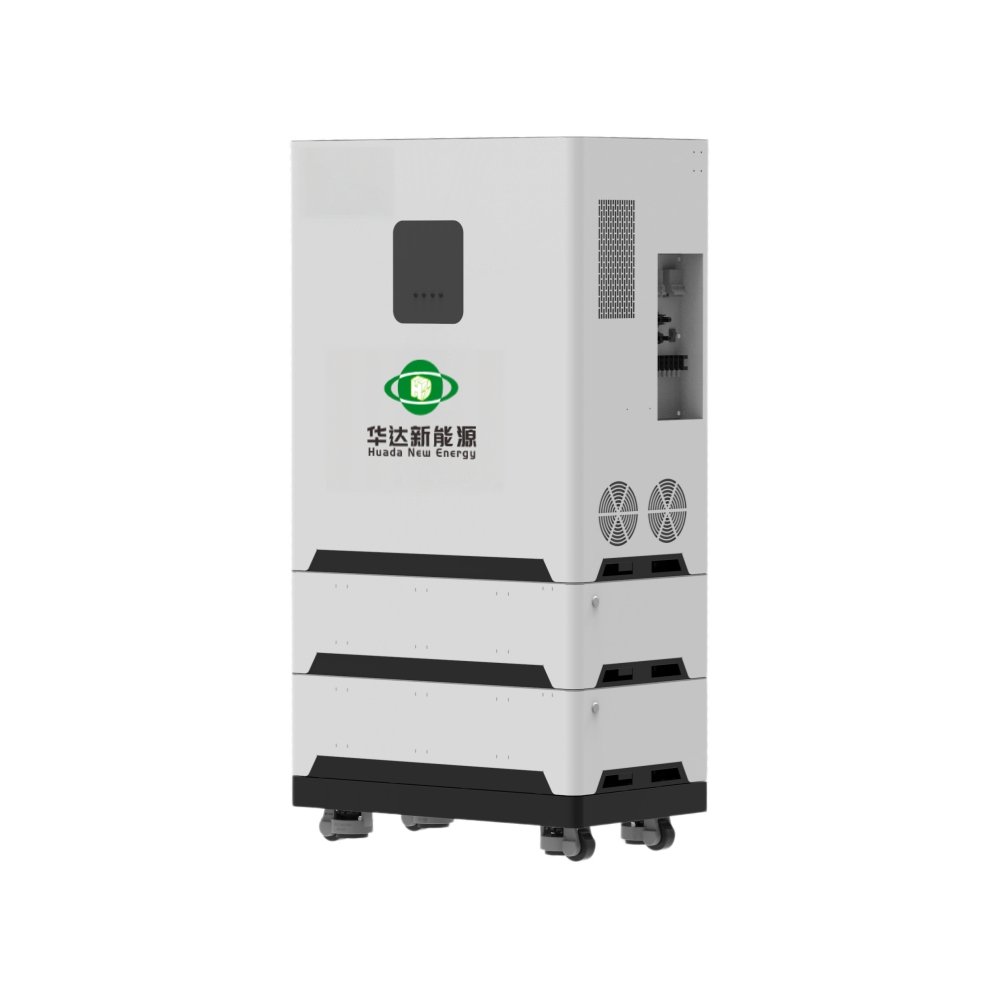
The same platform reaches 20.48 kWh, with a 5.12 kWh module and a 15 kWh floor-standing option between them. Product details stay brief here; the point is that a coated enclosure is being applied from home storage upward.
How to Evaluate a Fire-Coating Claim Before Ordering
Evaluate a fire-coating claim by matching the document to the exact product, protocol and jurisdiction, rather than reading a single headline number.
- Confirm who holds the report. Developer-group reports support the material; they are not the buyer’s own product certificate.
- Check the substrate and thickness. The cited fire test used a 2.5 mm coated steel plate, not a finished battery cabinet.
- Read the criterion, not only the result: back-face temperature under 300 °C and no burn-through under the stated flame and duration.
- Ask for system-level fire evidence required in the destination market; in the US, NFPA 855 (2026) references UL 9540A, whose Edition 6 was published on 13 March 2026.
- Request the current safety data sheet and RoHS declaration for the exact coating batch.
Frequently Asked Questions
Is huadaenergy the first to use this fire-resistant coating in energy storage?
huadaenergy describes itself as a pioneer and the first to apply this newly developed coating in the storage industry. The coating itself was jointly developed with affiliated material companies, so the claim concerns application, not ownership of the material patents.
What temperature did the coating withstand in testing?
In report YJ2025060240, a 2.5 mm coated steel plate faced an 800–850 °C flame for 30 minutes without burn-through; its back face peaked at 154.8 °C against a 300 °C criterion. The result applies to that sample and protocol only.
Does a fire-resistant coating replace UL 9540A testing?
No. A coating is a passive protection layer; UL 9540A and similar standards assess fire and propagation behaviour of the battery system. Both belong in a design review, and requirements depend on the local authority.
Is the coating compliant with EU chemical rules?
RoHS report A2260349272101001C concluded the tested sample conformed to EU RoHS 2011/65/EU and (EU) 2015/863. The SDS XG26165519 was compiled to EU REACH 2020/878. Obtain the current documents for the delivered batch.
Can the coating be used outside energy storage?
Yes. The developer’s brochure lists high-temperature industrial equipment, building steel structures, EV battery enclosures and electric transport among its application fields, with a variant for magnesium-alloy automotive parts.
Which huadaenergy products can carry the coating?
The stackable platform from 5.12 to 20.48 kWh is the starting point, including the 10 kWh tower. Ask which enclosure and coating specification apply to a quoted configuration.
About huadaenergy
huadaenergy builds LiFePO4 storage from small stacks to home towers and industrial systems, and works with affiliated materials partners on fire protection for storage equipment. The company assembles, configures and full-function tests each unit before packing. To request the coating documents, a datasheet or a quotation, use the huadaenergy contact page.
Last updated: 2026-11-18