A 15kWh home energy storage battery is the right size for households whose evening consumption has outgrown a starter battery: it stores enough solar energy to cover an evening’s cooking, heating circulation and appliances, and enough reserve to ride through a full-night outage. This guide takes the huadaenergy H096-15kWh floor-standing battery — 14.33 kWh usable, 280Ah / 51.2V LiFePO4, rated for 5,000+ cycles with capacity retention above 80% — and works through where the 15kWh class pays off, what the specifications actually mean, how it compares with a 10kWh unit and a lead-acid bank, and a five-point checklist for choosing between brands. All market figures come from verifiable public sources.

What Is the H096-15kWh Home Battery?
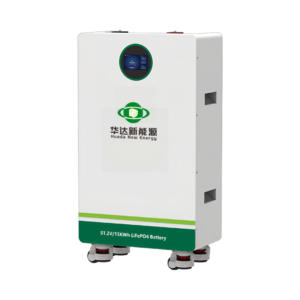
The H096-15kWh is a floor-standing residential LiFePO4 battery built around a 280Ah / 51.2V pack rated at 14.33 kWh of usable energy, working across a 40V–58V voltage window and managed by a built-in smart BMS that monitors temperature, voltage, current and short-circuit faults cell by cell. It is the largest cabinet in the huadaenergy H096 classic home series, sized for homes with higher evening demand or longer backup requirements.
Installation is designed to be plug-and-play for a qualified installer: standard RS485 / CAN terminals link to the hybrid inverter, a WiFi and Bluetooth module pairs with the mobile app without gateway hardware, and an LCD on the cabinet keeps state of charge, voltage and alarms readable during maintenance. The stackable structure is prepared for expansion, so additional cabinets can be added later without rewiring the first one.
Where the 15kWh Class Pays Off in 2026
The economics of a home battery come down to one gap: what you pay for grid electricity versus what the grid pays you for exported solar. In 2026 that gap is wide in the markets where home batteries sell well.
In Germany, residential electricity prices were among the highest in the EU in the first half of 2026 at roughly €0.36–0.42/kWh, while the EEG surplus feed-in rate for systems up to 10 kW commissioned between August and December 2026 stands at 7.70 ct/kWh (Eurostat H1 2026; Bundesnetzagentur, 2026). Every kilowatt-hour you store and use yourself is therefore worth around €0.28–0.34 more than the same kilowatt-hour exported. At one full daily cycle, a 14.33 kWh battery shifts roughly €4.00 of value per day — on the order of €1,200–1,400 a year after allowing for round-trip losses and partial cycling (estimate based on the assumptions above; actual savings depend on your tariff and consumption pattern).
The market is moving the same way. European residential battery installations are projected to recover to 13.2 GWh in 2026, slightly above the 2023 peak, supported by dynamic tariffs, lower export remuneration and grid congestion (SolarPower Europe, European Battery Market Outlook 2026–2030, 2026). Across Europe’s mature markets, nearly 40% of new residential solar installations were paired with batteries in 2025, and in the Netherlands and Poland — where net-metering schemes are being phased out — attachment rates climbed past 50% in 2025. A 15kWh-class cabinet sits exactly where these trends point: enough capacity to raise solar self-consumption from roughly 30–40% without storage to 70–80% with it.
Key Specifications and What They Mean
The table below lists the H096-15kWh specifications as published on the product page, with a practical note for each.
| Item | Value | What It Means for Buyers |
|---|---|---|
| Usable capacity | 14.33 kWh (280Ah / 51.2V) | Covers evening loads and overnight backup for larger homes |
| Battery type | LiFePO4, 40V–58V window | Thermally stable chemistry; check the window against your inverter |
| Cycle life | 5,000+ cycles, above 80% capacity retained | Roughly 72 MWh of lifetime throughput; 13+ years of daily full cycles |
| Service life | Up to 12 years | Calendar life is usually the limiting factor before cycles run out |
| Expansion | Stackable, up to 16 units | Grows to about 229 kWh as household load increases |
| Communication | RS485 / CAN + WiFi and Bluetooth app | Standard hybrid-inverter links; monitoring without gateway hardware |
| Interface | On-cabinet LCD | Charge, voltage and alarms readable during site visits |
| Dimensions / weight | 460 × 245 × 760 mm, 120 kg | Small floor footprint; plan floor loading and handling |
| Operating temperature | Charge −5 to 50°C, discharge −20 to 50°C | Recommended ambient 20–30°C; indoor placement preferred |
| Protection level | IP20 | Indoor installation — garage or utility room, not outdoors |
| Certification | CE / FCC / RoHS | EU market conformity, US electronics compliance, substance restrictions |
One specification deserves emphasis when you compare quotes: usable capacity. Some brands quote nominal capacity — the raw size of the cells — while the H096-15kWh’s 14.33 kWh figure is the usable rating. A nominal 15.36 kWh pack limited to 90% depth of discharge delivers less energy per cycle than this unit; always compare usable versus usable.
Certifications Explained: What CE, FCC and RoHS Cover
The H096-15kWh is certified to CE, FCC and RoHS and rated IP20, which clears it for EU market placement, US electromagnetic compliance and hazardous-substance limits — but none of those marks certifies fire behaviour or grid interconnection.
| Mark | What it confirms | What it does not cover | Document to request |
|---|---|---|---|
| CE | EU market conformity, declared by the manufacturer against the applicable battery, EMC and safety rules | Fire-spread performance, building-code approval, utility interconnection | EU Declaration of Conformity naming the standards applied |
| FCC | US electromagnetic compliance for the electronics, including the WiFi/Bluetooth radio module (FCC Part 15) | Battery safety, usable capacity or cycle-life claims | FCC test report or supplier declaration |
| RoHS | Restriction of lead, mercury, cadmium, hexavalent chromium, PBB, PBDE and four phthalates (Directive 2011/65/EU, amended by 2015/863) | Battery chemistry, performance or service life | Material declaration or RoHS test report |
| IP20 | Ingress protection under IEC 60529: fingers and solid objects from 12.5 mm blocked, no water protection | Outdoor, wet-area or hose-down installation | Test report or datasheet statement |
What CE Actually Confirms for a Home Battery
CE marking is the manufacturer’s declaration that the cabinet meets the EU rules that apply to it, with Regulation (EU) 2023/1542 as the central battery instrument alongside the EMC framework. The document that matters at procurement is the EU Declaration of Conformity, because it names the standards the unit was tested against — CE confirms market access, not fire-spread performance.
What FCC Covers, and What It Does Not
FCC compliance here applies to the electronics and to the WiFi/Bluetooth module that pairs the battery with the mobile app, under the Part 15 framework for radio-frequency devices. It tells a US buyer the product’s emissions and radio behaviour sit within permitted limits; it says nothing about usable capacity or cycle life.
RoHS, IP20 and the EU Deadlines That Follow CE
RoHS 2 is a substance restriction rather than a performance mark, confirming the electronics, cabling and enclosure avoid the restricted materials, while IP20 is a separate IEC 60529 ingress rating — and the one that most shapes installation, because the cabinet is built for a utility room or garage, not a wall exposed to rain. Regulation (EU) 2023/1542 adds dated obligations on top of CE: labelling from 18 August 2026, a carbon footprint declaration for industrial batteries above 2 kWh scheduled from 18 February 2026, and a battery passport for the same category from 18 February 2027. A 14.33 kWh stationary cabinet is above that 2 kWh threshold, so European distributors should plan for passport data within that timetable.
For a quotation file, ask for four documents rather than a logo strip: the EU Declaration of Conformity, the RoHS material declaration, the FCC report for the radio module and — if units ship internationally — the UN 38.3 test summary, a transport requirement for lithium cells rather than a product certification.
Cycle Life: What 5,000+ Cycles Adds Up To
The H096-15kWh is rated for more than 5,000 charge-discharge cycles with capacity retention above 80%, which is the number that separates lithium from every alternative at this scale. Multiply it out and the arithmetic is straightforward: 5,000 cycles × 14.33 kWh ≈ 72 MWh of lifetime energy throughput. Cycled once per day, the battery supports more than 13 years of daily full cycles — in practice, the rated calendar service life of up to 12 years is usually the limiting factor, not cycle count (estimate based on the published rating).
Compare that with a lead-acid bank of equal usable capacity, which typically delivers 500–1,500 cycles at 50% depth of discharge before replacement, and the total-cost picture changes: one lithium cabinet can outlive two or three generations of lead-acid batteries while requiring no topping-up or ventilation room.
15kWh vs 10kWh vs Lead-Acid: Sizing the Bank
Choosing between the H096 series cabinets is mostly a question of evening consumption and backup expectations, not price per cabinet.
| Item | H096-15kWh (this unit) | H096-10kWh class | Lead-acid, equal usable capacity |
|---|---|---|---|
| Usable energy | 14.33 kWh | ≈10 kWh | ~29 kWh nominal at 50% depth |
| Cycle life | 5,000+ (above 80%) | 5,000+ (above 80%) | Typically 500–1,500 at 50% depth |
| Footprint | One cabinet, 460 × 245 mm | One cabinet | Multiple large batteries plus venting |
| Maintenance | None | None | Regular checks and topping-up (flooded types) |
| Expansion | Up to 16 units stacked | Stackable | Add banks, more wiring |
| Monitoring | App + LCD, cell-level BMS | App + LCD | Limited or none |
As a sizing rule of thumb (assumptions stated): a household consuming 4,000–5,000 kWh per year typically draws 8–12 kWh per day, of which 60–75% falls outside solar hours. If your evening-plus-overnight demand is 8 kWh or less, the 10kWh class usually suffices; if it runs 10–13 kWh, or you want a full night of backup including heat-pump circulation, the 15kWh cabinet covers it with margin. Households with electric vehicles or planned heat pumps should size for the load that is coming, and the stackable design exists precisely for that path — start at 15kWh, expand in whole cabinets later, or step up to the 20kWh class from the outset.

How to Choose the Right Home Battery
Before you commit to any 15kWh-class cabinet, run it through five checks:
- Usable, not nominal, capacity — compare usable kilowatt-hours against your evening load; a nominal 15 kWh pack at 90% depth gives you about 13.5 kWh.
- Voltage window match — the H096 works across 40V–58V; confirm your hybrid inverter accepts that window and lists the battery in its compatibility documentation.
- Communication protocol — RS485 and CAN are the standard wired links; ask the supplier for the inverter protocol list rather than assuming.
- Expansion path — confirm stacking is supported without rewiring, and that future units stay warranty-compatible with the first.
- Certifications and installation rating — this cabinet carries CE, FCC and RoHS and is IP20, so plan indoor placement; outdoor-rated sites need a different enclosure class.
For OEM/ODM programmes, capacity, branding, enclosure and communication protocols can be customized — useful for distributors who need one platform across several markets.
Frequently Asked Questions
Is a 15kWh battery big enough for my home?
For most households consuming 4,000–5,000 kWh per year, yes: the 14.33 kWh usable capacity covers a typical evening and overnight demand of 8–13 kWh with margin. If you run an electric vehicle charger or a heat pump at night, size upward — the stackable design lets you add cabinets instead of replacing the first one.
How long will a 15kWh home battery last?
The H096-15kWh is rated for 5,000+ cycles with capacity retention above 80% — roughly 72 MWh of lifetime throughput, or 13+ years of daily full cycling. In practice the rated calendar service life of up to 12 years usually limits the battery before the cycle count does.
Can I add more capacity later?
Yes. The stackable structure supports up to 16 units — about 229 kWh in total — and additional cabinets are prepared for connection without rewiring the installed one, so capacity can follow household demand instead of a fixed first purchase.
Which inverters work with the H096-15kWh?
The battery connects to hybrid inverters through standard RS485 / CAN terminals within a 40V–58V voltage window. Ask the supplier for the current inverter compatibility list before ordering, and confirm the backup-switching behaviour is handled by your inverter, not the battery cabinet.
Does it keep my home running during a power cut?
The battery stores the energy, but backup switching is done by the hybrid inverter it is wired to. If your inverter supports a backup port, essential circuits keep running from the battery when the grid fails; confirm this configuration with your installer at the quotation stage.
What certifications does the H096-15kWh carry?
CE, FCC and RoHS, as listed on the product page. CE covers EU market conformity, FCC covers US electromagnetic compliance, and RoHS restricts hazardous substances. The cabinet is IP20-rated, so it is designed for indoor installation.
About huadaenergy
huadaenergy (Huizhou Huada Technology Co., Ltd.) manufactures LiFePO4 batteries and integrated energy-storage systems in Huizhou, Guangdong, China, serving distributors, installers and OEM partners in more than 40 countries. The H096 home series spans the 5.12kWh starter cabinet, the 10kWh class, this 15kWh unit and the 20kWh class, alongside 12V/24V drop-in batteries, golf-cart lithium batteries, portable power stations and containerized commercial and industrial BESS from 215kWh to 3MWh. For stamped datasheets, OEM/ODM customization or volume pricing, contact the huadaenergy team.
Last updated: 2026-11-13. Market figures are third-party estimates provided for reference; actual savings depend on local tariffs and consumption patterns.