
A 12V 200Ah LiFePO4 battery is now the volume heart of the 12-volt deep-cycle market: it delivers 2,560Wh in the same footprint as a lead-acid group-size battery, yet lasts roughly ten times longer. Global demand for 12V LiFePO4 packs is forecast to grow from USD 3.41 billion in 2025 to USD 11.52 billion by 2032, an 18.96% CAGR, with the 100–200Ah band holding 48% of 2025 revenue (PW Consulting, 2026). This article explains where that growth comes from, what a 200Ah pack actually buys an RV, marine or solar buyer, and — critically in 2026 — how to read the certification documents behind the claim. huadaenergy is a Huizhou-based source factory building these packs with in-house BMS, OEM/ODM branding and documented UN 38.3 transport files.
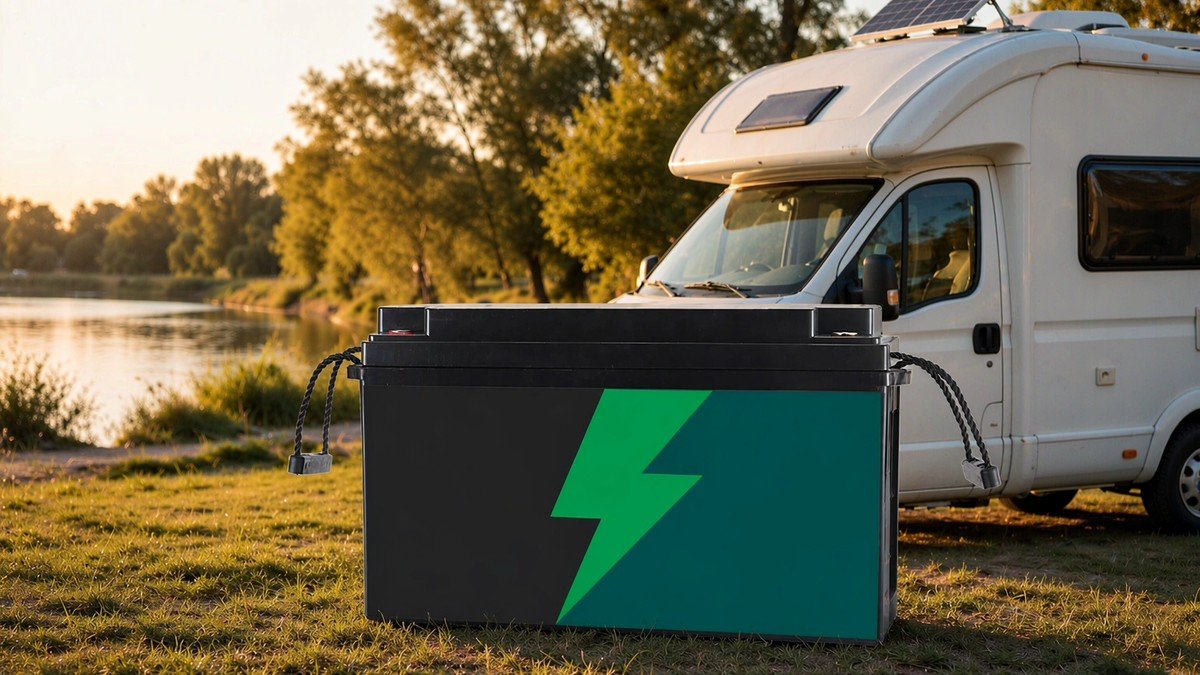
What Is a 12V 200Ah LiFePO4 Battery?
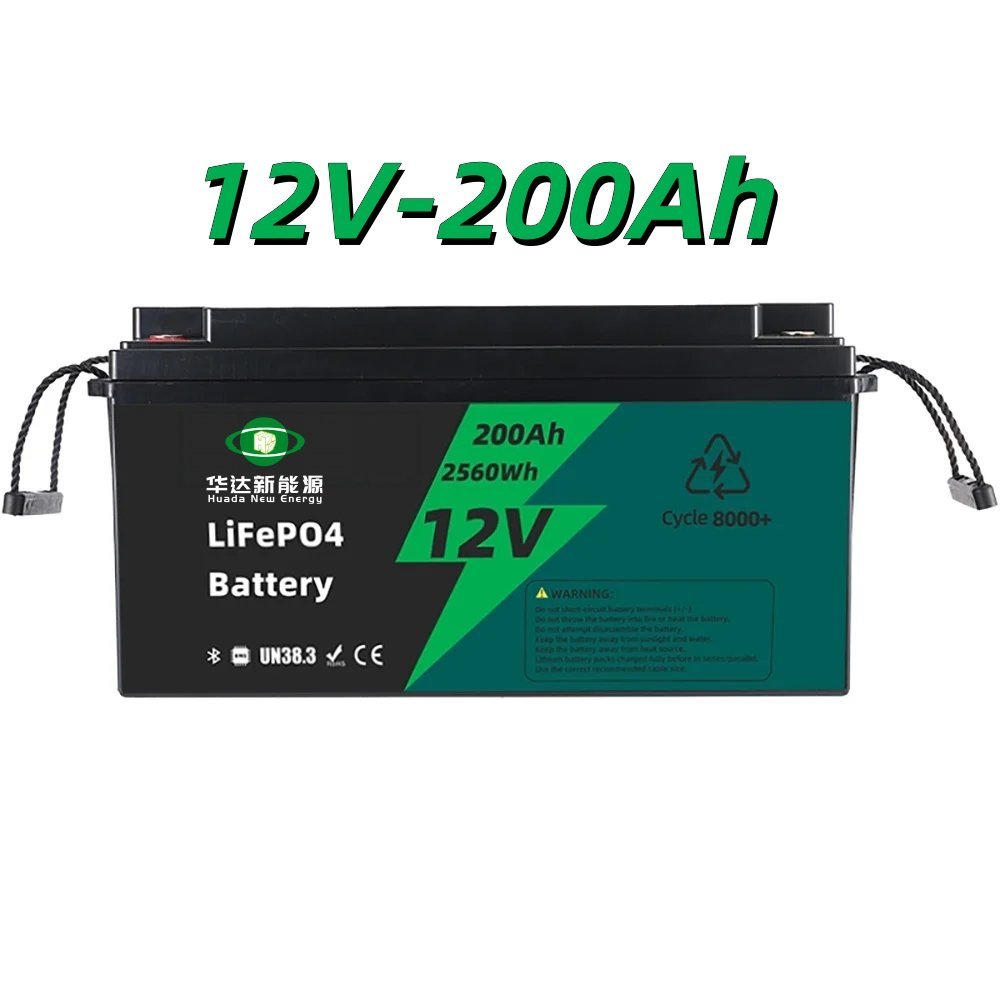
A 12V 200Ah LiFePO4 battery is a 12.8-volt lithium iron phosphate pack, built from four 3.2V prismatic cells in a 4S1P arrangement, that stores 2,560Wh and is shaped to drop into an existing 12V lead-acid bay. “12V” is the nominal system class; the real operating platform is 12.8V. “200Ah” is charge capacity — multiply by nominal voltage and the usable energy is about 2.56 kWh before conversion losses. The chemistry is LiFePO4 (LFP), chosen for thermal stability and long cycle life rather than maximum energy density.
The numbers a buyer should read first
The huadaenergy 12V 200Ah pack is specified at 8,000+ cycles at 0.2C charge and discharge until 80% capacity remains, with a built-in battery management system, ≤35 mΩ internal resistance and a sealed IP55 plastic case. It delivers 200A continuous and 400A pulses under three seconds through M8 terminals, weighs about 22 kg — roughly half an equivalent lead-acid battery — and self-discharges at ≤3.5% per month at 25 °C. Charging runs from 0 °C to 45 °C and discharge from −20 °C to 60 °C.
Why the 12V LiFePO4 Market Is Accelerating in 2026
The 12V LiFePO4 market is accelerating because three independent forces — falling cell prices, lead-acid replacement economics and new RV safety rules — now point in the same direction. BloombergNEF’s Battery Price Survey (December 2025) put average lithium-ion pack prices at USD 108/kWh and LFP packs at USD 81/kWh, while PW Consulting (2026) projected the 12V LiFePO4 segment from USD 3.41 billion in 2025 to USD 11.52 billion in 2032. Energy Resources Insights (2026) gives a more conservative but still steep path: USD 3.55 billion in 2026 to USD 8.48 billion by 2034, an 11.5% CAGR.
Lead-acid replacement is the volume engine
The largest single driver is the replacement of flooded and AGM lead-acid batteries in recreational vehicles, boats and off-grid solar. PW Consulting (2026) puts RV at 33% of 2025 12V LiFePO4 revenue and reports that lead-acid’s roughly tenfold lower cycle life and heavier mass push buyers toward lithium even at a higher upfront price. LFP allows deep discharge to 80% depth without the voltage sag and sulfation that shorten lead-acid service. For distributors, the aftermarket is the dependable channel: existing fleets need replacement every few years, and a drop-in format removes installation friction.
RV regulation turns certification into a gatekeeper
From 1 September 2026, RVIA member plants face mandatory enforcement of NFPA 1192 (2026 edition) and the ANSI/RVIA DC Standard (2025 edition), with in-field use from 1 June 2026; rechargeable lithium batteries used in RV manufacturing are expected to carry a listing from a third party recognised by RVIA, commonly to UL 1973 or UL 2054 (Lithionics, 2026). The practical effect is that “designed to UL 1973” and “tested to UL 1973” are no longer interchangeable with a product listing — procurement teams must match the model number on the label to a listing directory. Buyers outside North America face a parallel trend: insurers and surveyors for small craft increasingly ask for IEC 62619 or UL 1973 plus a UN 38.3 test summary and a documented low-temperature charging lockout (marine OEM guidance, 2026).
What a 200Ah Pack Delivers in Real Use
A 200Ah pack matters because 2.56 kWh is enough to run a real inverter load for hours, not just to power lights. At 200A continuous output the battery can feed a 2 kW-class AC load directly; the 400A sub-three-second pulse covers compressor and winch start-up without the voltage collapse typical of a half-discharged lead-acid bank. Across its life, 8,000 cycles at 80% depth implies about 16.4 MWh of cumulative throughput per pack — an estimate based on stated cycle rating and 80% usable depth, not a warranty commitment.
RV and camper vans
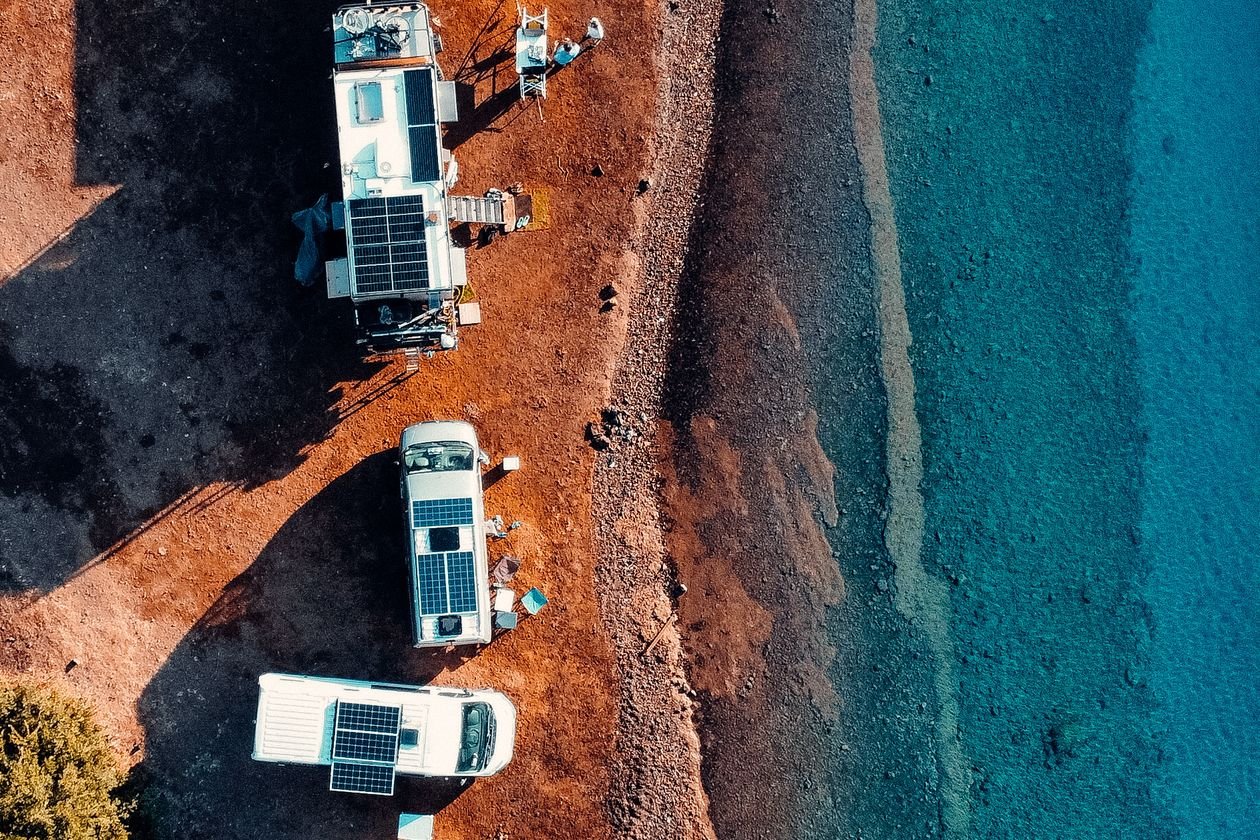
In a caravan, halving battery mass while keeping the same bay size improves payload and handling. Bluetooth monitoring lets the owner check state of charge from a phone, and low self-discharge means the van is ready after a season in storage. Rooftop solar recharges the bank during the day for evening cooking and heating.
Marine house banks and off-grid sites
An IP55 sealed case and the absence of acid leakage make LFP a practical house-battery upgrade for boats; installers still apply ABYC E-13 for restraining and fusing. For cabins and telecom cabinets, the same 2.56 kWh block works as a standby bank that stays ready through long float periods.

Solar self-consumption at home
A rooftop array paired with a 12V bank stores midday surplus for evening loads. At 80% usable depth, a 200Ah pack makes roughly 2.05 kWh available, which covers lighting, routers and appliance standby for a small off-grid cabin.

Key Capabilities at a Glance
A 12V 200Ah LiFePO4 battery competes on usable energy, cycle life and weight rather than on headline voltage. The table below restates the published figures that affect specification decisions.
Where the 200Ah class wins
Two figures dominate a specification review: 2,560Wh in a lead-acid-sized case, and 8,000+ cycles to 80% capacity. Together they set the pack apart from a same-size lead-acid battery of roughly 2,400Wh nameplate.
| Item | huadaenergy 12V 200Ah | Typical same-size lead-acid |
|---|---|---|
| Nominal voltage / capacity | 12.8V / 200Ah | 12V / 200Ah class |
| Stored energy | 2,560Wh | ~2,400Wh nameplate, less under load |
| Cycle life | 8,000+ @ 0.2C to 80% | typically 500–1,500 cycles |
| Weight | approx. 22 kg | approx. 45 kg or more |
| Continuous / pulse current | 200A / 400A (<3s) | sag under high draw |
| Self-discharge | ≤3.5% per month at 25 °C | significantly higher |
| Enclosure / terminals | IP55 plastic, M8 | vented or sealed case |
Figures are from the huadaenergy product page; lead-acid column shows industry-typical ranges for comparison, not a specific competitor.
Certification and Compliance: What the Documents Show
Certification is where a 12V LiFePO4 battery separates into spec-sheet claims and verifiable files, and 2026 buyers increasingly demand the latter. huadaenergy’s documentation set for model HD12200-24 includes a UL 1973 test report, a UN 38.3 test report, an MSDS and a sea-transport classification report, all issued by Shenzhen Tiansu Calibration and Testing Co., Ltd. with Huizhou Huada Technology Co., Ltd. as applicant.
Four documents, four different questions
Each file answers a distinct question. The UL 1973 report addresses safety testing, UN 38.3 transport, the MSDS handling, and the sea-transport classification customs acceptance. None substitutes for the others, and none alone proves compliance with a market’s installation rules.
| Document | Reference | What it covers | Buyer note |
|---|---|---|---|
| UL 1973 test report | TSZ25JW026A02-01, issued 2025-11-27 | Test to ANSI/CAN/UL-1973:2022 for stationary and auxiliary-power batteries | A test report on the tested sample; a listing requires a recognised agency’s follow-up service |
| UN 38.3 test report | TSZ25BQ037A04-01 | Transport testing of the HD12200-24 Li-ion battery | Basis for air and sea dangerous-goods paperwork |
| MSDS | TSZ25M1023A02-01, issued 2025-12-08 | Safety data for the Li-ion battery | Stated valid to 31 December 2026 |
| Sea transport classification | TSZ25M1023A02-02 | Identification of the goods as dangerous goods for sea transport | Stated valid to 31 December 2026 |
| Product page marking | CE, UN38.3 | As listed on the huadaenergy product page | Ask for the declaration and current edition for your market |
Three cautions matter. First, a test report to UL 1973 is evidence of testing, not a product listing; for a North American RV programme the buyer must confirm whether an RVIA-recognised agency lists the exact model. Second, UN 38.3 governs transport safety and says nothing about cycle life or BMS behaviour. Third, standards and declarations are market- and edition-specific — request the file set that matches the destination and the model number before a tender.
Why Buyers Source From a Source Factory
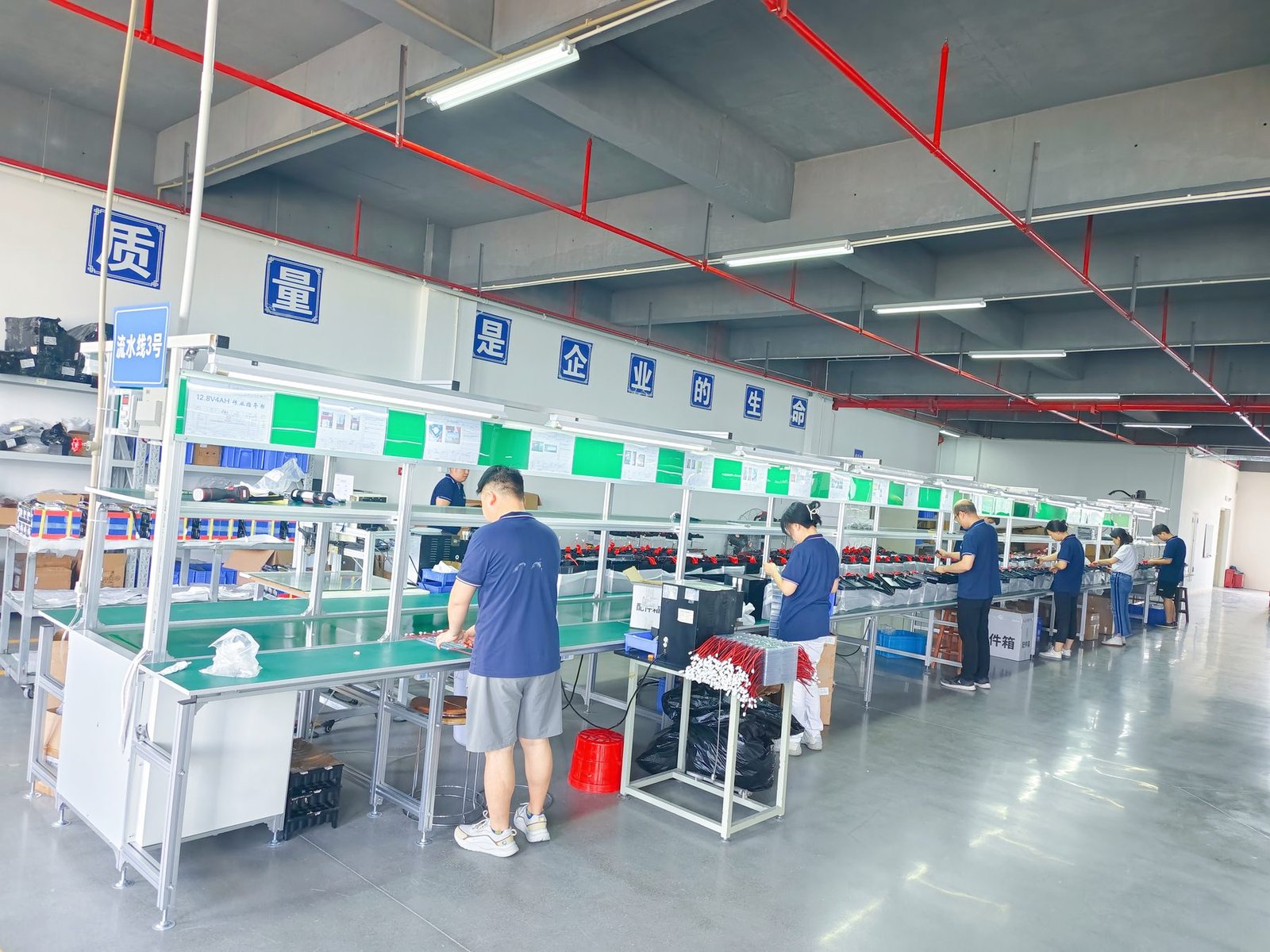
Sourcing from a source factory matters because a 200Ah pack is a system, not a cell: the BMS logic, busbar design, case sealing and terminal hardware all determine whether the published 200A rating survives in the field. huadaenergy builds 12V and 24V LiFePO4 packs in Huizhou with in-house assembly and test, and offers OEM/ODM customisation of logo, packaging, capacity and communication options including Bluetooth, RS485 and CAN. Project buyers can request custom system design and development against their own enclosure, protocol or branding requirements.
Assembly and test under one roof
Keeping cell matching, BMS integration and formation testing in one plant shortens the feedback loop when a pack fails a check. For an OEM buyer that means a specification can be adjusted at the line rather than sent to a second contractor.
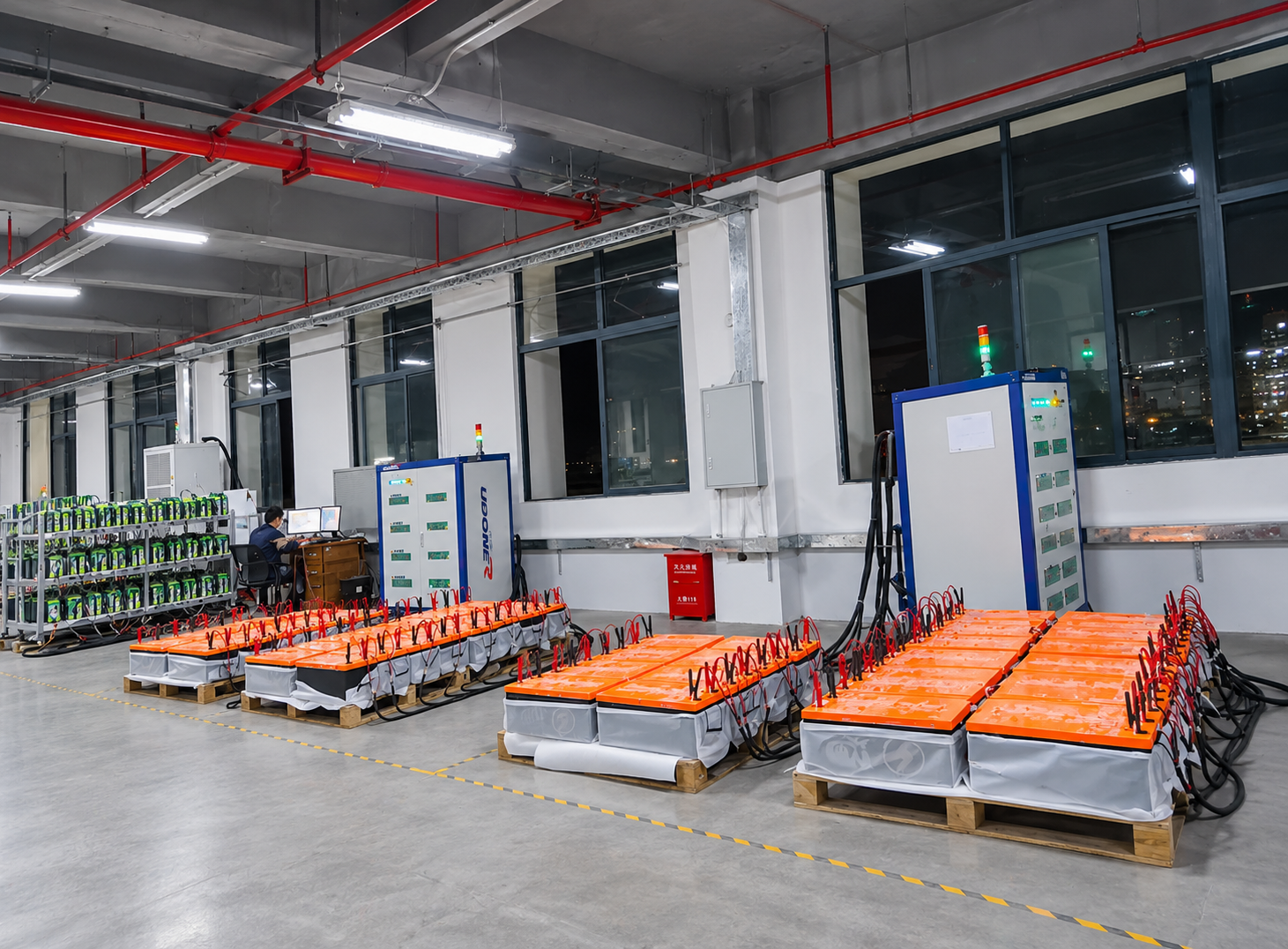
For buyers comparing a drop-in LFP pack with staying on lead-acid, the decision is usually total cost rather than purchase price: a pack rated for thousands of cycles spreads its cost over more delivered kWh, and its lower mass reduces freight and handling. Distributors can also use the same platform to build a private-label range across capacities — from this 12V 100Ah pack to 24V 200Ah systems — with the same branding and BMS options.
How to Choose the Right 12V 200Ah LiFePO4 Battery
Choosing the right 12V 200Ah LiFePO4 battery comes down to checking five things on the data sheet and five on the document set. On the data sheet, confirm the continuous and pulse current against the inverter or motor load, the charge temperature range if the bank sits in a cold bay, the case IP rating for the installation area, the BMS communication protocol needed by the charger or monitor, and whether the physical dimensions fit the bay including terminal clearance.
Five data-sheet checks, five document checks
Match the discharge rating to the real peak load, not the average. Then verify the charge profile, IP rating, communication protocol and dimensions. On the paperwork side, confirm the transport files, safety data, market-relevant test report or listing, stamped datasheet and warranty in writing before committing to a volume order.
On the documents, request the UN 38.3 test summary and dangerous-goods declaration, the MSDS and its validity date, the test report or listing relevant to the target market, a stamped datasheet for tender submission, and written confirmation of the warranty terms. If the application is a North American RV or an insured vessel, ask specifically whether a recognised agency lists the model — a report alone will not satisfy a listing requirement.
Frequently Asked Questions
Can a 12V 200Ah LiFePO4 battery replace my lead-acid battery directly?
Yes, in voltage and footprint terms. The 12.8V platform and group-style case fit a standard 12V bay, so most replacements need no system redesign. Confirm the charger has a lithium-compatible profile and that terminal orientation and height match the space.
How long does a 200Ah LiFePO4 battery last in service?
The huadaenergy pack is rated for 8,000+ charge-discharge cycles at 0.2C until 80% capacity remains. Actual life depends on depth of discharge, temperature and charge practice; the figure is a rating, not a guarantee of calendar life.
Does the 200Ah pack hold a 2,000W inverter?
Yes. Continuous output is 200A at 12.8V, about 2.56 kW before conversion losses, so a 2,000W inverter is within the rating. Check cable sizing and fusing, and note that the 400A pulse is limited to under three seconds.
Is the UL 1973 document a certification or only a test report?
It is a test report to ANSI/CAN/UL-1973:2022 (TSZ25JW026A02-01, issued 2025-11-27). A listing would require a recognised certification agency’s evaluation and follow-up service. For regulated RV or marine programmes, verify the model in the agency directory.
What documents come with the battery for shipping?
The documentation set includes a UN 38.3 test report, an MSDS and a sea-transport classification report, each issued for model HD12200-24. Ask for the current versions matching the shipment date and destination.
Can huadaenergy build a battery under my brand?
Yes. As a source factory, huadaenergy supports OEM/ODM branding, packaging, capacity and communication options, and can develop a system design against a customer’s specification. Send the application, target market and volume to request a quotation and document list.
About huadaenergy
A manufacturing partner, not just a catalogue
huadaenergy is a Huizhou, China-based battery manufacturer with in-house pack assembly and testing, serving RV, marine, solar, telecom and light-EV markets worldwide. The company supports OEM/ODM programmes, private-label ranges and custom system design for distributors and project buyers. Request a quotation and the full certification file set for the 12V 200Ah LiFePO4 battery.
Last updated: 2026-11-21