A 5.12kWh home energy storage battery is the smallest practical size for running essential household circuits through the evening and through an outage — and in 2026 it sits at the entry point of one of the fastest-growing energy markets in the world. Global battery storage additions passed 100 GW in a single year for the first time in 2025 (BloombergNEF, 2026), and more than 450,000 Australian homes added a battery in the first twelve months of one subsidy programme alone (Clean Energy Council, 2026). This guide explains what the huadaenergy H096-5kWh wall-mounted unit offers, which households it fits, and how to size a system.
Last updated: 2026-10-25
What Is a 5.12kWh Home Energy Storage Battery?
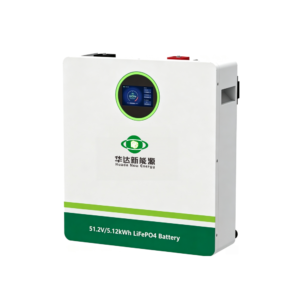
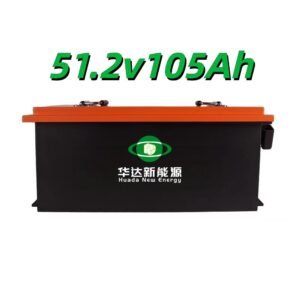
A 5.12kWh home energy storage battery is a wall-mounted LiFePO4 pack that stores solar or off-peak grid energy and returns it to household circuits through a hybrid inverter. The huadaenergy H096-5kWh class unit combines a 100Ah / 51.2V LiFePO4 pack with a built-in smart battery management system (BMS) in a slim 460 × 145 × 515 mm enclosure that weighs 45 kg and hangs on a garage, utility-room or hallway wall, so no floor space is lost.
In daily use, 5.12kWh is enough to carry a typical set of essential loads — refrigerator, lighting, internet router, security system and phone charging — through an evening and overnight, or to shift daytime solar generation into the peak-price hours. The unit reports state of charge on a local LCD and in a mobile app over WiFi and Bluetooth, and it speaks the two standard inverter protocols, RS485 and CAN, so it drops into most mainstream 48V-class residential systems.

Why Compact Home Batteries Are Selling Fast in 2026
Compact home batteries are selling fast in 2026 because pack prices have fallen to record lows while subsidies, dynamic tariffs and shrinking feed-in payments now reward households that store energy instead of exporting it. Four data points from the last twelve months show where the market stands:
- Global storage passed 100 GW per year. The world added 112 GW / 307 GWh of energy storage in 2025, up 48% year on year — the first year above 100 GW — and BloombergNEF forecasts 158 GW / 459 GWh in 2026 (BloombergNEF, 2025–2026).
- Pack prices hit a record low. Average lithium-ion pack prices fell to US$108/kWh in 2025, with stationary storage packs the lowest-priced segment of the market (BloombergNEF Battery Price Survey, 2025).
- Europe’s residential fleet keeps growing. Europe installed 36 GWh of battery storage in 2025, and the residential segment added 12.3 GWh across more than 1.5 million systems; around 72% of new rooftop PV systems in Germany and 85% in Italy were sold with a battery attached (SolarPower Europe, 2026).
- Subsidies are pulling demand forward. Australia’s Cheaper Home Batteries Program, launched in July 2025, delivered 457,439 home batteries and 12.9 GWh of capacity in its first twelve months (Clean Energy Council, 2026).
Policy is also changing how households get paid for flexibility. Since January 2025, German electricity suppliers have been required to offer dynamic time-of-use tariffs under the Energy Industry Act (EnWG §41a), and by the end of 2025 fifteen EU countries had smart-meter coverage above 80% (SolarPower Europe, 2026). A battery that charges during cheap midday hours and discharges into the evening peak is the simplest way for a household to use those tariffs — one reason analysts expect the entry-level segment, below roughly 6kWh, to keep expanding alongside the 10kWh-plus mainstream, which in Germany averaged about 10.3 kWh per new system in 2025 (ISEA RWTH Aachen Battery Charts, 2026).

Key Specifications of the H096-5kWh Battery
The huadaenergy H096-5kWh is a 51.2V, 100Ah LiFePO4 wall-mounted battery rated at 5.12kWh with a cycle life of more than 5,000 cycles while retaining above 80% of original capacity. The table below lists the complete specifications and what each one means in practice.
| Item | H096-5kWh class | What it means for buyers |
|---|---|---|
| Battery capacity | 100Ah / 51.2V (5.12kWh) | Roughly one evening and night of essential loads for a small household |
| Battery type | LiFePO4 (LFP) | Thermally stable chemistry suited to occupied living spaces |
| Cycle life | 5,000+ cycles, above 80% capacity retained | About 13 years of daily cycling before the pack drops to 80% |
| Voltage range | 40V–58V | Matches mainstream 48V-class hybrid inverters |
| Installation | Wall-mounted, 460 × 145 × 515 mm, 45 kg | No floor space needed; mounts beside the distribution board |
| Communication | RS485 / CAN; WiFi + Bluetooth with mobile app; LCD | Wired inverter integration plus remote monitoring |
| Operating temperature | Charge −5°C to 50°C; discharge −20°C to 50°C | Indoor installation across most climates |
| Protection & certification | Smart BMS (over-voltage, over-current, over-temperature, short-circuit); CE / FCC / RoHS; IP20 | Cell-level protection; indoor mounting required |
Specifications follow the documents shipped with each unit. Capacity, branding, enclosure and communication protocol can be customised for OEM / ODM programmes.
Real-World Applications for a 5.12kWh Wall-Mounted Battery
A 5.12kWh wall-mounted battery earns its keep wherever floor space is tight and the priority is dependable power for essential circuits rather than whole-house autonomy.
Apartment and starter-home solar
In apartments and small homes, the slim 145 mm-deep case mounts on a garage or hallway wall at 45 kg, keeping floor space free. Households that already own a 3–5kWp rooftop array can store their surplus solar instead of exporting it at a low feed-in rate.
Essential-load backup
Wired through a hybrid inverter, the pack keeps lighting, networking, refrigeration and security systems alive during an outage. A refrigerator typically consumes 1–1.5kWh per day, so 5.12kWh covers a full day of essentials with headroom for evening lighting and devices.
Night-time self-consumption
Where feed-in tariffs have fallen below retail prices — the situation across most of Europe — storing self-generated solar for the evening is worth more per kWh than exporting it. The unit charges from PV or the grid during cheap windows and discharges automatically at peak times.
Holiday homes and small businesses
Between visits, a holiday home still needs refrigeration, security and network power. A wall-mounted 5.12kWh pack, paired with a small PV array, keeps those circuits running without a generator.
5.12kWh vs 10.24kWh vs 14.33kWh: Which Size Fits?
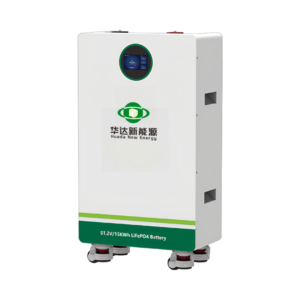
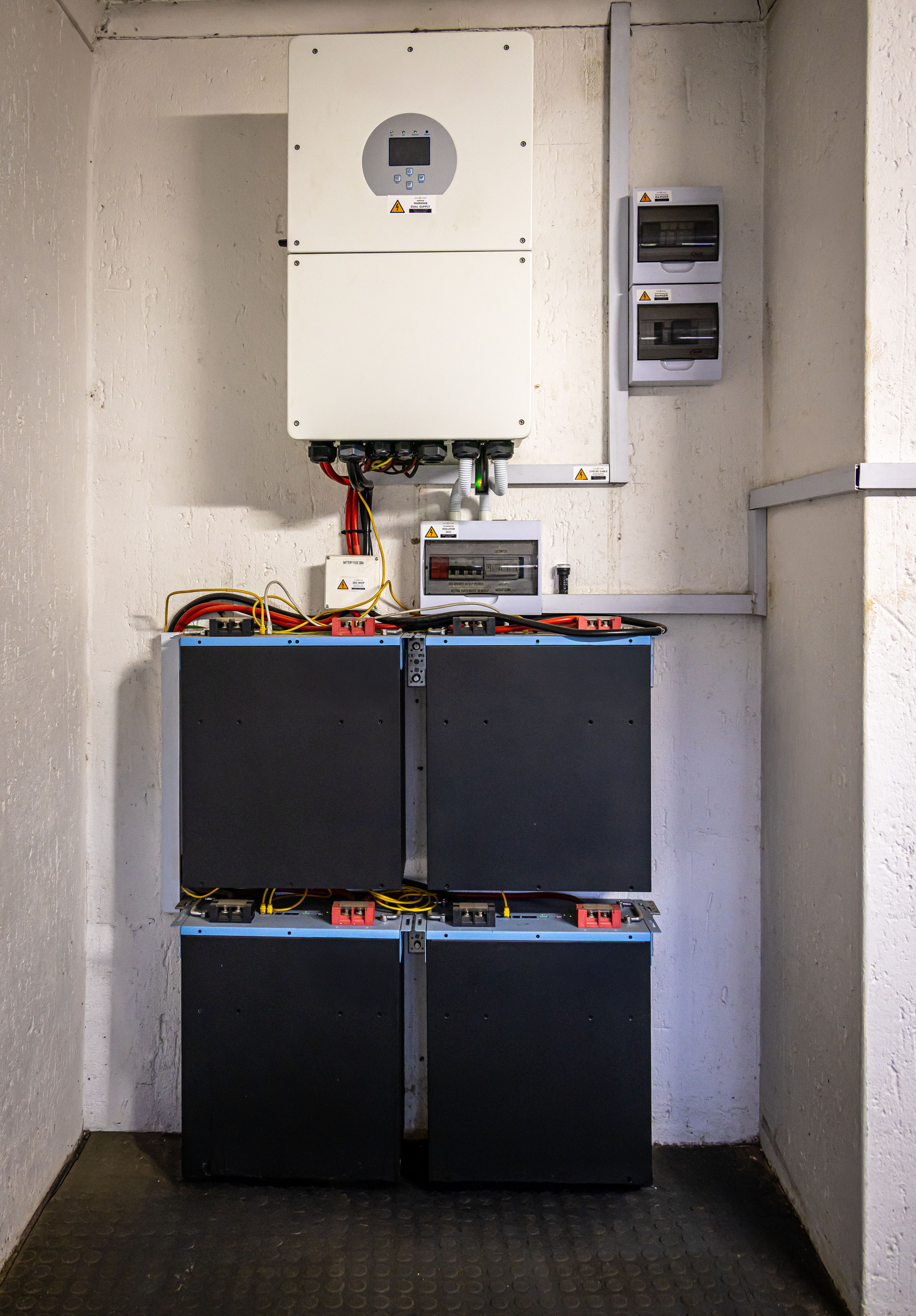
The right capacity depends on the loads you want to cover and the wall or floor space you have — the 5.12kWh unit minimises upfront cost, while the 10.24kWh and 14.33kWh models in the same H096 series cover whole-evening autonomy and larger arrays.
| H096-5kWh (wall) | 10.24kWh stackable | 14.33kWh floor-standing | |
|---|---|---|---|
| Capacity | 5.12kWh | 10.24kWh | 14.33kWh |
| Typical home | Apartment, starter home | Family home with 5–8kWp PV | Large home or high evening load |
| Coverage | Essential circuits, one evening | Essentials plus cooking, washing | Near-full evening autonomy |
| Footprint | Wall, 45 kg | Stackable tower | Floor cabinet |
| Expansion | Move up within the series | Stack further modules | Pair two cabinets |
Two numbers help with the decision. First, per-kWh system cost generally falls as capacity rises, so a single larger battery is usually cheaper per kWh than two small ones — but only if the budget and space allow. Second, lifetime throughput scales with capacity: a 5.12kWh pack cycled 5,000 times moves roughly 25.6 MWh over its life, while a 14.33kWh pack moves about 71.7 MWh. If the household’s evening consumption already exceeds 5kWh, the larger models pay back the extra upfront spend through avoided grid purchases. Compare the 10.24kWh stackable all-in-one battery and the 14.33kWh floor-standing home battery for those sizes.
How to Choose the Right Home Battery Capacity
The fastest way to size a home battery is to add up the loads you actually want to run, then check the technical fit. Work through this list before ordering:
- List essential loads and their daily kWh — refrigerator, lighting, router, security; most small households land between 4kWh and 8kWh per evening.
- Check the PV array size — a 5.12kWh battery charges fully from a 3–5kWp array on a sunny day, leaving surplus for daytime use.
- Confirm inverter compatibility — the battery is a 48V-class unit speaking RS485/CAN lithium protocols; verify the protocol list with your inverter brand.
- Measure the wall — the case needs 460 × 515 mm of wall and carries 45 kg; keep it indoors (IP20) and close to the distribution board for short cable runs.
- Plan the expansion path — if consumption may grow, confirm the inverter has spare capacity for a second battery before you buy.
- Compare certifications and warranty terms — CE, FCC and RoHS marks and a written cycle-life rating (5,000+ cycles at above 80% retention for this unit) belong in every supplier quote.
Frequently Asked Questions
What can a 5.12kWh battery power during a blackout?
Through a hybrid inverter it runs essential circuits — refrigerator, lights, router, security system and device charging — for roughly a full day. Energy-heavy loads such as air conditioning, electric ovens or EV charging exhaust 5.12kWh quickly and are normally left on the grid or generator.
Is 5.12kWh enough for a whole house?
For essential loads in an apartment or small home, yes. A whole house with electric heating, pool pumps or air conditioning typically consumes 10–20kWh per evening, which calls for the 10.24kWh or 14.33kWh models in the same series.
How long does a 5.12kWh LiFePO4 battery last?
The H096-5kWh is rated for more than 5,000 cycles while retaining above 80% of its original capacity. At one cycle per day that is about 13 years of cycling; calendar life also depends on temperature and average depth of discharge.
Can I expand a 5.12kWh battery later?
The H096 series continues with 10.24kWh and 14.33kWh units, and the battery communicates over RS485/CAN so it can pair with energy-management equipment. Before expanding, confirm the hybrid inverter has enough charging capacity for the additional kWh.
Which inverters work with a 51.2V home battery?
Mainstream 48V-class hybrid inverters that support lithium batteries over RS485 or CAN work with the unit; the WiFi/Bluetooth app handles monitoring on the household side. Send huadaenergy your inverter model to confirm the protocol match before ordering.
How much does a 5kWh home battery cost in 2026?
Installed prices vary by market, inverter and labour, so there is no single figure. What is verifiable is the trend: average lithium-ion pack prices fell to US$108/kWh in 2025, a record low (BloombergNEF Battery Price Survey, 2025), which makes entry-level systems cheaper per kWh than at any earlier point. Ask suppliers for itemised quotes covering battery, inverter, installation and warranty.
About huadaenergy
huadaenergy manufactures LiFePO4 batteries for homes, businesses and vehicles, including wall-mounted and floor-standing home storage, stackable all-in-one systems, golf cart and lead-acid-replacement batteries, portable power stations, commercial cabinets, containerised ESS and EV charging stations. Every unit is assembled, inspected and full-function tested before shipment, and ships with packing lists, parameter sheets and mounting guidance for a single-visit installation. OEM and ODM programmes cover capacity, branding, enclosure and communication protocols for distributors and installers. Explore the H096 5.12kWh home energy storage battery, read the detailed 15kWh home storage guide, or contact the huadaenergy team for datasheets and distributor pricing.
Last updated: 2026-10-25