51.2V 105Ah Golf Cart Battery Explained | huadaenergy
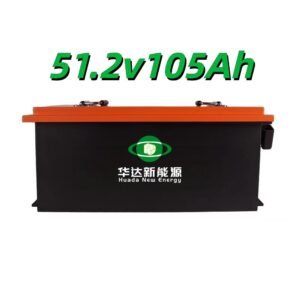
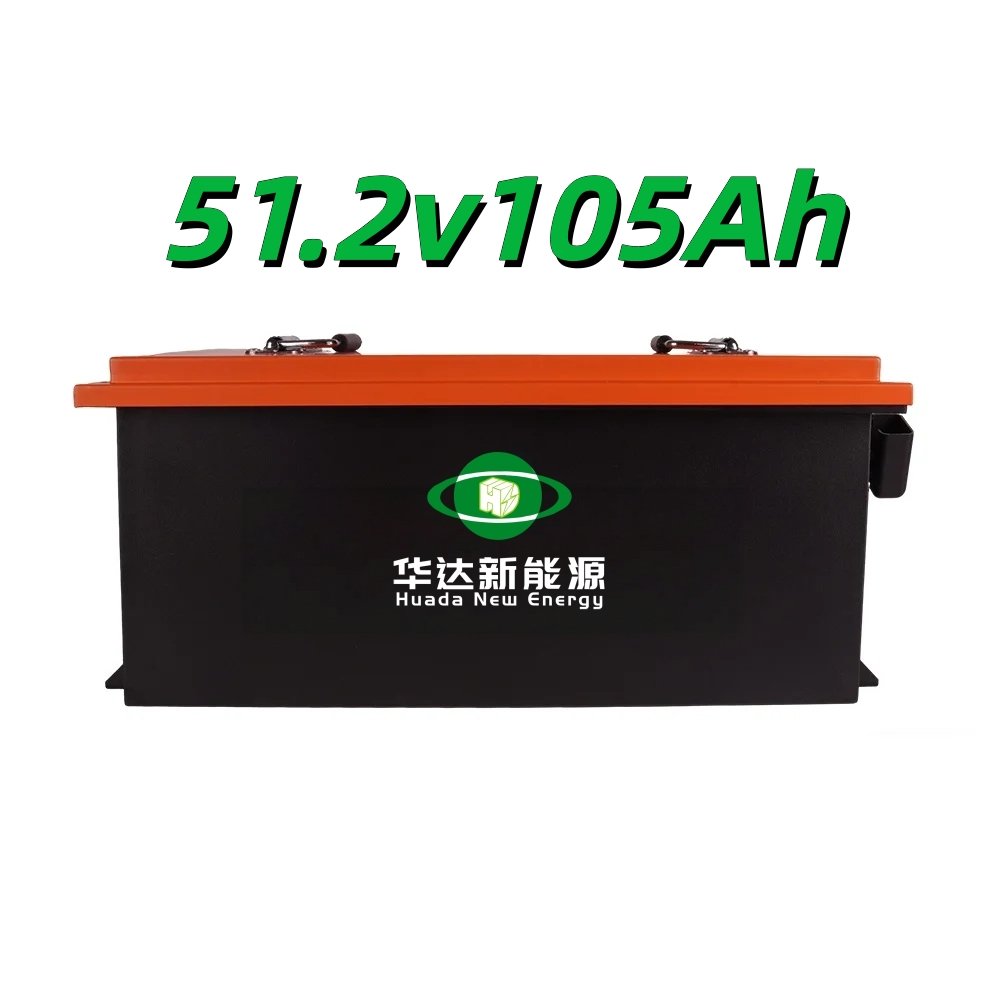
A 51.2V 105Ah golf cart battery is a LiFePO4 (LFP) pack that stores 5.376 kWh of energy, delivers 200 A of continuous discharge current, and is rated for more than 3,000 charge cycles while retaining at least 80% of its capacity. For golf course operators, resort fleet managers and sightseeing-vehicle buyers, those numbers add up to one practical outcome: a lighter, maintenance-free pack that covers a full day of driving and outlasts a lead-acid set several times over. This guide explains what each specification actually means, why the market is switching from lead-acid to LFP in 2026, and how to judge battery quality before you place an order.
Last updated: 2026-10-24
What Is a 51.2V 105Ah Golf Cart Battery?
A 51.2V 105Ah golf cart battery is a lithium iron phosphate (LiFePO4) pack built from 16 prismatic cells connected in series, and it stores enough energy — 5.376 kWh — to drive a typical golf cart 35–45 miles on a single charge. The “16S” configuration is the key idea: each LFP cell has a nominal voltage of 3.2 V, so 16 cells in series produce 51.2 V, which is why a 51.2V lithium pack works as a direct replacement for a “48V” lead-acid system (six 8 V batteries wired in series).
The two numbers in the name describe different things. Amp-hours (105 Ah) measure how much charge the pack can deliver; watt-hours measure the actual energy stored. Multiply 51.2 V by 105 Ah and you get 5,376 Wh, or 5.376 kWh. This is also why the 51.2V version carries about 33% more energy than a 38.4V 105Ah pack at identical capacity — voltage, not just amp-hours, determines range. If you are comparing the two, see the 38.4V 105Ah golf cart battery and the 51.2V 105Ah golf cart battery product pages for side-by-side specifications.
Why Golf Cart Fleets Are Switching to LiFePO4 in 2026
Golf cart fleets are switching to LiFePO4 because lithium pack prices have fallen sharply while total cost of ownership now favors LFP in most commercial duty cycles. Market researchers have quantified the shift: IndexBox estimates the United States golf cart battery market at $1.1–1.4 billion in 2026, with LFP expected to reach roughly 25–30% of new battery pack shipments by value, up from under 15% in 2022 (IndexBox, 2026). The same report notes that large golf-course and resort fleets are converting from lead-acid to LFP at an estimated 15–20% per year, and that aftermarket replacement accounts for roughly 60–70% of annual battery sales — a huge installed base of aging lead-acid carts is reaching its replacement window.
Globally, Research and Markets (citing TechSci Research data, 2026) projects the golf cart battery market to grow from about $2.23 billion in 2025 to about $3.49 billion by 2031, a compound annual growth rate near 7.75%. On the cost side, BloombergNEF’s Battery Price Survey found that average lithium-ion pack prices fell to $108/kWh in 2025, a record low that keeps narrowing the upfront price gap (BloombergNEF, 2025).
Key Specifications and What They Mean
The specifications that matter most in a golf cart battery are nominal energy, discharge current, cycle life, self-discharge rate and the BMS protections behind them. The table below lists the published ratings of the huadaenergy 51.2V 105Ah pack, followed by a plain-English reading of each group.
| Parameter | Value | What it means for buyers |
|---|---|---|
| Battery type | LiFePO4 (LFP), Grade-A cells | Thermally stable chemistry; no toxic heavy metals |
| Nominal voltage | 51.2 V (16S) | Matches 48 V lead-acid vehicle systems |
| Nominal capacity | 105 Ah (±3%) | Charge volume the pack can deliver |
| Nominal energy | 5,376 Wh | 33% more than a 38.4 V 105 Ah pack |
| Standard / max charge current | 20 A / 50 A | Roughly 2.5 hours to full at maximum charge current |
| Standard discharge current | 20 A | Cruising load on flat terrain |
| Continuous discharge | 200 A | About 1.9C — sustained hill climbs and stop-start duty |
| Max / peak discharge | 400 A (35 s) / 600 A (0.5 s) | Hill starts and sudden load spikes |
| Cycle life | 3,000+ cycles, capacity retention ≥ 80% | Multi-year fleet service before replacement |
| Self-discharge | ≤ 3% per month | Seasonal storage without deep-discharge damage |
| Weight / dimensions | ≈ 39.6 kg; 520 × 268 × 220 mm | Single-person handling during installation |
| Charge / discharge temperature | 0–55 °C / −20–55 °C | Covers hot-course and cold-morning operation |
| Cut-off voltages | 58.4 V charge / 40 V discharge | BMS-enforced safe operating window |
| Communication | Built-in smart BMS, UART | Protection plus status data for integration |
Reading the discharge ratings. Continuous current divided by capacity gives the C-rate: 200 A ÷ 105 Ah ≈ 1.9C. In plain terms, the pack can push nearly twice its capacity per hour to the motor without voltage sag — enough for loaded hill climbs and the frequent start-stop pattern of course traffic. The 600 A peak (0.5 s) covers momentary surges such as accelerating from a standstill on a slope.
Reading cycle life. A cycle is one full charge and discharge. The “3,000+ cycles at ≥ 80% capacity retention” rating means that after roughly eight years of daily cycling, the pack should still hold at least four-fifths of its original energy. Lead-acid packs under the same deep-discharge duty are typically rated for only 150–300 cycles (Stats Market Research, 2026).
Reading self-discharge. At no more than 3% per month, a cart parked over the winter loses a small fraction of its charge, so the BMS never drains the cells into a deep-discharge state that would cause permanent damage — a common failure mode for lead-acid sets in seasonal storage.
Real-World Applications
The 51.2V 105Ah format fits any 48 V-class low-speed electric vehicle that runs daily start-stop duty on mixed terrain, from golf courses to gated communities.
Golf course fleets
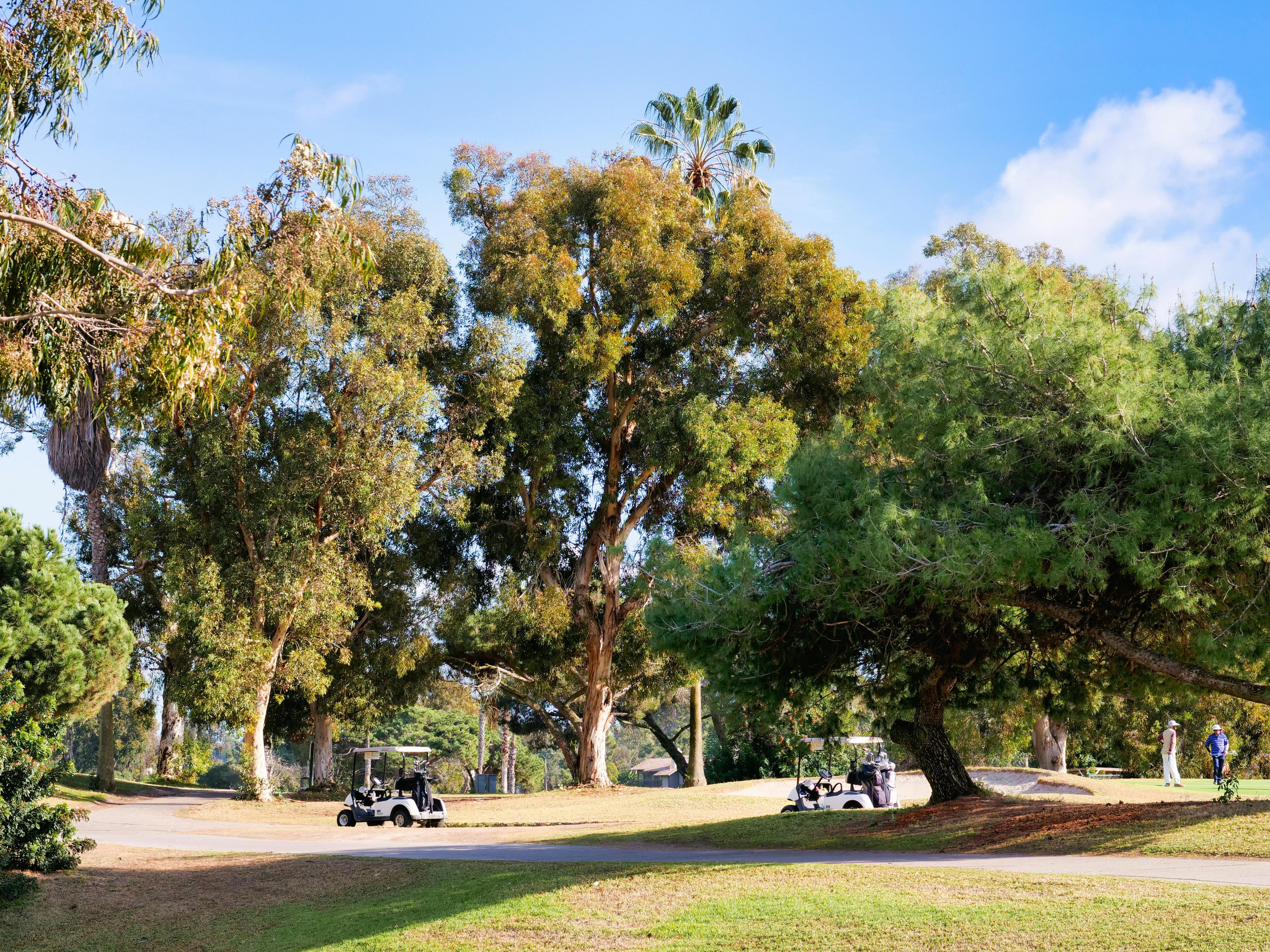
Course carts run dawn-to-dusk, often two to three rounds per day, and fleets rarely want mid-day swap sessions. A typical 48 V LFP pack delivers 35–45 miles per charge versus 25–30 miles for an equivalent lead-acid set (IndexBox, 2026), which lets a cart complete multiple rounds and opportunity-charge during lunch breaks. The 200 A continuous rating covers the sustained draw of hills and rough turf without the voltage sag that thins lead-acid performance late in the day.
Sightseeing vehicles and resort shuttles
Sightseeing buses and resort shuttles run fixed routes with full passenger loads, so they need steady power rather than bursts. The 5.376 kWh energy rating extends route length, while maintenance-free operation matters most: no watering, no equalization charges, no acid checks on a fleet of dozens of vehicles.
Residential communities, campuses and rental fleets
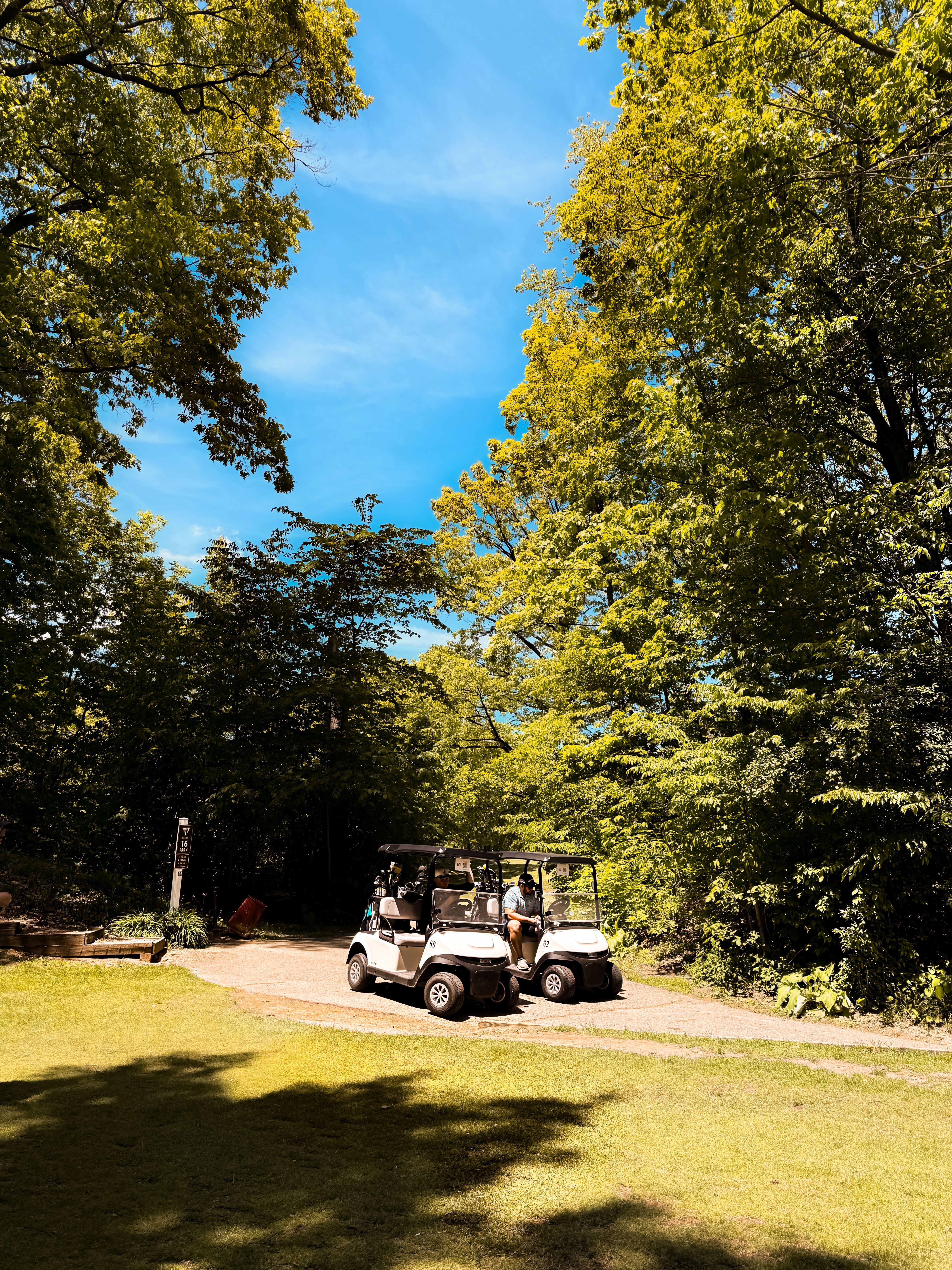
Retirement communities, HOAs and campuses use low-speed vehicles as daily transport, and rental operators prioritize uptime above all. Low self-discharge (≤ 3%/month) protects vehicles that sit idle between rentals, and the ≈ 39.6 kg pack weight allows one technician to swap batteries without lifting equipment. Buyers in these segments often pair the 51.2V golf pack with other huadaenergy products, such as the 24V 200Ah LiFePO4 battery for utility carts or the 12V 100Ah LiFePO4 battery for accessories and small backup loads.
51.2V 105Ah LiFePO4 vs 48V Lead-Acid: How They Compare
Against a comparable flooded lead-acid set, the 51.2V 105Ah LiFePO4 pack delivers roughly ten times the deep-cycle life, close to twice the usable energy per charge, and requires no watering maintenance at all.
| Aspect | 51.2V 105Ah LiFePO4 | 48V lead-acid set (6 × 8V) |
|---|---|---|
| Cycle life | 3,000+ cycles (≥ 80% retention) | Typically 150–300 deep-discharge cycles (Stats Market Research, 2026) |
| Range per charge | 35–45 miles (typical LFP, IndexBox 2026) | 25–30 miles |
| Usable depth of discharge | High — BMS-managed window | About 50% to protect service life |
| Maintenance | None — sealed, no watering | Regular watering and equalization |
| Weight | ≈ 39.6 kg | Typically 120 kg or more for six batteries (typical industry figures) |
| Pack price (US market) | $1,600–2,400 (IndexBox, 2026) | $800–1,200 per set (IndexBox, 2026) |
Cost over eight years, based on assumptions. Using the IndexBox US price ranges and a daily-cycle course schedule: a lead-acid fleet may replace its packs two to three times over eight years ($1,600–3,600 spent on sets, plus watering labor), while one LFP pack ($1,600–2,400) spans the same period. The figures above are illustrative estimates based on published market ranges, not a quotation; actual economics depend on local labor costs, duty cycle and charger efficiency.
How to Choose the Right Golf Cart Lithium Battery
Choose a golf cart lithium battery by matching the system voltage, verifying cycle-life ratings in writing, and checking the BMS protections, certifications and after-sales support behind the pack. A short checklist:
- Voltage match. Confirm the cart is a 48 V-class system; a 51.2 V LFP pack replaces six 8 V lead-acid batteries directly in most models.
- Cycle life in writing. Ask for the tested rating (cycles and capacity retention) and the warranty terms that back it, not just marketing numbers.
- Discharge current vs terrain. Hilly courses need 200 A-class continuous discharge; flat routes can use less.
- BMS protections. Over-charge, over-discharge, over-current, short-circuit and temperature protection should all be built in, with communication (UART, or CAN/RS485 on request) for fleet monitoring.
- Certifications and test reports. Request UN 38.3 transport test reports and applicable market certifications before shipping.
- Charger compatibility. Use a charger with a LiFePO4 profile and the correct cut-off voltage (58.4 V here).
- OEM/ODM support. For fleets, confirm the supplier can customize capacity, casing, connectors and communication protocols.
Frequently Asked Questions
How long does a 51.2V 105Ah golf cart battery last?
It is rated for more than 3,000 charge cycles while retaining at least 80% of its capacity. Under a daily full-cycle schedule that corresponds to roughly eight years of service, and lighter duty cycles stretch the calendar life further.
Is the 51.2V 105Ah pack a drop-in replacement for a 48V lead-acid set?
Yes, in most 48 V-class golf carts it replaces six 8 V lead-acid batteries directly, because 51.2 V nominal sits in the same operating window and the BMS enforces safe cut-off voltages (58.4 V charge, 40 V discharge). Confirm dimensions and connector type against your battery bay before ordering.
Can I keep using my existing lead-acid charger?
Not recommended. Lead-acid chargers use different charge profiles and may not terminate correctly on LFP chemistry. Use a LiFePO4-compatible charger sized for the pack — the maximum charge current of this pack is 50 A, which recharges it in roughly 2.5 hours.
How far can a golf cart go on one charge with this battery?
A typical 48 V LFP pack achieves 35–45 miles per charge versus 25–30 miles for a comparable lead-acid set (IndexBox, 2026). Actual range depends on terrain, payload, speed and temperature.
What does 200A continuous and 600A peak discharge actually mean?
The pack can supply 200 A indefinitely during normal driving — about 1.9 times its capacity per hour — and tolerate surges up to 400 A for 35 seconds or 600 A for half a second, which covers hill starts. The built-in BMS enforces these limits to protect the cells.
Does huadaenergy support OEM/ODM and bulk orders?
Yes. huadaenergy manufactures golf cart LiFePO4 batteries in bulk with OEM branding and can customize capacity, casing, connectors and communication protocols (CAN/RS485). Sample orders and test reports are available, and the team typically replies within 12 hours.
About huadaenergy
huadaenergy (Huizhou Huada Technology) is a LiFePO4 battery manufacturer supplying golf cart batteries, home energy storage, portable power stations and commercial/containerized energy storage systems, with Grade-A cells, integrated smart BMS hardware and OEM/ODM customization for fleet projects. For fleet pricing, samples or the full datasheet of the 51.2V 105Ah golf cart battery, or bulk orders of the 51.2V 105Ah fleet version, contact the sales team — replies usually come within 12 hours.
Last updated: 2026-10-24