A 500kWh containerized BESS is the fastest way to add around two hours of dispatchable storage to a commercial or industrial site: the H098 250kW/502.6kWh system from Huada Energy arrives as a factory-assembled, factory-tested 20ft container that only needs a concrete pad, an AC connection and commissioning on site. For procurement managers, EPC contractors and distributors, 2026 is a pivotal year to be specifying this capacity class — the EU has set a 200 GW storage target for 2030, the US has raised tariffs on non-EV lithium-ion batteries to 25%, and global storage additions are forecast to grow another 41%. This guide explains what the specification means, how the policy shifts affect your project, and how to choose the right unit.
Last updated: 18 October 2026
What Is a 500kWh Containerized BESS?
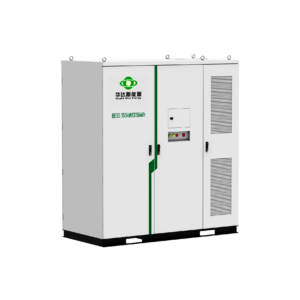
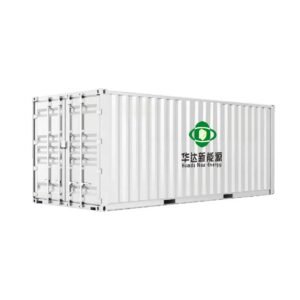
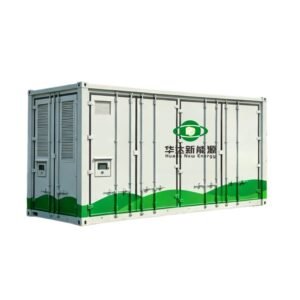
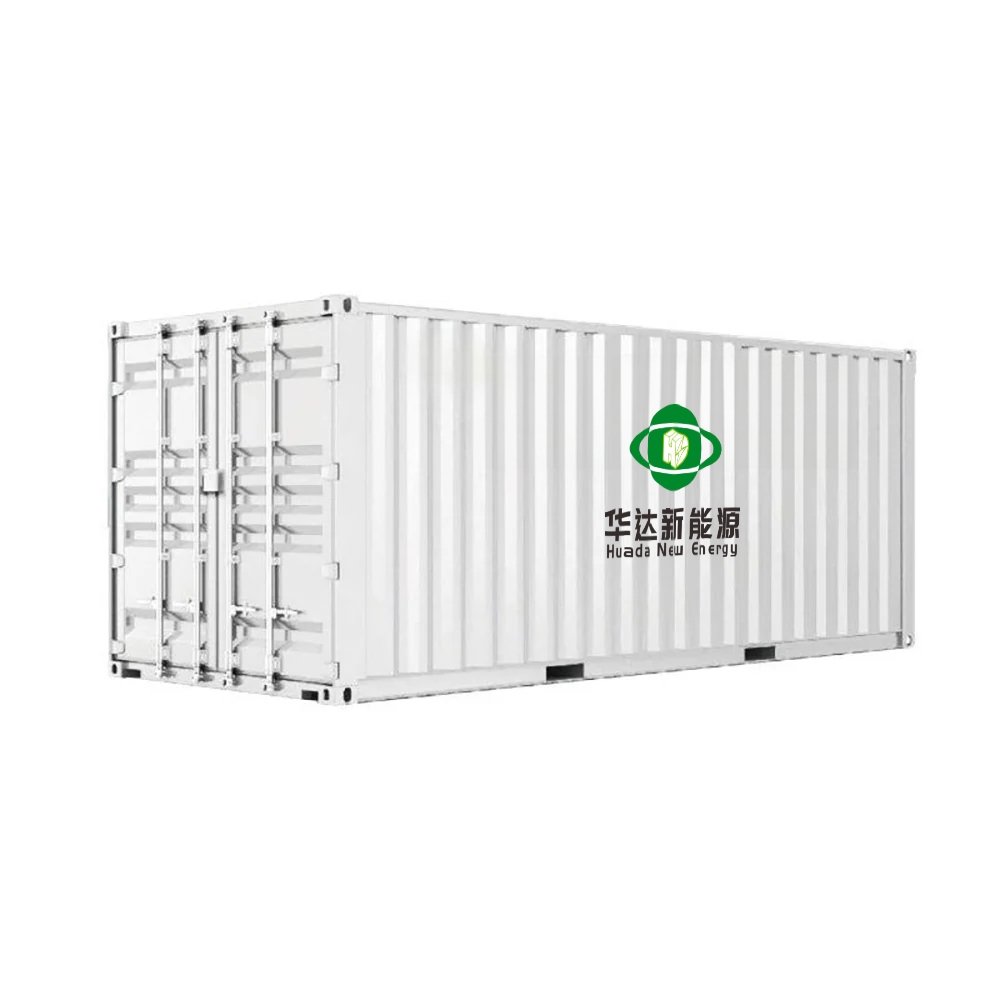
A 500kWh containerized BESS is a complete battery energy storage system — LiFePO4 battery bank, PCS, BMS, EMS, power distribution, fire control and thermal management — pre-assembled and tested inside one standard 20ft shipping container, delivered ready to connect.
The Huada Energy H098 250kW/500kWh containerized BESS uses an 840Ah / 598.4V LiFePO4 battery bank rated at 502.6 kWh. The power conversion system is rated at 250 kW continuous with a 275 kW peak, which means a full charge delivers roughly two hours of rated output. The AC output is 400V (−20% to +15%), with a 361A rated current and 397A maximum, so the container connects directly to standard low-voltage industrial distribution at most C&I sites without a custom transformer.
Inside the 20ft Container
Everything a site needs is integrated at the factory. The container measures 6058 × 2438 × 2591 mm and weighs 11,500 kg, so it ships as standard cargo and lands on a concrete pad. Inside sit the LiFePO4 packs, a rack-mounted modular PCS, the layered-protection BMS, the EMS, power distribution and fire-control systems. A door-mounted embedded air conditioner handles thermal management without occupying cabinet space, and the IP54 enclosure is rated for outdoor installation at desert, coastal and high-temperature sites. With 6,000+ cycle cells and factory testing before dispatch, on-site work is cabling and commissioning, not construction.
Why 2026 Policy Moves Storage From Option to Requirement
Storage stopped being a project option in 2026: the European Commission now targets 200 GW of energy storage by 2030, and the United States raised its Section 301 tariff on non-EV lithium-ion batteries from 7.5% to 25% on 1 January 2026.
In its Electrification Action Plan published on 17 July 2026, the European Commission reaffirmed that the EU needs 200 GW of storage by 2030, up from about 55 GW in 2026, and 500 GW by 2050, calling storage “indispensable” to a power system running on wind and solar (European Commission, 2026). The plan builds on the first EU Tripartite Agreement on Energy Storage, signed on 26 June 2026, under which member states pledged 30–35 GW of new stationary storage between 2026 and 2028. Globally, BloombergNEF forecasts 158 GW / 459 GWh of storage additions in 2026, up about 41% from the record 112 GW / 307 GWh installed in 2025 (BloombergNEF, Energy Storage Market Outlook H1 2026).
What the 200 GW Target Means for Industrial Buyers
A 145 GW gap over four years means grids across Europe will keep absorbing as much flexibility as they can connect — and behind-the-meter C&I systems are part of that mix. For a factory or logistics operator, a 500kWh containerized BESS fits this window: large enough to shift a meaningful daily load, small enough to permit quickly, and parallelable as the site grows. The plan also targets an electricity-to-gas price ratio of 2 for industry by 2030 and rewards flexible consumption in network charges — both improving the business case for on-site storage (European Commission, 2026).
How the US Tariff Step-Up Changes Procurement Math
Import economics now differ sharply by destination market. Under the USTR Section 301 final modification (89 FR 76581), tariffs on lithium-ion non-EV batteries — the category covering stationary storage — rose from 7.5% to 25% effective 1 January 2026 (USTR, 2024). US-bound buyers should model landed cost with the duty included; buyers in Europe, the Middle East, Southeast Asia, Africa and Latin America are not affected. In both cases, OEM/ODM configuration — which Huada Energy offers across its 500kWh–3MWh containerized series — makes it easier to adapt voltage and certification to each destination market.
Key Specifications and What They Mean
The table below lists the H098 500kWh system’s published specifications and what each means at procurement stage. All values come from the official product page.
| Parameter | Value | What It Means for Buyers |
|---|---|---|
| Battery capacity | 502.6 kWh (840Ah / 598.4V LiFePO4) | About 2 hours of rated discharge; covers a typical evening peak window |
| Rated / peak power | 250 kW / 275 kW | Caps demand peaks at 250 kW; 10% headroom for motor starts and surges |
| AC output | 400V (−20% to +15%), 361A rated / 397A max | Direct connection to standard industrial LV distribution |
| Cycle life | 6,000+ cycles (LiFePO4) | Supports daily cycling for well over a decade before notable fade |
| Thermal management | Door-mounted embedded air conditioner | Holds battery temperature in harsh climates without using cabinet space |
| Enclosure | 20ft container, 6058 × 2438 × 2591 mm, 11,500 kg, IP54 | Standard shipping, outdoor installation, no dedicated building required |
| Integrated systems | BMS + PCS + EMS + distribution + fire & environmental control | One supplier, one warranty scope, no third-party integration on site |
| Certifications | IEC, UN38.3, MSDS, RoHS | Core documentation set for export transport and most project approvals |
| Monitoring | 4G cloud monitoring, RS485 / CAN local bus | Remote dispatch, alarms and performance data without on-site staff |
| Expansion | Parallel multiple containers; series 500kWh–3MWh; OEM/ODM | Buy the capacity you need today, scale toward MWh-class plants later |
The 2-hour duration deserves attention when comparing quotes. The IEA notes that most projects still cluster around two hours of storage duration, while four-hour systems are increasingly common where PV penetration is high (IEA, Global Energy Review 2026). A 502.6 kWh bank at 250 kW sits exactly in that mainstream band — long enough to shift an evening peak, short enough to keep capital cost contained. If your tariff has a longer peak window, the same manufacturer builds 1MWh, 2MWh and 3MWh containers on the same platform.
Real-World Applications for a 500kWh Container
A 250kW/500kWh containerized BESS earns its keep in three main settings, each with a different value driver.
Factory Peak Shaving and Demand-Charge Control
Where tariffs bill demand charges on the highest 15- or 30-minute draw, a 250 kW battery can cap those spikes: the container charges at night or midday and discharges across the morning and evening peaks. A facility with recurring short peaks above its contracted capacity can flatten its load profile with one unit, avoiding demand penalties and possible grid-upgrade triggers.
Solar Self-Consumption and Load Shifting
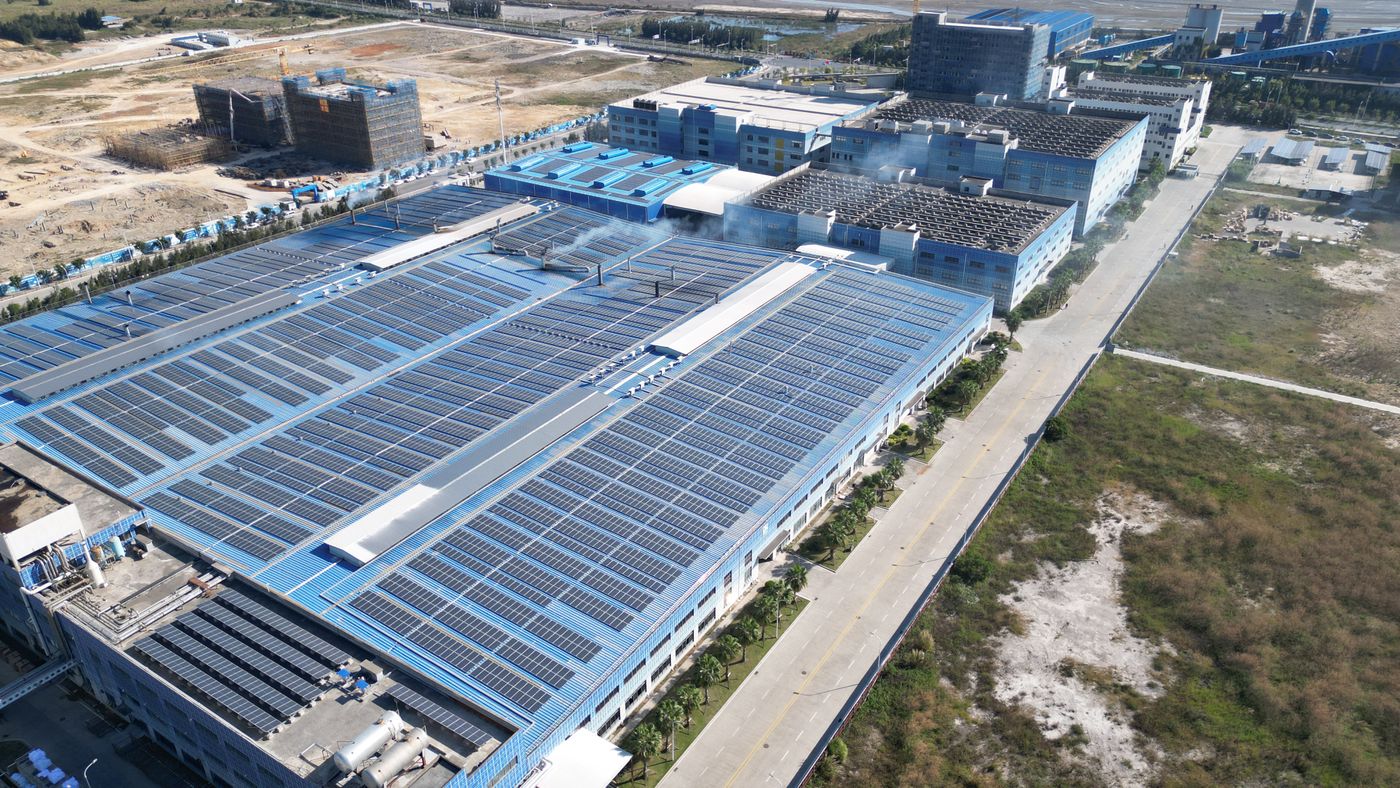
Paired with rooftop or ground-mount PV, the container absorbs midday solar excess that would otherwise be exported at low or even negative prices, then releases it during the evening tariff peak. This matters increasingly in Europe, where negative-price hours have been climbing. As a reference point, mid-sized industrial consumers in France (500–2,000 MWh per year band) paid about €0.130/kWh excluding taxes and levies in the first half of 2026 (Eurostat, 2026) — every kilowatt-hour shifted from a peak tariff to a cheaper stored kilowatt-hour widens the margin.
Microgrid and Diesel-Hybrid Sites
On mining camps, islands, telecom sites and off-grid industrial parks, the container works alongside existing diesel gensets and PV, cutting fuel burn, running hours and maintenance intervals. The product page’s system topology shows the arrangement — solar, grid and genset feeding the container, loads and the cloud platform on the output side, with the EMS automatically deciding when to charge, discharge or hold reserve.
500kWh Container vs the Alternatives
A 500kWh containerized BESS is the pragmatic middle of the storage market: below it, cabinet systems win on granularity; above it, larger containers win on cost per kilowatt-hour — and both diesel and lead-acid lose to LiFePO4 on lifetime operating cost for daily-cycled duty.
| Factor | H098 500kWh Container | Cabinet Systems (e.g. 315kWh) | Larger Containers (1–3MWh) | Lead-Acid Bank |
|---|---|---|---|---|
| Footprint | One 20ft unit, 11.5 t | Indoor/outdoor cabinets | 20ft/40ft units | Large vented battery rooms |
| Daily cycling cost | Low (off-peak/PV charging) | Low | Low | Moderate–high (replacement cycle) |
| Cycle life | 6,000+ LFP cycles | Several thousand LFP cycles | Several thousand LFP cycles | Short under deep daily cycling |
| Deployment | Factory-tested, plug & play | Fast, modular | Factory-tested, plug & play | On-site assembly and commissioning |
| Typical fit | Single mid-size loads, pilot projects, parallel scaling | Step-by-step expansion, indoor space | Multi-MWh plants, longer peaks | Legacy UPS backup only |
See the 150kW/315kWh cabinet ESS for the granular segment, or the 500kW/1MWh, 1MW/2MWh and 1MW/3MWh containers when the peak window is longer than two hours.
Illustrative cost benchmark (based on assumptions, not a quote): BNEF’s Energy Storage Systems Cost Survey 2025 put the global average turnkey BESS price at $117/kWh and stationary-storage pack prices at $70/kWh, down 45% year-on-year. At those global-average benchmarks, 500 kWh corresponds to roughly $35,000 at pack level and about $58,500 turnkey. Actual quotations differ with configuration, certification, freight, duties and volume, so treat these figures as market benchmarks for negotiation, not as a price for this product.
How to Choose the Right 500kWh Containerized BESS
Six checks separate systems that will cycle reliably for a decade from systems that will disappoint in year two.
- Match power to your load, not just energy. Confirm your controllable peak stays under 250 kW (275 kW peak), and check that 502.6 kWh covers your peak window — about two hours at full rating.
- Verify certifications for your market. IEC, UN38.3 (transport), MSDS and RoHS come standard; confirm any additional grid-code or fire-safety documentation your authority requires before ordering.
- Check the thermal design against your climate. The door-mounted air-conditioner layout suits desert, coastal and high-temperature sites; ask for the specified operating temperature range in writing.
- Confirm factory integration and testing. BMS, PCS, EMS, distribution and fire control should be integrated and tested before dispatch, so site scope is limited to the pad, cabling and commissioning.
- Plan the scaling path. H098 containers parallel for larger plants, and Huada Energy builds the same series at 1MWh, 2MWh and 3MWh with OEM/ODM support for EPCs and distributors.
- Model your own tariff. Run the payback with your actual demand charges, peak/off-peak spread and expected cycling — benchmark data is a starting point, not a substitute for your load profile.
Frequently Asked Questions
How much does a 500kWh containerized BESS cost?
Pricing depends on configuration, certification, freight and duties, so suppliers quote per project. As a market benchmark, BNEF’s 2025 cost survey put the global average turnkey BESS price at $117/kWh and stationary pack prices at $70/kWh — a mid-five-figure range at pack level for 500 kWh before integration and logistics. Request a quotation with your load profile for an exact figure.
How long can a 500kWh BESS power a facility?
It depends on the load. At the full 250 kW rating, the 502.6 kWh bank delivers about two hours; at a 100 kW average load it stretches to roughly five hours. Size the container against the specific peak window you need to cover rather than total daily consumption.
Can multiple 500kWh containers work together?
Yes. The H098 supports parallel connection of multiple containers, so a site can start at 500 kWh and scale toward MWh-class capacity by adding units. The rack-mounted modular PCS design also allows the number of PCS modules and battery capacity to be configured for microgrid and other scenarios.
Is LiFePO4 safer than other lithium chemistries for stationary storage?
LiFePO4 chemistry is more thermally stable than NMC and does not rely on cobalt, which is why it dominates stationary storage — around 90% of global battery storage deployments in 2025 used LFP, according to the IEA. The H098 adds layered BMS protection against over-charge, over-discharge, over-current and short circuits, plus fire-control and environmental systems inside the container.
What certifications should I check before importing a BESS container?
At minimum, UN38.3 for transport, MSDS for shipping documentation, and the relevant IEC standards for the system, as the H098 carries. Confirm any destination-specific requirements — grid codes, fire standards and customs rules vary by market — before placing the order.
How long does installation take?
The container ships pre-assembled and factory-tested; the manufacturer states the plug-and-play design cuts on-site construction and commissioning time substantially compared with building a battery room. Site preparation is a concrete pad, AC cabling and commissioning, and the 11,500 kg unit handles like standard container cargo.
About Huada Energy
Huada Energy (Huada New Energy, Huizhou, China) manufactures the H098 containerized BESS series from 500kWh to 3MWh, alongside cabinet ESS units, home storage batteries, 12V/24V LiFePO4 batteries, golf cart lithium batteries, portable power stations and EV charging stations, with OEM/ODM customization for EPC contractors and distributors. Every container ships with BMS, PCS and EMS integrated and factory-tested. To size a 500kWh containerized BESS for your site or to discuss distribution, contact the Huada Energy team.