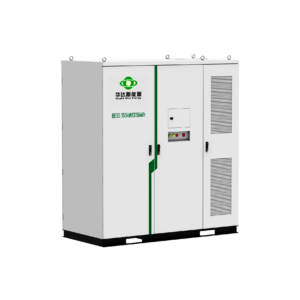
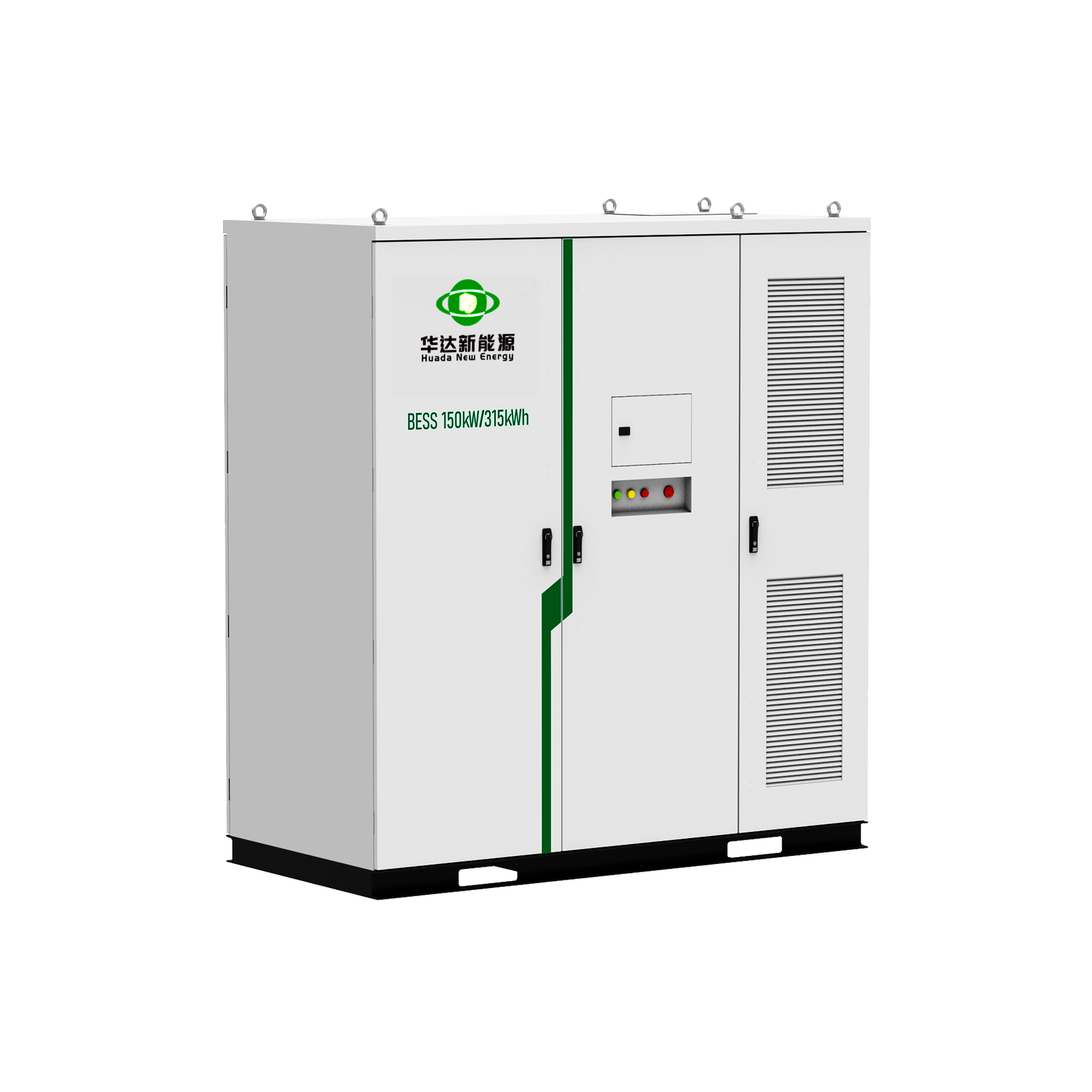
A 315kWh battery energy storage system is the right size for factories, cold-storage sites and EV charging plazas that need roughly two hours of peak-shaving power without the footprint of a shipping container. The Huada Energy H098-315kWh packs 316.4 kWh of LiFePO4 storage and an integrated 150 kW power conversion system into one air-cooled outdoor cabinet of 2.15 × 1.30 × 2.41 metres. This guide decodes its specification sheet — chemistry, C-rate, IP rating, temperature window, certifications — so procurement teams can compare cabinet ESS offers on facts instead of adjectives, and explains why the IEC 62933-5-2:2025 safety standard published in December 2025 now belongs in every tender.
Last updated: 20 October 2026
What Is a 315kWh Battery Energy Storage System?
A 315kWh battery energy storage system is a grid-connected unit that stores 316.4 kWh of electricity in lithium iron phosphate (LiFePO4) cells and returns it as 400 V three-phase AC through an integrated 150 kW power conversion system (PCS). Battery, inverter, battery management system (BMS), energy management and monitoring sit inside one outdoor-rated enclosure, factory-assembled and factory-tested: on site, the installer runs AC cables, connects a PV array or the grid, and commissions.
Inside the H098-315kWh Cabinet
The Huada Energy H098 150kW/315kWh cabinet ESS measures 2153 × 1297 × 2414 mm and weighs 3500 kg, so it lifts into place with standard handling equipment and no civil works beyond a level surface. It shares its envelope with the 215 kWh model in the same H098 platform — the 315 kWh version carries 47% more energy in the same footprint. The platform spans 50, 100, 150, 215 and 315 kWh, so a site can start small and add cabinets as demand grows, with OEM/ODM customization for export projects.
What the Numbers Mean in Practice
Divide rated power by rated energy and you get the C-rate: 150 kW ÷ 316.4 kWh = 0.47C. At rated output the cabinet discharges for about 2.1 hours, so one full cycle shifts roughly 285 kWh from off-peak to peak hours once the system’s round-trip efficiency of around 90% is accounted for — a figure consistent with independent research on modern LFP assets (Ember, 2025). For a plant running two shifts, that flattens the evening demand peak; for a charging plaza, it buffers the chargers against the grid connection limit.
How to Read the Specification: The Numbers That Decide the Deal
The specification table below lists every headline parameter of the H098-315kWh and what each one means for a purchasing decision.
| Parameter | H098-315kWh Value | What It Means for Buyers |
|---|---|---|
| Rated energy | 316.4 kWh | Usable storage per full cycle; sets how much peak electricity you can shift each day |
| Rated power | 150 kW, integrated PCS | Maximum simultaneous discharge; 3P+N+PE, AC 400 V, 50/60 Hz — connects to standard low-voltage industrial distribution |
| C-rate | 0.47C (≈2.1 h at rated power) | A gentle discharge rate that reduces cell stress and supports long service life |
| Cell chemistry | LiFePO4 (LFP) | Thermally stable phosphate chemistry; about 90% of new stationary storage worldwide now uses LFP (IEA, 2026) |
| Ingress protection | IP55, fully sealed outdoor enclosure | Dust-protected and resistant to water jets; installs outdoors without a canopy or machine room |
| Operating temperature | Discharge −20 °C to +55 °C; charge 0 °C to +50 °C | Defines siting and climate limits; charging below 0 °C requires preheating, so verify cold-climate behaviour |
| Thermal management | Air-cooled | No liquid-cooling loop, no coolant top-up, no leak risk; simpler O&M for sites without a dedicated maintenance team |
| PV input | Built-in MPPT, 200–950 V working range, 850 V max, up to 240 kW PV | Commercial rooftop solar connects directly; PV charging and off-peak grid charging run in parallel |
| Communications | RS485 / CAN locally; cloud monitoring remote | Operating data, alarms and energy reports accessible from anywhere; request the API specification if you use a third-party EMS |
| Dimensions / weight | 2153 × 1297 × 2414 mm / 3500 kg | Plan a level, load-bearing surface with clearance for the air-cooling airflow |
| Certifications | IEC 63056, IEC 62477-1, IEC 62933-5-2, IEC 62933-2-1, EN 61000-6, RoHS 2.0, UN 38.3, MSDS, SIRIM · MyHIJAU | Cell, PCS, system, EMC and transport safety plus Malaysia market access — see the breakdown below |
Why LiFePO4 Chemistry Dominates Stationary Storage
LiFePO4 cells trade some energy density for thermal and chemical stability, which matters when a cabinet stands next to a production line for twenty years. The chemistry is now the default for stationary storage: the IEA’s Global Energy Review 2026 reports that LFP accounts for roughly 90% of new battery storage deployments worldwide, and research published by Ember in December 2025 found that modern LFP assets operate for around 20 years at about 90% round-trip efficiency. For buyers, the practical consequence is that lifecycle cost per kWh cycled — not sticker price — is the metric to compare.
Why the 0.47C Rate Is a Feature, Not a Limitation
The C-rate describes how hard the cells work: 0.47C means the full battery discharges in just over two hours. Lower C-rates generate less heat and stress the cell electrodes less, which is one reason air cooling is viable in this product class. Match the rate to your load profile: if your peak lasts two hours — the typical factory afternoon peak — a 0.5C-class cabinet uses its capacity efficiently.
What IP55 and the Temperature Window Really Mean
IP55 decodes as follows: the first 5 means the enclosure is dust-protected, and the second 5 means it withstands water projected by a nozzle from any direction — rain, wash-down spray and coastal humidity in most installations. It does not mean submersion-proof, so avoid placing the cabinet where floodwater can rise. The temperature window is equally practical: discharging works from −20 °C to +55 °C, but charging is specified from 0 °C to +50 °C, so in cold climates the cabinet must warm the cells before accepting charge — ask how preheating works and what it costs in standby consumption.
Certifications Explained: The Standards Behind the Label
The certification list on a cabinet ESS datasheet tells you which independent tests the complete system has passed, and since December 2025 it should include the second edition of IEC 62933-5-2. Published on 9 December 2025, IEC 62933-5-2:2025 defines system-level safety requirements for grid-connected electrochemical energy storage across the entire life cycle — covering fire propagation, chemical release, electrical hazards and enclosure IP guidance (IEC, 2025). Specifying it by edition number closes a loophole where suppliers quote the replaced 2020 edition.
| Standard | Scope | Why It Matters to You |
|---|---|---|
| IEC 63056:2020 | Safety of secondary lithium cells and batteries for electrical energy storage systems up to 1500 V DC; complements IEC 62619 | Confirms the battery itself passed ESS-specific safety tests |
| IEC 62477-1 | Safety requirements for power electronic converter systems (the PCS) | Covers the inverter stage that handles 150 kW continuously |
| IEC 62933-5-2:2025 | System-level safety for grid-integrated electrochemical ESS, whole life cycle (Edition 2, published 9 December 2025) | The most current system-safety benchmark; cite the edition in tenders |
| IEC 62933-2-1 | Unit parameters and test methods for ESS | Defines how rated parameters are measured and verified |
| EN 61000-6 | Electromagnetic compatibility (EMC) for industrial environments | Prevents interference with plant control systems |
| UN 38.3 + MSDS | Transport safety testing for lithium cells and batteries | Required to ship the system legally by air, sea and road |
| SIRIM · MyHIJAU | Malaysian national certification and green-product listing | Market access for Malaysian projects — relevant since the region’s industrial tariffs reward peak shaving |
| RoHS 2.0 | Restriction of hazardous substances | Environmental compliance for the EU and similar markets |
Where the Market Stands in 2026
Global energy storage additions are forecast to reach 158 GW / 459 GWh in 2026, up about 41% from the record 112 GW / 307 GWh installed in 2025 (BloombergNEF, Energy Storage Market Outlook H1 2026). Investment follows the same curve: the IEA’s World Energy Investment 2026 report projects battery storage spending above $100 billion for the first time in 2026, alongside roughly $550 billion of grid investment, up nearly 20% year on year. Costs have moved in buyers’ favour — the global average turnkey price of a battery energy storage system fell 31% to $117/kWh in 2025, and stationary pack prices fell 45% to $70/kWh (BloombergNEF, Energy Storage Systems Cost Survey 2025).
Real-World Applications
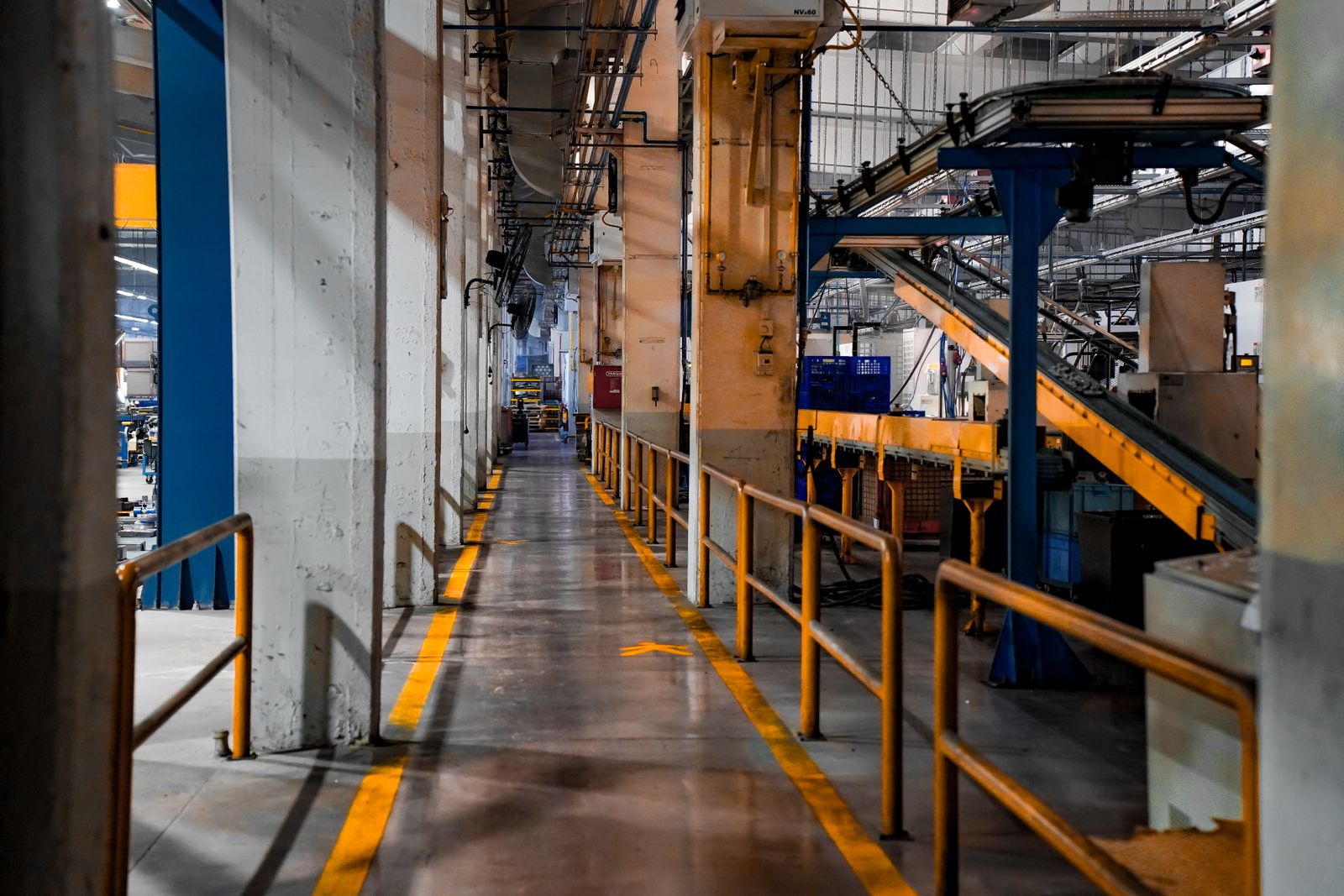
Factory Peak Shaving and Demand Control
A cabinet that charges at the off-peak tariff and discharges across the two-hour afternoon peak attacks both parts of an industrial electricity bill: the energy charge and the demand charge. As an illustration based on assumptions — a $0.15/kWh tariff spread and one cycle per working day — shifting about 285 kWh per day is worth roughly $43 per day, or around $15,600 per year; a demand-charge-heavy site may justify the cabinet on demand reduction alone.
EV Charging Plazas
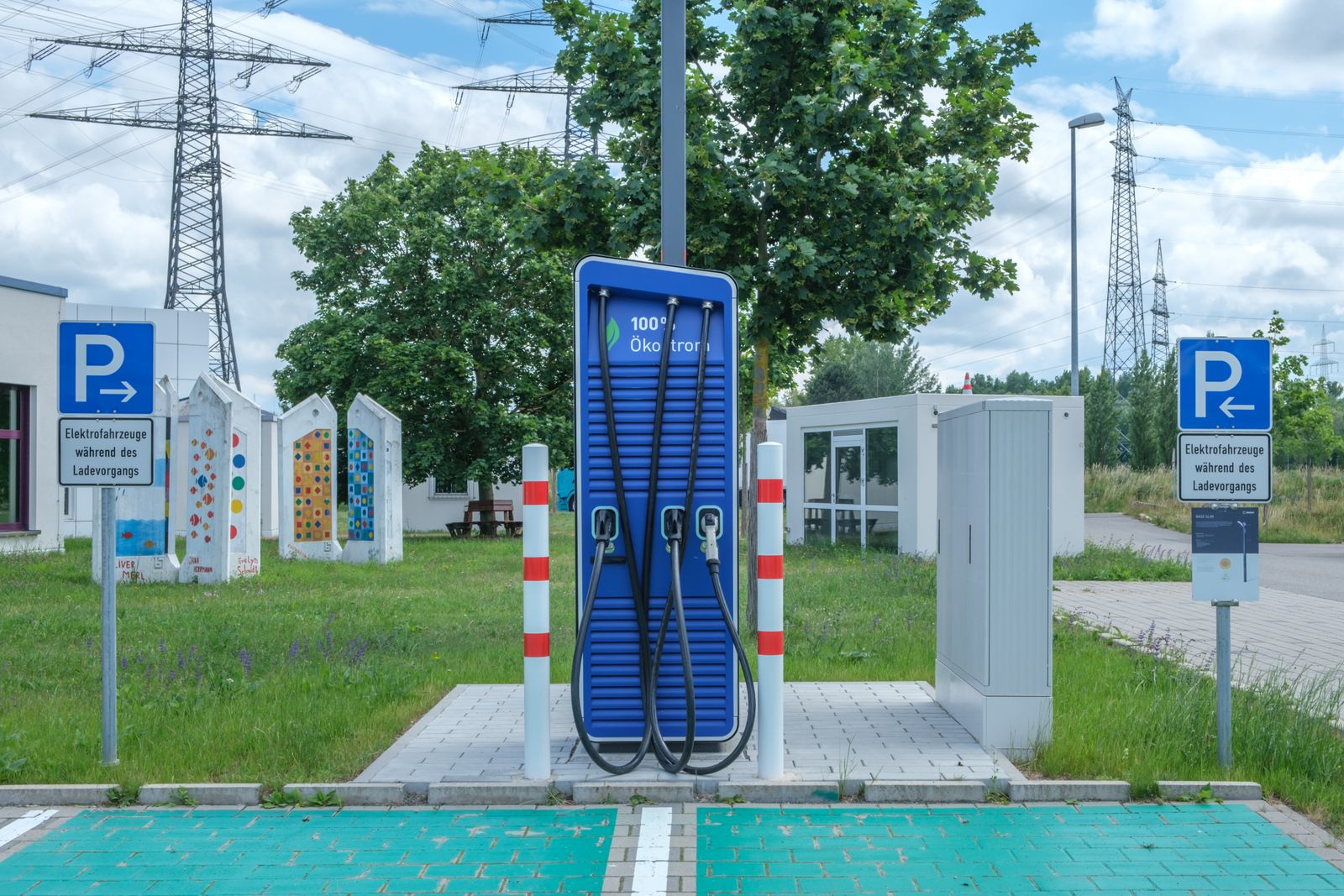
Public DC fast charging often collides with a limited grid connection, and upgrading the connection can cost more than the chargers themselves. A 150 kW battery buffer between the grid and two to four DC fast chargers absorbs the surges, letting the plaza sell more kWh without a transformer upgrade; Huada Energy supplies matching hardware, including the H096 193kWh off-grid EV charging station.
Rooftop Solar Self-Consumption
The built-in MPPT accepts 200–950 V PV input with up to 240 kW of connected solar, so a commercial rooftop array charges the cabinet directly without a separate solar inverter, and PV charging runs in parallel with off-peak grid charging. The energy management system decides the flow automatically — solar first, cheap grid power second, discharge when tariffs peak — raising self-consumption for sites that have both a roof and a daytime load.
Cabinet BESS vs Container BESS vs Diesel Generator
For a two-hour, 150 kW duty the realistic alternatives are a larger containerized BESS or a diesel genset.
| Criterion | Cabinet ESS (H098-315kWh) | Containerized BESS (500kWh–3MWh) | Diesel Generator |
|---|---|---|---|
| Capacity class | 50–315 kWh, single cabinet | 500 kWh to multi-MWh per container | Sized by kVA, unlimited runtime with fuel |
| Installation | Lift and place; no civil works beyond a level base | Crane placement on a concrete pad | Pad, fuel tank, exhaust and noise treatment |
| Emissions on site | None | None | Exhaust fumes and CO2 at the point of use |
| Noise | Fan noise only | HVAC noise | High; often restricted near offices or housing |
| Fuel logistics | None | None | Continuous delivery, storage and quality control |
| O&M | Air-cooled: no coolant circuit, remote monitoring via cloud | Liquid-cooled or HVAC: planned maintenance recommended | Oil, filters, load testing, fuel polishing |
| Typical role | Daily peak shaving, solar self-consumption, backup for selected loads | Multi-hour arbitrage, large solar plants, utility-scale | Emergency backup only, not daily cycling |
On cost, diesel electricity typically costs several times more per kWh than off-peak grid charging once fuel, delivery and maintenance are counted, which is why gensets increasingly serve as rare-event backup while batteries handle daily cycling. Total cost of ownership depends on cycles per day and tariff spread, so model both before comparing quotations.
How to Choose the Right Cabinet ESS
A structured checklist keeps cabinet comparisons objective across suppliers:
- Size from data: export one month of 15-minute interval load data and confirm the peak’s duration and magnitude before fixing capacity.
- Match C-rate to the peak: a two-hour peak fits a 0.5C-class cabinet like the H098-315kWh; shorter spikes need power-optimised units.
- Confirm chemistry and system safety: specify LFP cells and cite IEC 62933-5-2:2025 (Edition 2) by name in the tender.
- Check enclosure and climate fit: IP55 for outdoor installation; verify charge-temperature behaviour for cold sites.
- Verify destination-market certification: SIRIM/MyHIJAU for Malaysia, CE/EN standards for Europe, UN 38.3 for shipping everywhere.
- Plan for growth: a platform offering 50–315 kWh in one footprint lets capacity follow demand without redesign.
- Interrogate the software: ask for the cloud-monitoring demo and API documentation before signing.
Frequently Asked Questions
How long can a 315kWh battery energy storage system power a factory?
At its rated output of 150 kW, the H098-315kWh discharges for about 2.1 hours. At lighter loads it runs proportionally longer — roughly six hours at 50 kW — though usable energy depends on the depth-of-discharge settings configured in the energy management system.
What is the difference between air-cooled and liquid-cooled BESS?
Air-cooled systems like the H098-315kWh remove heat with fans, which means no coolant loop, no pumps and no leak risk, keeping maintenance simple for sites without a dedicated O&M team. Liquid-cooled systems move more heat and suit high C-rate utility-scale containers, but add cost and a coolant circuit to maintain. For 0.5C-class C&I duty, air cooling is a proven design choice.
What does IP55 mean for an outdoor battery cabinet?
IP55 means the enclosure is dust-protected and withstands water jets from any direction, so the cabinet installs outdoors in rain and coastal humidity without a canopy or equipment room. It is not submersion-rated, so the installation site should stay above any possible flood level.
Which certifications should a C&I storage cabinet have in 2026?
Ask for cell-level safety under IEC 63056 (with IEC 62619), PCS safety under IEC 62477-1, system safety under IEC 62933-5-2 — citing the 2025 Edition 2 — plus IEC 62933-2-1, EMC under EN 61000-6, and UN 38.3 for transport. The H098-315kWh carries all of these together with SIRIM and MyHIJAU for Malaysia and RoHS 2.0 for the EU.
Can the H098-315kWh connect directly to rooftop solar?
Yes. A built-in MPPT accepts 200–950 V of PV input with up to 240 kW of connected solar, so commercial rooftop panels charge the cabinet without an additional solar inverter, and PV charging runs in parallel with off-peak grid charging.
How does a 315kWh cabinet compare with a 500kWh container?
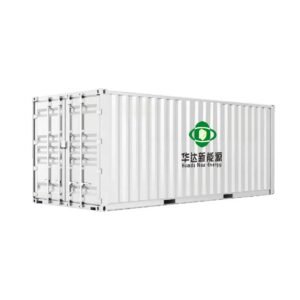
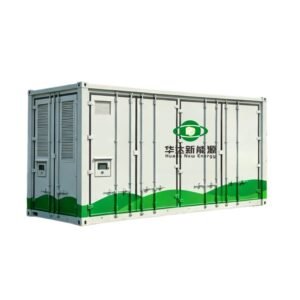
The 315kWh cabinet serves sites that need up to about 150 kW for around two hours with the simplest installation, while the H098 250kW/500kWh containerized BESS doubles both power and energy for larger loads or longer peaks. Both share the H098 platform approach of factory-assembled, factory-tested delivery, so the choice comes down to your measured peak profile.
About Huada Energy
Huada Energy (Huada New Energy, Huizhou, China) manufactures LiFePO4 battery systems across the C&I and residential range: cabinet and containerized energy storage from 50 kWh to multi-MWh, home storage batteries, 12V/24V LiFePO4 batteries, golf cart batteries, portable power stations and EV charging stations. The H098 cabinet platform spans 50 to 315 kWh in one footprint, ships factory-tested with OEM/ODM customization for export, and carries certifications including IEC 62933-5-2:2025, IEC 63056 and SIRIM/MyHIJAU. To size a cabinet for your load profile, contact the Huada Energy team — related reading includes the 100kW/215kWh cabinet ESS from the same platform.