Last updated: 21 October 2026
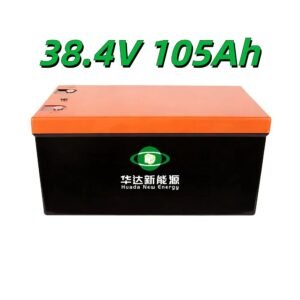
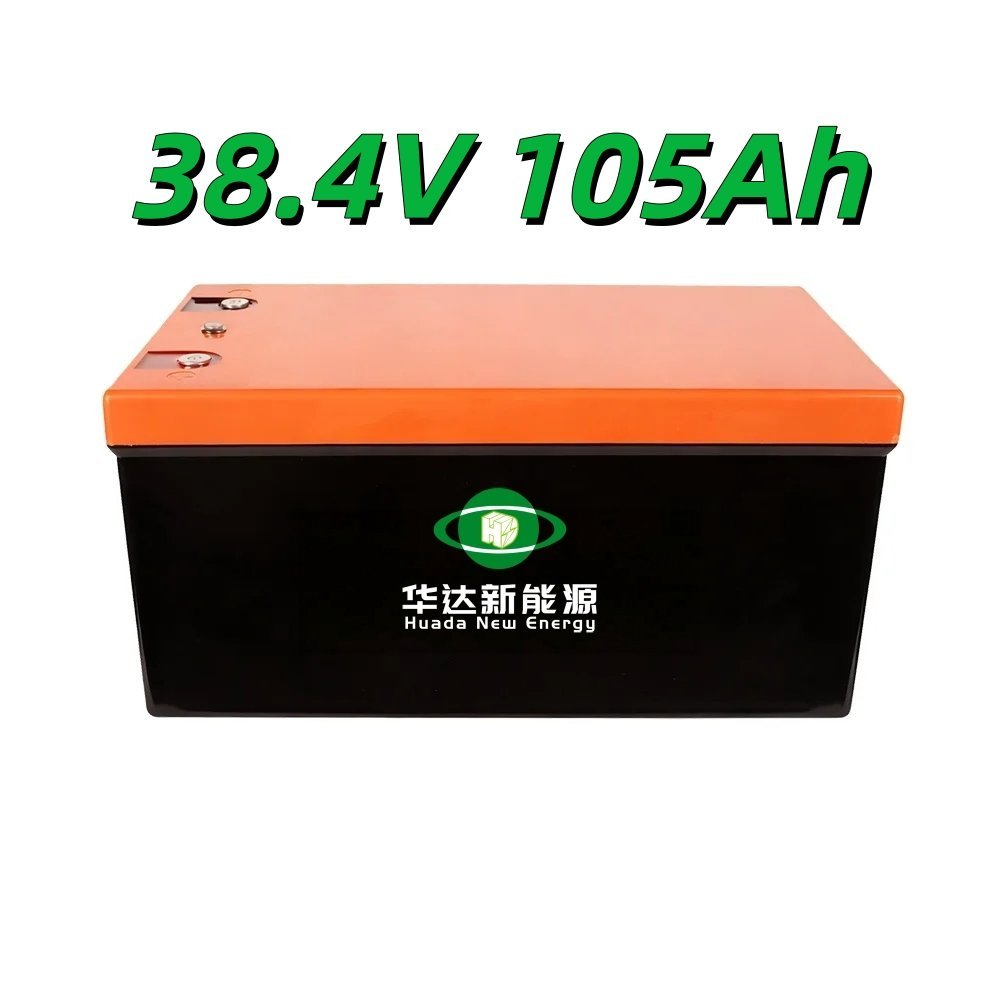
A 38.4V 105Ah LiFePO4 golf cart battery is a drop-in lithium replacement for a 48V lead-acid golf car pack, delivering 4,032 Wh of nominal energy, 200 A continuous discharge and 400 A for 35 seconds of climbing load. The hudanewenergy unit weighs about 31.7 kg and fits a 520 × 268 × 220 mm tray. This guide explains which duty cycles it suits and where a 51.2V pack or a lead-acid bank remains the more sensible choice.
What Is a 38.4V 105Ah Golf Cart Battery?
It is a 12-cell lithium iron phosphate (LiFePO4) pack that replaces a lead-acid golf cart battery bank, with an integrated battery management system (BMS) handling protection and communication. Nominal voltage is 38.4 V (3.2 V × 12), nominal capacity 105 Ah ±5% at 0.5C, and nominal energy 4,032 Wh.
Golf cars are conventionally wired for a 48 V nominal system, but a lead-acid pack sags well below that figure under load; hudanewenergy specifies this 38.4 V LFP pack as a drop-in replacement for lead-acid packs in golf carts and sightseeing vehicles, so the existing motor and controller normally accept it unchanged. If your controller and charger were built around a true 51.2 V lithium system, a 51.2V 105Ah golf cart battery is the correct part.
Three specification details decide whether a swap works:
- Charge voltage of 43.8 V. This is the charger’s absorption target. A charger locked to a 48 V lead-acid profile will undercharge or overcharge the pack.
- Discharge cutoff of 33.6 V. The controller’s low-voltage cutout should sit at or below this, or the cart will shut down early.
- UART communication. The BMS exposes charge and cell data over UART, readable without opening the case.
Why Golf Fleet Operators Are Moving to LFP Now
Golf fleet operators are moving to LFP because lithium packs now cost close to their long-run floor, narrowing the premium over lead-acid to the smallest gap in a decade. BloombergNEF’s price survey put the average lithium-ion pack at $108/kWh in 2025 and projected $105/kWh for 2026, citing the shift to lower-cost, safer LFP chemistry as a main driver (BloombergNEF, 2025). The 2010 figure was near $1,500/kWh.
That cost movement meets a steady replacement queue. The National Golf Foundation counted about 16,000 US courses at 14,000 facilities at the end of 2025, with record rounds played in four of the previous five years (NGF, 2025). More rounds per course means more cart hours per battery — where chemistry choice shows up in a maintenance budget.
Two regulatory currents push the same way. In the European Union, Regulation (EU) 2023/1542 classifies a sealed traction battery of 25 kg or less built for a wheeled vehicle as an LMT battery, with BMS requirements applying from 18 August 2024 and carbon-footprint declarations phased from 18 August 2028 (European Commission, 2023). In the United States, the Section 301 four-year review raised the tariff on non-EV lithium-ion batteries, which covers this category, from 7.5% to 25% effective 1 January 2026 (USTR, 2024). Landed cost therefore depends on production route, not only the ex-works quote.
Key Specifications and What They Mean in Service
Peak discharge current matters more than capacity on a golf cart, because a loaded cart climbing a fairway incline draws far more than its cruising current. This pack supports 200 A continuous, 400 A for 35 seconds and a 600 A three-second peak.
| Parameter | Value | What it means in service |
|---|---|---|
| Chemistry | LiFePO4 (LFP) | Thermally stable cathode; no cobalt or nickel |
| Nominal voltage | 38.4 V | Same class as a 48 V lead-acid bank; verify controller |
| Nominal capacity | 105 Ah ±5% (25 °C, 0.5C) | About 4 kWh nameplate per cart |
| Nominal energy | 4,032 Wh | Roughly 3,600 Wh usable at 90% depth of discharge |
| Charge voltage | 43.8 V | Charger absorption target |
| Discharge cutoff | 33.6 V | Cross-check the controller cutout |
| Standard / max charge current | 20 A / 50 A | About 5 hours full, about 2 hours for 0–80% |
| Continuous discharge | 200 A | Sustains hill climbs and loaded launches |
| Max discharge | 400 A for 35 s; 600 A for 3 s | Covers start-up surge on an incline |
| Shell | Plastic, impact-resistant | Suited to open-sided cart shelters |
| Weight | About 31.7 kg | Lighter than an equivalent lead-acid bank |
| Dimensions | 520 × 268 × 220 mm ±2 mm | Standard tray footprint |
| Cycle life | ≥80% capacity at rated cycle count (25 °C, 20 A protocol) | Manufacturer-stated test basis |
| Self-discharge | ≤5% per month at 25 °C | Idle carts start after a quiet month |
| Communication | UART | Fleet telematics or service laptop access |
| Charge temperature | 0–10 °C 30 A; 10–20 °C 20 A; 20–40 °C 50 A; 40–55 °C 30 A | Cold-morning charging is slower by design |
| Discharge / storage | −20 to 55 °C / −30 to 55 °C short term, −10 to 45 °C over a month | Long storage in a hot shed shortens life |
The reading of that table: 4,032 Wh at 90% depth of discharge yields about 3,628 Wh of working energy. A 48 V 170 Ah lead-acid bank stores 8,160 Wh but is commonly cycled to 50% to protect plate life, yielding roughly 4,080 Wh. The lead-acid bank carries twice the nameplate energy for a similar working range — at twice the weight, plus watering and terminal cleaning.
Real-World Applications
This pack suits duty cycles that combine short distances, frequent starts and a predictable overnight recharge window, and most golf cart battery demand falls into four patterns.
Golf course fleets
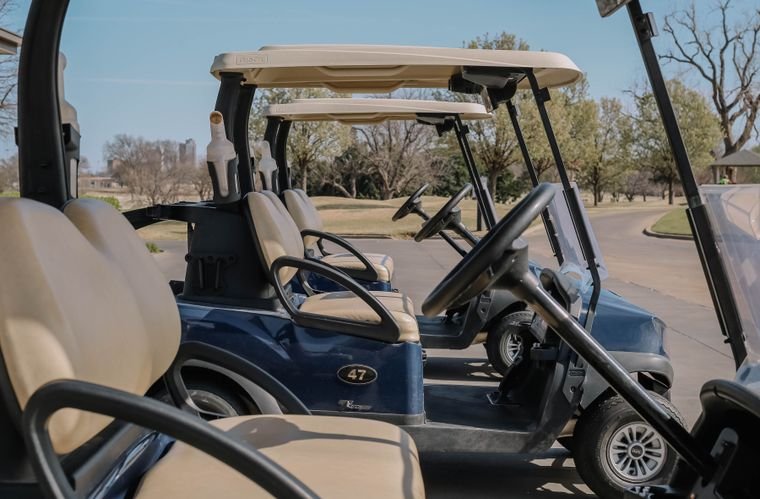
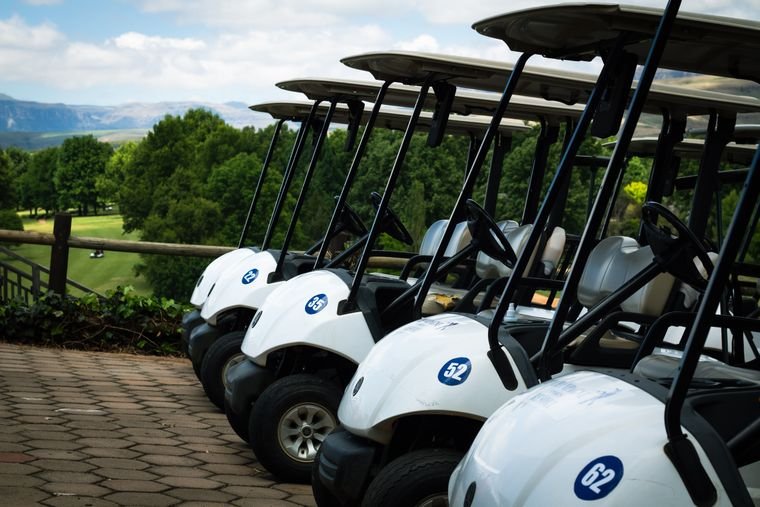
A course cart typically covers 2–5 km per loop with dozens of stops. That profile rewards the 200 A continuous rating on steep fairway transitions and the 43.8 V recharge target a single charger can service across a 20–40 cart fleet. Because the pack needs no watering, the labour saving is a scheduled line item removed from every cart, every month.

Resort and scenic-vehicle shuttles
A resort shuttle runs longer hours with more passengers, often in humid coastal air. The relevant specs are the −20 to 55 °C discharge window and the absence of lead-acid gassing, which matters when vehicles charge in enclosed bays. Size the fleet so each vehicle’s route fits one recharge at 50 A.

Gated communities and campus patrol
Community and campus duty is defined by unpredictability: many short trips, shared chargers, vehicles idle for days. Self-discharge of ≤5% per month means an idle cart still starts after a quiet week, and 50 A maximum charge current allows a mid-shift top-up. Where a site must also charge visitor EVs, a 60–240 kW CCS2 DC fast charging station or an off-grid 193 kWh EV charging station belongs in the same plan.
Light utility and low-speed vehicle duty
Grounds crews and low-speed routes under 40 km/h share one requirement: the pack must fit the existing tray. At 520 × 268 × 220 mm it drops into the space left by a conventional bank, and the 600 A three-second peak covers the start-up surge of a loaded utility bed. Lighter utility carts can use a 24V 200Ah LiFePO4 battery.

38.4V 105Ah LFP vs Lead-Acid
LFP wins on total cost of ownership in high-cycle fleets, while lead-acid remains cheaper to buy and adequate for very low-use carts. The honest comparison is cost per delivered kilowatt-hour over the fleet’s real annual hours.
| Criterion | 38.4V 105Ah LFP | 48V lead-acid bank |
|---|---|---|
| Nominal stored energy | 4,032 Wh | About 8,160 Wh (48 V × 170 Ah) |
| Practical depth of discharge | 90% | 50% by common practice |
| Working energy per charge | About 3,628 Wh | About 4,080 Wh |
| Weight | About 31.7 kg | Two to three times heavier for equal working energy |
| Routine maintenance | Terminal checks only | Watering, terminal cleaning, ventilated charging |
| Charge time to 80% | About 2 hours at 50 A | Several hours, limited by the lead-acid profile |
| Cold charging | Current derated by temperature band | Reduced acceptance at low temperature |
| Data visibility | UART BMS telemetry | None without added hardware |
| Upfront cost | Higher | Lower |
A worked example based on assumptions rather than quoted prices: a 30-cart course running 300 days a year, replacing LFP every six years and lead-acid every two. Over six years the LFP fleet buys 30 packs once; the lead-acid fleet buys 90 across three rounds, plus roughly 72 monthly watering visits per round. Re-run this with your own tariff — the direction holds, the magnitude does not.
Lead-acid still makes sense for carts used a few hours weekly, sites without reliable charging power, and markets where duty and freight push lithium landed cost beyond the payback horizon.
How to Choose the Right Golf Cart Battery
The right battery is the one whose voltage, cutoff and charge current match the vehicle’s controller and charger — capacity comes second. Work through this list before requesting a quote.
- Confirm the voltage class. A 38.4 V LFP pack suits 48 V lead-acid replacement duty; a native 51.2 V lithium system needs the 51.2V 105Ah pack.
- Check the charger. It must be settable to 43.8 V absorption; a charger locked to a lead-acid profile is the most common cause of a failed conversion.
- Check the controller cutoff. The pack cuts off at 33.6 V; the controller should not stop earlier.
- Measure the tray. The case is 520 × 268 × 220 mm ±2 mm, without the handle.
- Size to the shift, not the spec sheet. Estimate daily kilometres, average load and recharge window; split marginal duty across two carts.
- Plan for temperature. Charging is derated below 20 °C, so a cold-climate site needs a heated bay or a longer window.
- Ask for the cycle-life test report. hudanewenergy states ≥80% retention at the rated cycle count under a defined protocol; request the report.
- Decide on OEM or ODM. Private-label shells, connectors, BMS firmware and UART protocol can be customised; confirm MOQ and tooling lead time first.
Frequently Asked Questions
Can a 38.4V 105Ah LiFePO4 battery replace the lead-acid batteries in my golf cart?
Yes, hudanewenergy specifies this pack as a drop-in replacement for lead-acid golf cart packs, provided the charger is set to 43.8 V absorption and the controller’s low-voltage cutout sits at or below 33.6 V. The 520 × 268 × 220 mm footprint matches a conventional tray. Confirm the controller and charger first, because those components decide whether the swap succeeds.
How long does a 38.4V 105Ah golf cart battery last?
hudanewenergy rates this pack above 6,000 deep cycles with ≥80% capacity retention at a defined 20 A charge/discharge protocol at 25 °C. A cart cycling once a day reaches that count over many seasons, while calendar ageing and high storage temperatures shorten it. Storing at −10 to 45 °C keeps the figure realistic.
How long does it take to charge?
A full charge takes about five hours at the 20 A standard rate, or roughly two hours for a 0–80% top-up at 50 A. Below 20 °C the permitted current drops by band — 30 A at 0–10 °C and 20 A at 10–20 °C — so cold-morning charging is intentionally slower.
Is a 38.4V pack as powerful as the 48V lead-acid system it replaces?
It delivers comparable working energy with a higher usable depth of discharge: about 3,628 Wh usable from 4,032 Wh stored, against roughly 4,080 Wh from an 8,160 Wh lead-acid bank. Under load, 200 A continuous and a 600 A three-second peak hold output while lead-acid voltage sags.
Can hudanewenergy customise the battery for our brand or vehicle platform?
Yes, hudanewenergy supports OEM and ODM programmes covering case labelling, connector type, BMS firmware, UART protocol and pack configuration. Custom work starts from a specification review, so include controller details, charger model and daily duty cycle in the first enquiry.
How should the battery be stored between seasons?
Store at 30–70% state of charge — the 38–39.6 V delivery voltage corresponds to that window — in a dry space between −10 and 45 °C, topping up every few months to offset the ≤5% monthly self-discharge. Do not store it fully charged in a hot shed or fully discharged.
About hudanewenergy
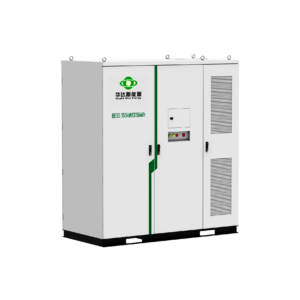
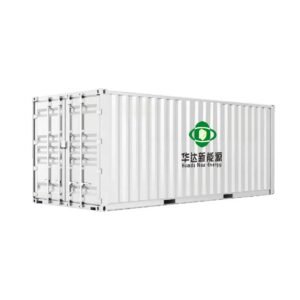
hudanewenergy is the export brand of Huizhou Huada Technology Co., Ltd., a lithium battery manufacturer in Huizhou, Guangdong, China, producing LiFePO4 packs for golf carts, low-speed vehicles, home storage, portable power stations and containerised commercial energy storage. The range spans 12 V to 51.2 V packs, 2.5 kWh to 3.6 kWh portable power stations, and cabinet and containerised battery energy storage systems, all built around LFP cells with integrated BMS protection.
Send the controller model, charger model, daily route and tray dimensions for a specification review, and the team will confirm whether the 38.4V 105Ah LiFePO4 golf cart battery fits.
Sources
- BloombergNEF, Battery Price Survey (2025 result, 2026 projection), reported December 2025.
- National Golf Foundation, Golf Industry Facts and year-end course count (2025).
- European Commission, Regulation (EU) 2023/1542 on batteries and waste batteries (2023).
- USTR, Section 301 four-year review (2024); non-EV lithium-ion battery tariff effective 1 January 2026.
- hudanewenergy product datasheet, 38.4V 105Ah LiFePO4 golf cart battery (2025).
Image credits: Product photograph — hudanewenergy. Application photographs — Pexels under the Pexels License (free commercial use, no attribution required): 37721061, 9207084, 20121807, 13655868, 31688476. Charts and diagrams — original work by hudanewenergy, 2026.
Last updated: 21 October 2026