Guia da Bateria LiFePO4 12V 200Ah: Mercado e Especificações 2026
O Bateria LiFePO4 12V 200Ah tornou-se a atualização padrão para compradores que ainda utilizam baterias de chumbo-ácido de ciclo profundo em RVs, barcos, sistemas solares e energia de reserva. Uma única unidade huadaenergy 12V 200Ah armazena 2.560 Wh de energia utilizável, oferece mais de 8.000 ciclos a 0,2C e encaixa no mesmo espaço e faixa de tensão da bateria de chumbo-ácido que substitui. Este guia analisa dados de mercado verificados de 2026, as especificações que realmente importam, as certificações a confirmar antes da importação e como os números se comparam com o chumbo-ácido ao longo de toda a vida útil.
Última atualização: 31/10/2026
O que é uma Bateria LiFePO4 12V 200Ah?
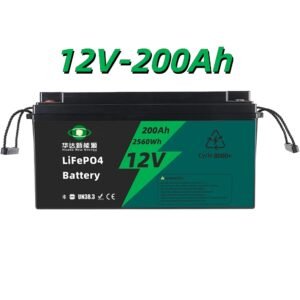
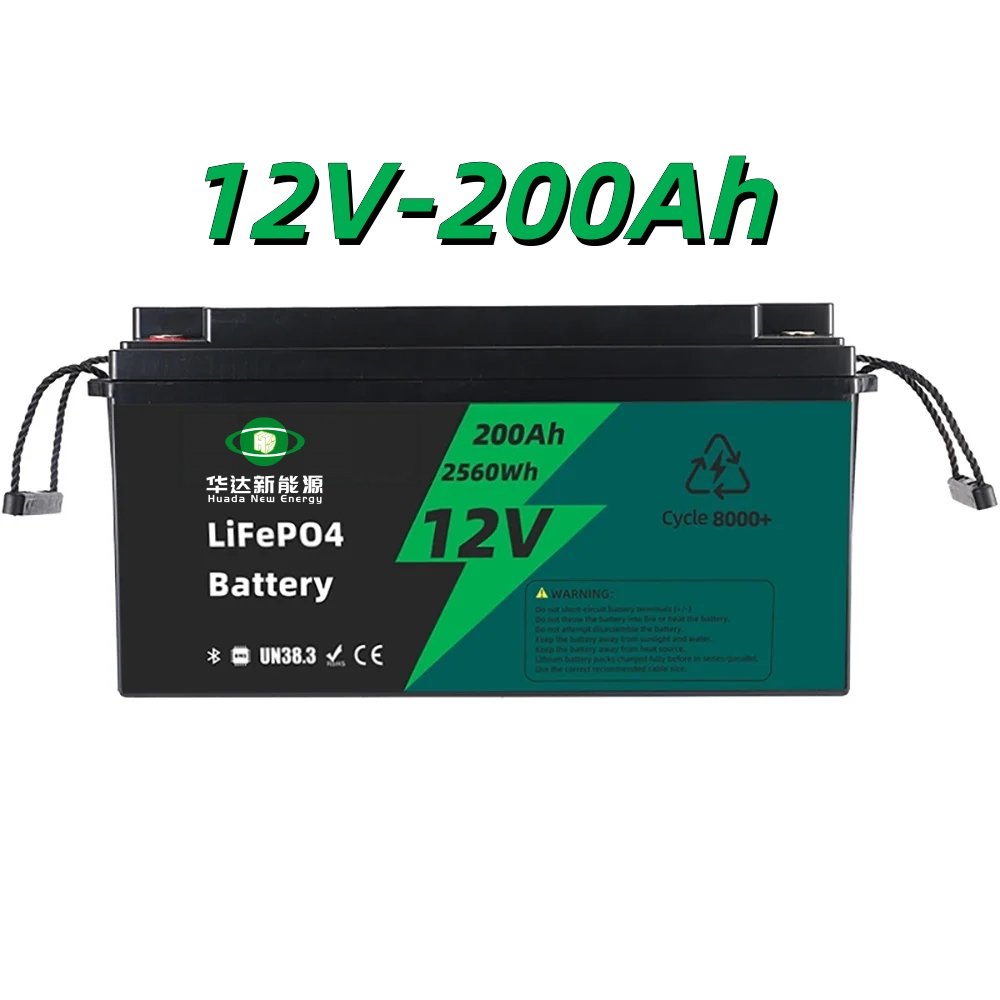
Uma bateria LiFePO4 12V 200Ah é uma bateria de lítio de ciclo profundo de 12,8 volts e 2.560 watts-hora, construída a partir de quatro células prismáticas LiFePO4 em série (4S1P) com um sistema de gerenciamento de bateria integrado, acondicionada em uma caixa compatível com chumbo-ácido. A versão huadaenergy mantém o mesmo tamanho de instalação e perfil de carregamento de uma bateria de chumbo-ácido 12V, de modo que a maioria dos carregadores, inversores e compartimentos de bateria a aceita sem modificação.
Células prismáticas Grade-A conferem ao pack uma resistência interna de 35 mΩ ou menos. Os terminais M8 suportam 200 A de corrente de descarga contínua e 400 A em pulsos de até 3 segundos, suficiente para inversores de 2.000–3.000 W sem queda de tensão. O pack pesa cerca de 22 kg — aproximadamente metade de uma bateria de chumbo-ácido comparável — e mantém a carga em armazenamento, perdendo no máximo 3,5% por mês a 25°C. O monitoramento por Bluetooth permite aos usuários verificar o estado de carga e a saúde das células pelo telefone, e a carcaça IP55 resiste a poeira e jatos de água em compartimentos de RV e armários externos. Compradores que precisam de uma opção mais leve podem comparar a Bateria LiFePO4 de 12V 100Ah da mesma plataforma.
Perspectiva de Mercado 2026: Por Que a Demanda por Substituição de Chumbo-Ácido Continua Crescendo
O mercado de baterias LiFePO4 12V está crescendo a quase 19% ao ano porque os preços dos packs de lítio continuam caindo enquanto a base instalada de sistemas de chumbo-ácido envelhecidos continua gerando demanda de substituição. Três pontos de dados verificáveis de forma independente descrevem a oportunidade:
- Tamanho do segmento: A PW Consulting avalia o mercado global de baterias LiFePO4 12V em USD 3,41 bilhões em 2025, com projeção de atingir USD 11,52 bilhões até 2032 — um CAGR de 18,96%. A classe de capacidade de 100–200Ah foi o maior segmento, com 48% da receita de 2025, e os veículos recreativos foram a maior aplicação, com 33% (PW Consulting, 2026).
- Onda de substituição: A Global Info Research dimensiona o segmento LiFePO4 de substituição de chumbo-ácido especificamente em USD 2,35 bilhões em 2025, subindo para USD 9,2 bilhões até 2032 — um CAGR de 21,5% (Global Info Research, 2026).
- Vento favorável de custos: A Pesquisa de Preços de Baterias 2025 da BloombergNEF colocou os preços médios de packs de íons de lítio em uma mínima recorde de USD 108/kWh, com packs LFP a uma média de USD 81/kWh e preços 93% menores em termos reais desde 2010 (BloombergNEF, dezembro de 2025).
A demanda regional está concentrada onde a base instalada de chumbo-ácido é maior: a PW Consulting estima a América do Norte em cerca de USD 920,8 milhões e a Europa em cerca de USD 784,4 milhões da receita de 2025. Uma nuance importante para distribuidores: o próprio mercado de RVs dos EUA deve esfriar, com a previsão RoadSigns de Outono de 2026 da RVIA projetando aproximadamente 290.000 unidades no atacado em 2026, uma queda de 15,3% em relação às 342.220 unidades enviadas em 2025. Um mercado de novas construções mais fraco não reduz a oportunidade de baterias — ele a desloca para a substituição no mercado de reposição da frota existente, exatamente o segmento onde as baterias de lítio drop-in 12V 200Ah vencem.
Especificações Principais e o que Elas Significam
A tabela de especificações abaixo lista os parâmetros publicados da bateria LiFePO4 huadaenergy 12V 200Ah e o que cada um significa na operação diária.
| Parâmetro | Valor | O que Significa para os Compradores |
|---|---|---|
| Tensão nominal | 12,8V (4S1P) | Compatível com carregadores e inversores de chumbo-ácido 12V |
| Capacidade / energia | 200Ah / 2.560Wh | O dobro da energia utilizável de uma unidade de 100Ah |
| Vida útil do ciclo | 8.000+ a 0,2C até 80% da capacidade | Anos de ciclagem diária; 5–13x o típico de chumbo-ácido |
| Resistência interna | ≤35 mΩ | Tensão estável sob carga pesada |
| Corrente de descarga | 200A contínua / 400A em pulso (<3s) | Opera inversores grandes e cargas de motor |
| Carregamento | CC/CV até 14,6V, 0–45°C, máx. 200A | Funciona com perfis padrão de carregadores de chumbo-ácido |
| Temperatura de descarga | −20°C a 60°C | Uso de ciclo profundo em todas as estações |
| Autodescarga | ≤3,5% por mês a 25°C | Pronta após armazenamento sazonal |
| Peso / dimensões | ~22 kg / 480 × 170 × 240 mm | Cerca de metade do peso do chumbo-ácido equivalente |
| Proteção / monitoramento | Carcaça IP55, BMS integrado, Bluetooth | Resistente a poeira e respingos; monitoramento por aplicativo |
| Certificação | UN38.3, CE | Transporte aéreo/marítimo e acesso ao mercado da UE |
Dois números merecem atenção extra. Primeiro, a classificação de 8.000 ciclos é especificada com carga e descarga a 0,2C até o pack atingir 80% da capacidade original — uma condição realista de ciclagem diária, não um ideal de laboratório. Segundo, a classificação de 80% de profundidade de descarga significa que os compradores podem planejar cerca de 2.048 Wh por ciclo, enquanto os sistemas de chumbo-ácido são tipicamente limitados a cerca de 50% de profundidade de descarga para evitar sulfatação.
Aplicações no Mundo Real
O formato 12V 200Ah é adequado para qualquer serviço de ciclo profundo onde uma bateria de chumbo-ácido costumava ser a escolha padrão. Quatro cenários cobrem a maioria das consultas que a huadaenergy recebe.
RVs e Camper Vans
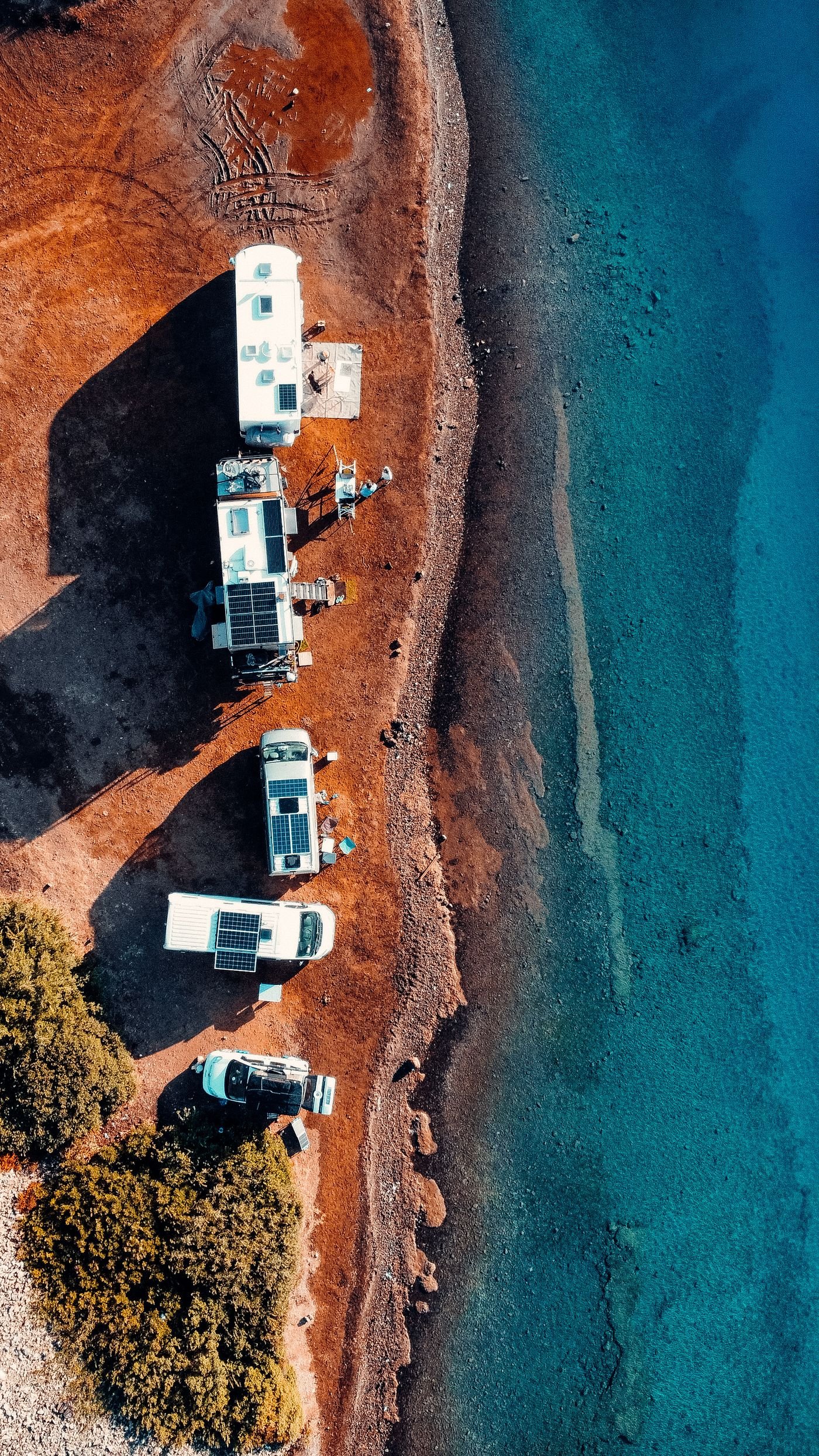
Uma única bateria 12V 200Ah fornece aproximadamente 2 kWh por ciclo para iluminação, geladeiras, inversores e carregamento de telefone — suficiente para um fim de semana off-grid sem recarga. Com 22 kg, é leve o suficiente para uma pessoa instalar, e o monitoramento por Bluetooth elimina suposições sobre a autonomia restante. Com 342.220 RVs enviados nos EUA em 2025 (RVIA, dezembro de 2025), o mercado de baterias de reposição por trás dessa frota é substancial.
Solar e Cabines Off-Grid
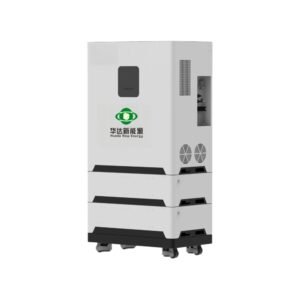
For small solar systems, two or four units in 12V or 24V banks store daytime generation for evening use. Buyers scaling up beyond 12V usually move to the Bateria LiFePO4 de 24V 200Ah or step into a wall-mounted 10kWh stackable home battery for whole-house backup. The 80% usable depth of discharge effectively doubles the capacity a same-size lead-acid bank can deliver.
Marine House Power
IP55 sealing and the absence of liquid acid make the pack a safe house-battery upgrade for sailing and fishing boats, where spilled electrolyte and hydrogen venting are real safety concerns. Low self-discharge keeps the bank ready between trips, and the 400 A pulse rating handles windlass and thruster start-up currents.
Telecom and UPS Standby
Remote telecom sites and small UPS systems run float duty for years. The ≤3.5% monthly self-discharge, sealed IP55 casing and sealed shipping carton make the 12V 200Ah a practical retrofit for sites where maintenance visits are expensive. The larger Bateria LiFePO4 de 24V 100Ah covers higher-voltage DC buses in the same product family.
12V 200Ah LiFePO4 vs Lead-Acid: Lifetime Cost
Over a full service life, the lithium option delivers far more energy per dollar despite a higher purchase price. The comparison below uses the huadaenergy product page figures and industry-typical lead-acid assumptions.
| Item | Huada 12V 200Ah LiFePO4 | Chumbo-Ácido (mesmo tamanho) |
|---|---|---|
| Vida útil em ciclos até 80% da capacidade | 8,000+ (0.2C) | Tipicamente 500–1.500 |
| Profundidade de descarga utilizável | 80% (~2,048 Wh/cycle) | ~50% (~1,200 Wh/cycle) |
| Peso | ~22 kg | ~45 kg or more |
| Self-discharge (25°C) | ≤3.5% per month | Significativamente superior |
| Manutenção | Nenhuma — totalmente selada | Periodic checks and topping-up |
| Estimated lifetime throughput | ~16 MWh | ~0.6–1.8 MWh |
On these assumptions the LiFePO4 pack delivers roughly 13 times more usable energy before replacement, which is why total cost per delivered kilowatt-hour falls well below lead-acid even when the upfront price is two to three times higher. Exact economics depend on local prices and duty cycle, so treat the throughput figures as planning values rather than guarantees.
Certifications Explained: UN38.3, CE and IP55
The huadaenergy 12V 200Ah LiFePO4 battery is listed on its product page with UN38.3 and CE certification, and those two certificates deserve a closer look because they gate transport and EU market access.
UN38.3 is the United Nations transport test series (tests T.1–T.8: altitude, thermal, vibration, shock, external short circuit, impact/crush, overcharge and forced discharge) that every lithium battery must pass before it can ship as air or sea cargo. Certified packs travel as Class 9 dangerous goods with test summaries included — essential for importers arranging freight.
CE confirms conformity with the applicable EU legislation, and for batteries the governing framework is Regulation (EU) 2023/1542. Its compliance calendar keeps tightening:
| EU 2023/1542 Milestone | Data | Relevance for 12V LFP Buyers |
|---|---|---|
| Conformity and CE marking requirements apply | 18 de ago. de 2024 | Batteries placed on the EU market must comply |
| New labelling requirements | 18 de ago. de 2026 | Capacity, chemistry and separate-collection marks |
| QR code and battery passport for applicable batteries | 18 de fev. de 2027 | Digital record linked to the pack |
| Carbon footprint rules for LMT batteries | 18 de ago. de 2028 | Extends to light-means-of-transport packs |
IP55, per IEC 60529, means the enclosure is dust-protected and withstands low-pressure water jets from any direction — appropriate for battery bays, engine rooms and outdoor cabinets, though not for submersion. When comparing suppliers, ask for the actual UN38.3 test summary and the EU Declaration of Conformity rather than relying on logos alone.
How to Choose the Right 12V 200Ah LiFePO4 Battery
Buying decisions should come down to a short checklist rather than brochures:
- Verified cycle-life conditions: confirm the test rate and end-of-life threshold (here: 8,000+ at 0.2C to 80%).
- BMS protection scope: overcharge, over-discharge, over-current and short-circuit protection, with cell balancing.
- Terminal and current rating: M8 terminals rated 200A continuous match most 12V inverter installations.
- Enclosure rating: IP55 for outdoor or semi-exposed installs; check IEC 60529 definitions.
- Transport and compliance documents: UN38.3 test summary plus CE/DoC before committing to a purchase order.
- OEM/ODM support: logo, packaging, capacity and communication (Bluetooth/RS485/CAN) options for distributor branding.
Perguntas frequentes
Uma bateria LiFePO4 de 12V 200Ah pode substituir diretamente a minha bateria de chumbo-ácido?
Yes. The huadaenergy 12V 200Ah is designed as a drop-in lead-acid replacement with the same 12V voltage window and installation footprint. Chargers that use a standard absorption voltage of 14.0–14.6V work without changes.
Quanto tempo durará uma bateria LiFePO4 de 12V 200Ah?
The pack is rated for more than 8,000 cycles at 0.2C charge and discharge until it reaches 80% of original capacity. With one cycle per day, that corresponds to well over 20 years of cycling; calendar life in the field will usually be limited by other factors.
Posso conectar várias baterias de 12V 200Ah em série ou em paralelo?
Yes, banks of multiple units are common for 12V, 24V and 48V systems, but the allowed configuration depends on the BMS design and your charger setup. Tell huadaenergy your target voltage and load profile so the project can be configured correctly before you order.
Que carregador devo usar para uma bateria LiFePO4 de 12V 200Ah?
Use a charger with a CC/CV profile that charges to 14.0–14.6V, charging between 0°C and 45°C. The pack accepts up to 200A of charge current, so a 40–100A charger recharges it quickly without stressing the cells.
A bateria funciona em clima frio?
Discharge works from −20°C to 60°C, so winter loads are fine. Charging is specified from 0°C to 45°C; below freezing, charge the pack in a heated space or use a charger with a low-temperature cutoff.
Vocês apoiam pedidos OEM e ODM para distribuidores?
Yes. huadaenergy offers customized logos, packaging, capacity and communication options (Bluetooth, RS485, CAN) for distributor and project buyers, along with UN38.3 shipping documents for export orders.
Sobre a huadaenergy
huadaenergy (Huizhou Huada Technology) manufactures LiFePO4 batteries and energy storage systems in Huizhou, China, spanning the 12V/24V deep-cycle series, golf cart batteries, portable power stations, home storage (5–20kWh) and containerized commercial-and-industrial ESS. The Bateria LiFePO4 12V 200Ah product page carries the full datasheet, and the sales team provides stamped datasheets, UN38.3 summaries and OEM briefs on request. Contact sales@huadaenergy.com or +86 138 2316 3795 for quotations and project support.
Fontes
- PW Consulting, “Global 12V LiFePO4 Battery Market” (2026)
- Global Info Research, lead-acid replacement LiFePO4 battery market report (2026)
- BloombergNEF, Lithium-Ion Battery Price Survey (December 2025)
- RV Industry Association, shipment reports and RV RoadSigns forecasts (December 2025; Fall 2026)
- Regulation (EU) 2023/1542 on batteries and waste batteries
- UN Manual of Tests and Criteria, UN38.3; IEC 60529 (IP ratings)