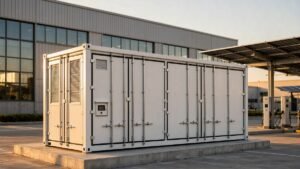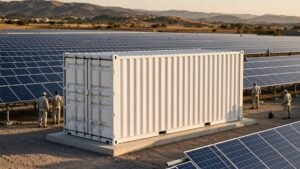
A 3MWh containerized BESS gives a factory, data center or renewable plant roughly three hours of megawatt-scale power shifting in one 40ft unit, and for many sites it beats buying more grid capacity or running diesel through peak hours. The H098-3MWh from huadaenergy integrates 3,153.9 kWh of LiFePO4, a 1 MW PCS, liquid cooling, BMS and fire suppression in a factory-tested enclosure that needs only a foundation, cabling and a grid tie on site. This guide compares the container with diesel generators and UPS systems, explains the specifications that matter at this scale, and sets out what buyers should confirm before ordering — including the UL 9540A, CE and IEC listings on the product page and OEM/ODM options from the source factory.
What Is a 3MWh Containerized BESS?
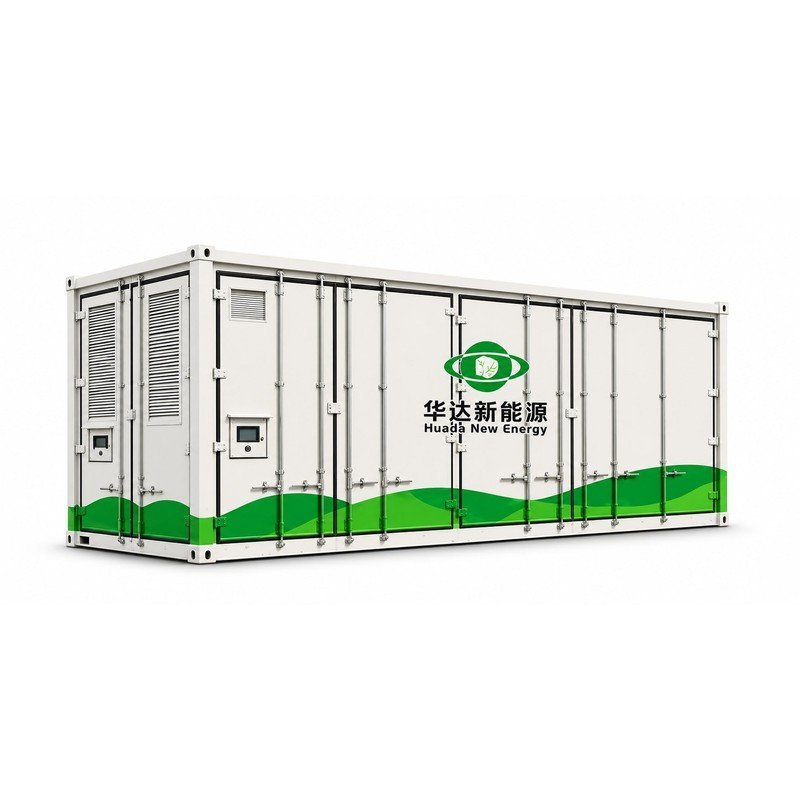
A 3MWh containerized BESS is a complete outdoor battery power station — cells, battery management, power conversion, cooling and fire protection — built into one standard 40ft container. The buyer receives a single unit wired and factory-tested rather than assembling components on site. The huadaenergy H098-3MWh carries 3,153.9 kWh of LiFePO4 cells and a 1 MW rated PCS (1.1 MW peak), giving about three hours of discharge at rated output. AC output is 400 V, and the 40ft unit ships and lifts like a standard container.
The Building Blocks Inside the 40ft Container
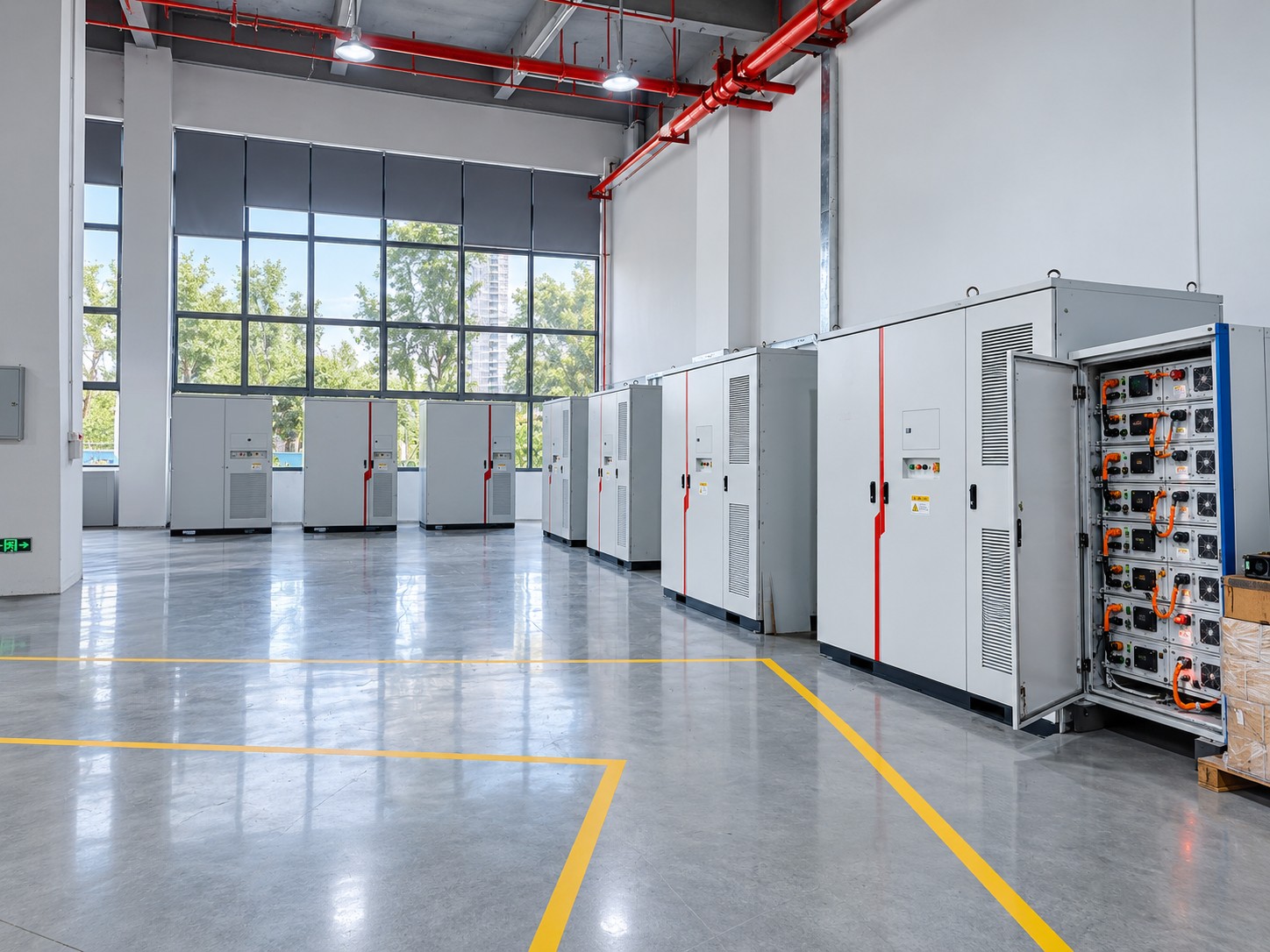
LiFePO4 battery clusters connect to a BMS that watches cell voltage and temperature in real time. A PCS converts DC to AC, liquid-cooling manifolds hold pack temperatures in a narrow band, and fire suppression with pressure-relief paths addresses thermal events. 4G remote monitoring reports state of charge, alarms and performance. Every subsystem is factory-installed; site work is limited to the pad, cabling and grid connection.
Where It Fits in a Site Power System
The container sits between the grid or on-site solar and the facility loads. It charges when power is cheap or surplus renewable energy is available, and discharges during peak tariffs or outages — serving peak shaving, backup and renewable firming in one asset.
Why Compare a 3MWh BESS With Diesel and Grid Upgrades?
Buyers compare a 3MWh containerized BESS with diesel and grid upgrades because electricity demand is rising faster than connection capacity, while battery costs keep falling.
Data-Center and Industrial Load Growth
Global storage additions reached 112 GW / 307 GWh in 2025 and BloombergNEF forecasts 188 GW / 535 GWh in 2026, a 45% increase (BloombergNEF Energy Storage Market Outlook, H2 2026). The same report puts onsite data-center storage in the United States rising from 0.5 GW / 1.4 GWh in 2025 to 4.9 GW / 7.4 GWh in 2026. The IEA World Energy Outlook, published 19 November 2026, projects global data-center electricity use doubling to around 1,000 TWh by 2030 in its stated-policies scenario.
Interconnection Queues and Grid Constraints
The IEA also estimates that about 25 million km of new power lines and 15 million km of upgrades will be needed by 2035, with transformers and cables in tight supply (IEA, 2026). For a site facing a long interconnection queue, a containerized BESS can be commissioned on a prepared pad while the grid connection is secured, then reduce the peak demand the site draws from the network.
Especificações Principais e o que Elas Significam
At the 3MWh class, the specifications that decide project value are usable capacity, power rating, discharge duration, cooling method and the documents shipped with the unit.
| Parâmetro | Value (as listed on product page) | O que significa para o comprador |
|---|---|---|
| Capacidade nominal | 3,153.9 kWh (4,082 Ah / 768 V LiFePO4) | Sets how much energy can be shifted per cycle |
| Potência nominal / de pico | 1 MW / 1,1 MW | Handles a 1 MW site load; peak covers short surges |
| Saída CA | 400 V (−20% ~ +15%) | Matches standard low-voltage site distribution |
| Discharge duration | About 3.1 hours at rated power | Covers a typical afternoon peak window |
| Vida útil do ciclo | Mais de 6.000 ciclos | Supports years of daily cycling; confirm shipped warranty |
| Gestão térmica | Arrefecimento líquido | Uniform pack temperature slows capacity fade |
| Contêiner | 40 ft, 12,192 × 2,438 × 2,896 mm, 32,000 kg | Standard shipping, lifting and pad dimensions |
| Normas de certificação | UL 9540A, CE, IEC, UN38.3, MSDS, RoHS | Documents to request in the project file |
Capacity, Power and Duration
3,153.9 kWh at 1 MW gives roughly 3.1 hours of discharge, suiting a multi-hour peak window or backup event. The 1.1 MW peak rating covers short transients without oversizing the PCS. The 400 V AC output matches common distribution; confirm the exact tolerance with the shipped parameter sheet.
Liquid Cooling and Cycle Life
Liquid cooling holds every pack near the same temperature, slowing capacity fade and supporting more cycles than air cooling. The product page lists over 6,000 cycles. For planning, 6,000 × 3,153.9 kWh ≈ 18.9 GWh of gross lifetime throughput — an assumption-based illustration, not a warranty; confirm the shipped terms.
3MWh BESS vs Diesel Generator and UPS: The Selection Math
A 3MWh containerized BESS responds in milliseconds and shifts energy every day, while a diesel generator mainly provides long-duration backup and a UPS covers seconds to minutes.
Response Time and Power Quality
A battery PCS picks up load in milliseconds and smooths sub-second swings that AI and industrial loads create; a diesel set typically needs seconds to reach full output. Data-center operators are therefore adding BESS for power quality rather than replacing diesel outright — 2026 industry commentary describes overlapping roles, with batteries handling fast events and generators holding long outages.
Cost Structure Over the Project Life
Diesel has lower upfront capital but ongoing fuel, maintenance and emissions costs; batteries cost more yet need no fuel and earn value by shifting energy between tariffs. An NREL cost comparison cited in 2026 industry reporting put diesel capex near USD 1,000/kW and storage near USD 1,300/kW, with BESS gaining a lifecycle advantage below roughly eight hours of backup. BloombergNEF’s Battery Price Survey (December 2025) put stationary pack prices near USD 70/kWh — use a current quote for a real bid.
| Critério | 3MWh containerized BESS | Gerador a diesel | UPS |
|---|---|---|---|
| Response | Milliseconds | Seconds to full output | Milliseconds |
| Useful duration | About 3.1 hours per charge | Hours to days, limited by fuel | Seconds to minutes |
| Daily energy shifting | Sim | Não | Não |
| Fuel / emissions on site | Nenhum | Diesel fuel and exhaust | Nenhum |
| Typical role in 2026 | Power quality + peak shaving | Long-duration backup | Ride-through |
Certifications Explained: UL 9540A, CE, IEC and UN38.3
The H098-3MWh is listed on its product page with UL 9540A, CE, IEC, UN38.3, MSDS and RoHS; each document covers a different part of compliance, and buyers should request the exact reports for their market.
What Each Document Covers
UL 9540A is a fire test method, not a product certification; it reports how a thermal event develops from cell to unit level. The sixth edition, published 13 March 2026, made the Large-Scale Fire Test mandatory for most non-residential systems and aligned with NFPA 855 (2026) (UL Solutions / NFPA, 2026). CE indicates conformity with applicable EU rules — the EU Battery Regulation 2023/1542 brings carbon-footprint and passport duties for industrial batteries above 2 kWh across 2026–2027, a range this 3,153.9 kWh system falls within. UN38.3 covers transport safety, MSDS documents handling, and RoHS (2011/65/EU) restricts hazardous substances.
| Documento | Abrange | Nota para o comprador |
|---|---|---|
| UL 9540A | Thermal-runaway fire propagation test method | Test report, not a system listing; ask for the 6th-edition report |
| CE | Conformity with applicable EU legislation | Request the declaration and the standards cited |
| IEC | Referenced IEC safety standards | Confirm standard numbers and editions on the report |
| UN38.3 | Transport safety of lithium cells | Required for shipment documentation |
| MSDS | Material safety and handling | Keep with site safety files |
| RoHS | Restrição de substâncias perigosas | EU 2011/65/EU scope |
What to Request for Your Market
Certification names on a page are a starting point, not a project file. Ask for dated test reports, the exact IEC standards and editions, the shipping classification and the fire/installation code package your authority requires. huadaenergy states certifications can be provided on request to meet regional grid and project requirements.
Aplicações no Mundo Real
A 3MWh containerized BESS is used where a site has both a large energy shift and a megawatt-scale power need — factories, data centers, telecom hubs and renewable plants.
Factory Peak Shaving and Demand Management
A plant with a 1 MW peak can charge overnight and discharge through the afternoon tariff window, cutting energy charges and demand spikes. The roughly 3.1-hour duration covers a typical commercial peak.
Data-Center and Telecom Backup
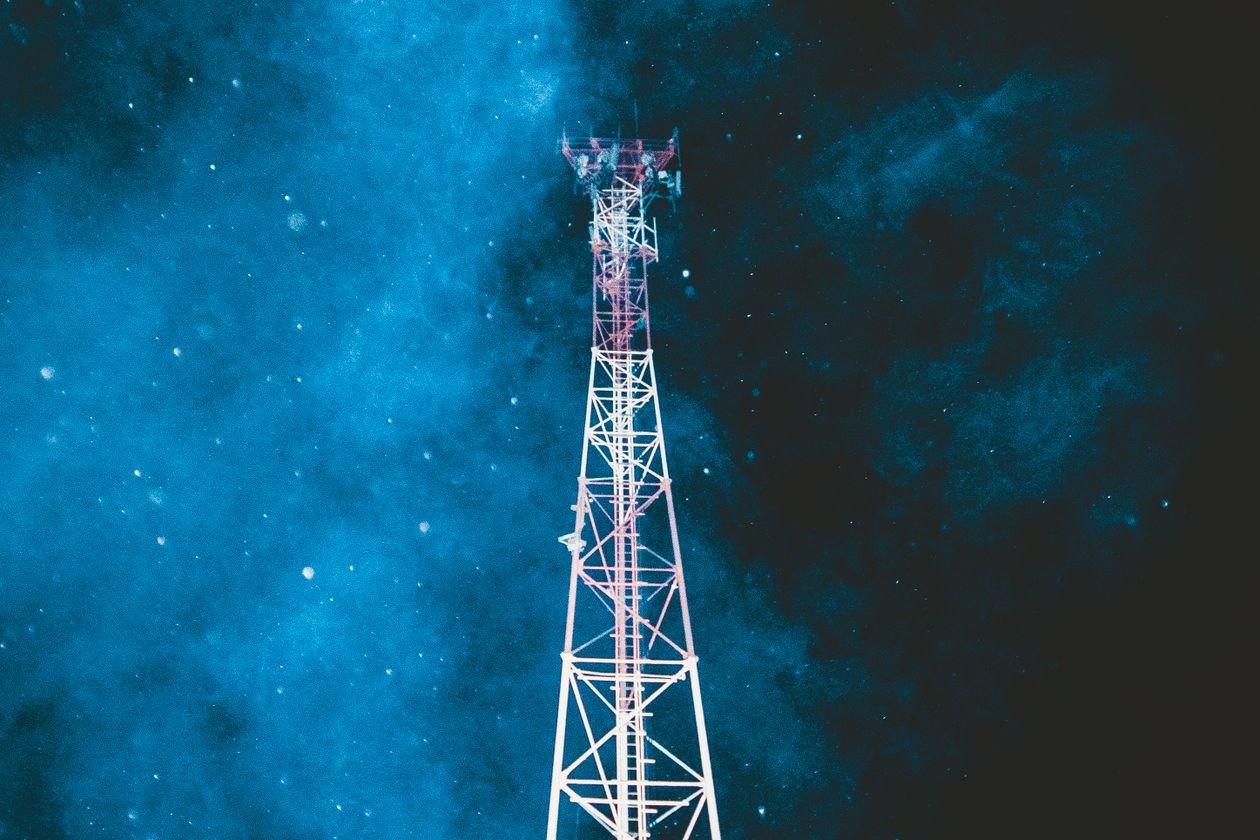
For a data center or remote telecom tower, the BESS bridges outages and smooths load steps while generators start, reducing diesel runtime. 4G monitoring lets operators watch state of charge and alarms centrally.
Renewable Co-Location and Microgrids
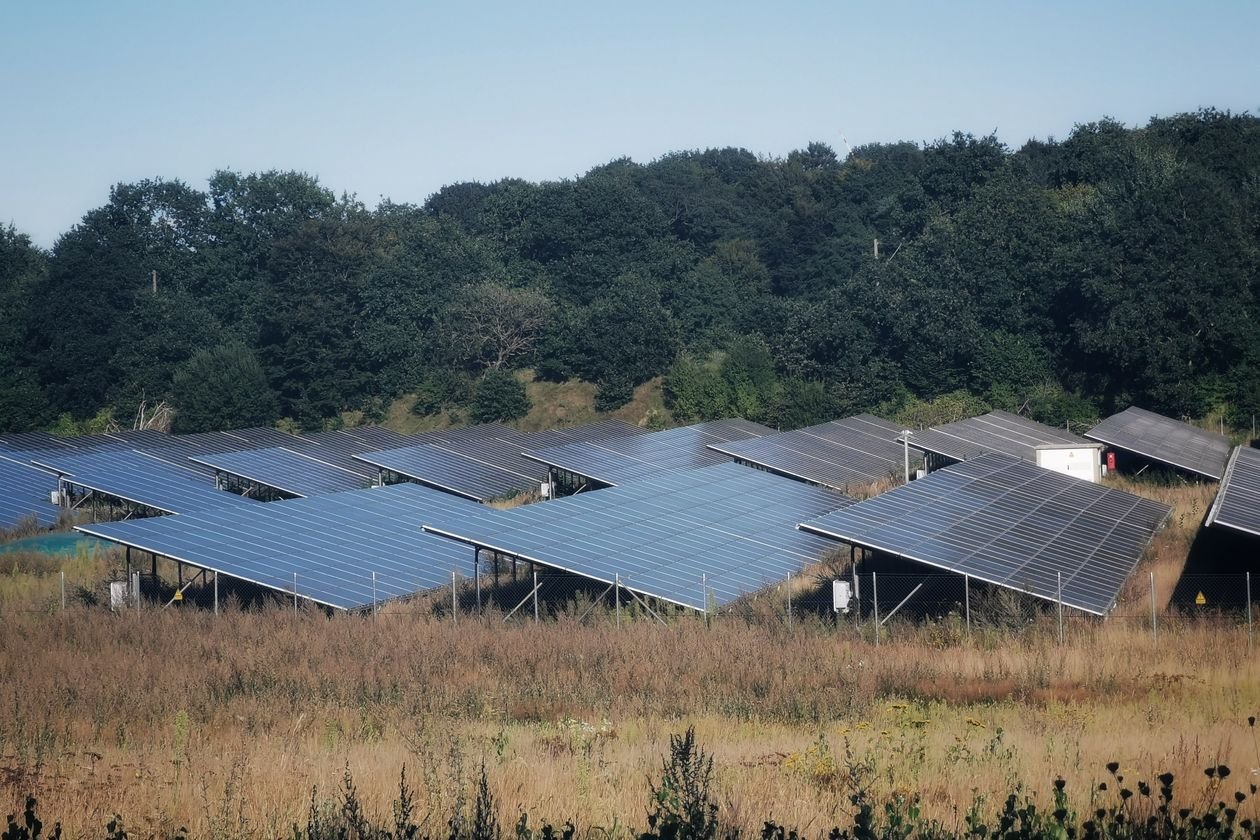
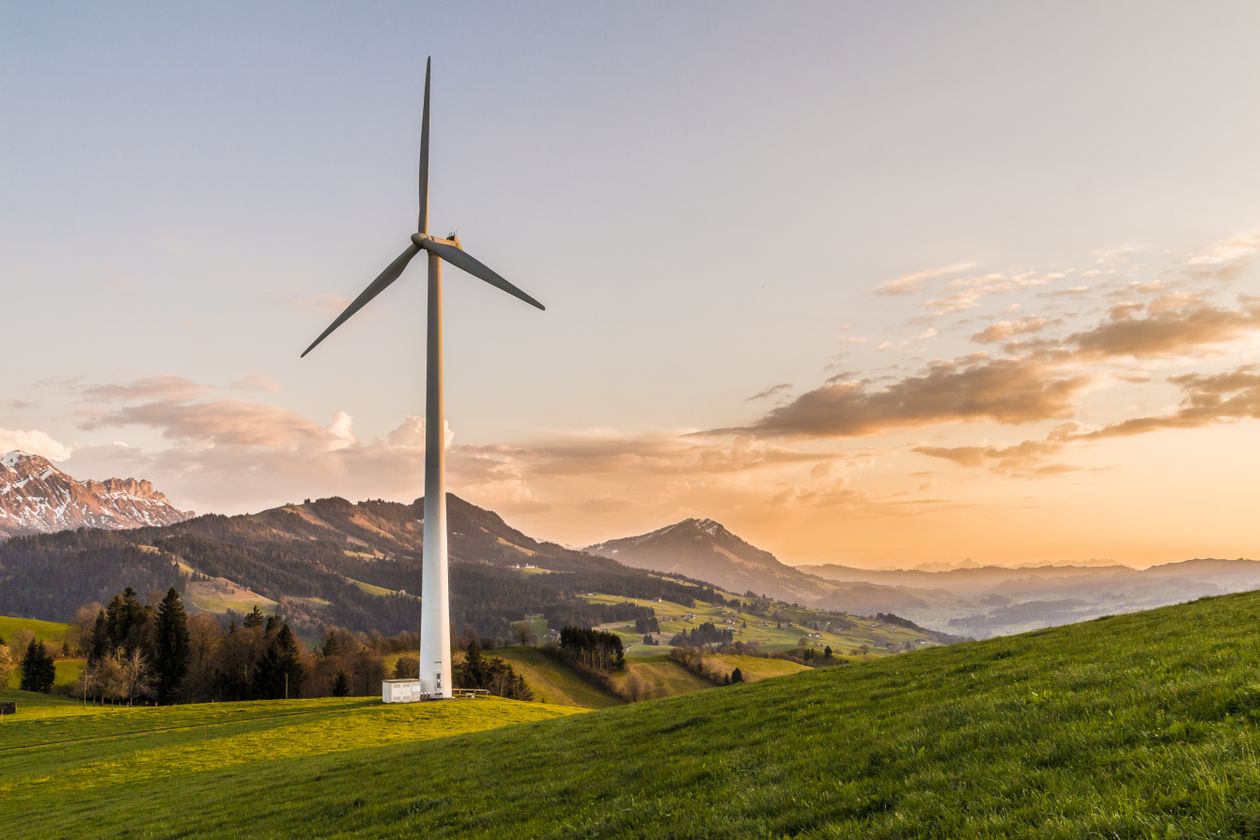
Ground-mounted solar or wind can charge the container instead of being curtailed. BloombergNEF reported 69.3 GW / 195.6 GWh of utility-scale storage co-located with 303.6 GW of solar by end-2025 (BloombergNEF, H2 2026). In a microgrid, the container pairs with PV and a generator to hold frequency and cover the evening peak.
Built at Source: OEM, ODM and Custom System Design
As a source factory, huadaenergy can build the 3MWh container to a buyer’s capacity, appearance, communication protocol and project configuration rather than selling a fixed catalogue unit.
What Source-Factory Customization Covers
The H098 container series spans 500 kWh to 3 MWh, with cabinet systems from 50 to 315 kWh for smaller sites. OEM/ODM work can cover enclosure branding, PCS and BMS communication protocols, cooling configuration and interface documents. Engineering support extends to system design — matching battery duration to the site’s load profile, transformer and PV array — and to developing the control logic a specific project needs. See the huadaenergy OEM/ODM page for the partnership scope.
Factory Testing and Delivery Support
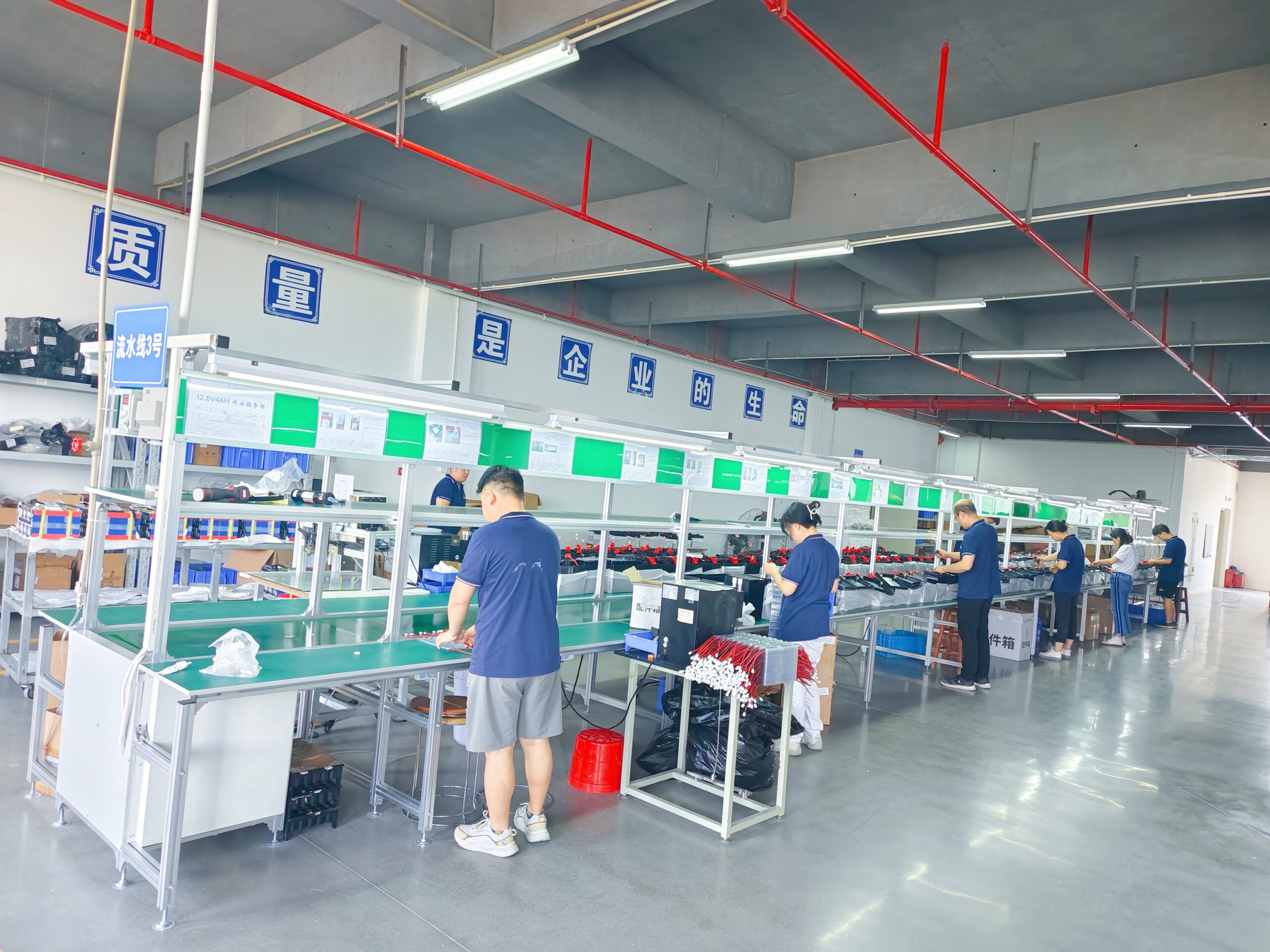
Units are pre-assembled and fully tested before shipment, with cell and module batch records on file. Reinforced export packing and standard lifting points suit sea and land transport; the team supports customs clearance and site acceptance.
Como Escolher o Contentor BESS de 3MWh Certo
Choose a 3MWh containerized BESS by matching duration to your tariff or outage window, then verifying cooling, safety documents and supplier engineering support.
Checklist for Buyers
- Confirm the load profile: peak kW, peak window length and required backup duration.
- Match duration: about 3.1 hours at 1 MW for this model; see the 2MWh container ou 2.5MWh container for shorter windows.
- Check the site: pad size, 40ft truck access, transformer rating and 400 V distribution.
- Verify documents: dated UL 9540A report, CE declaration, UN38.3, MSDS, RoHS and the editions of any cited IEC standards.
- Ask about liquid cooling and the warranty terms that actually ship with the unit.
- Confirm OEM/ODM scope: branding, protocols and custom control logic.
Perguntas frequentes
Por quanto tempo um contêiner de 3MWh pode alimentar um site?
Um contêiner de 3.153,9 kWh fornece cerca de 3,1 horas em sua potência nominal de 1 MW. O tempo de execução real depende da carga, da profundidade de descarga e da temperatura.
Pode substituir um gerador a diesel?
Para interrupções curtas e redução diária de picos, frequentemente sim. Para backup de vários dias, a maioria dos projetos mantém o diesel como fonte de longa duração e utiliza o BESS para resposta rápida e economia de combustível.
Qual é a diferença entre UL 9540A e UL 9540?
A UL 9540A é um método de ensaio de incêndio que produz um relatório de dados; a UL 9540 é a norma de certificação a nível de sistema. A página do produto lista a UL 9540A como um ensaio, portanto, pergunte separadamente se é necessária uma listagem UL 9540.
Porquê arrefecimento líquido em vez de arrefecimento por ar?
O arrefecimento líquido mantém as temperaturas do pack uniformes, o que reduz a degradação da capacidade e suporta mais ciclos — importante a 3MWh em locais quentes, costeiros ou desérticos.
Posso encomendar uma capacidade ou marca personalizada?
Yes. huadaenergy supports OEM/ODM on the H098 container series, including capacity, appearance, communication protocols and project-specific control logic.
What should I send for a quotation?
Share site type, transformer capacity or monthly consumption, peak window, whether you have PV, and target market. The factory can then propose a configuration — see the container BESS explained article ou contacte a huadaenergy.
Sobre a huadaenergy
Manufacturing and Support
huadaenergy is a source factory for LiFePO4 batteries and energy storage systems, with pack, cabinet and container production lines in Huizhou, China. The company supports OEM/ODM, custom system design and project development, and backs each 3MWh containerized BESS with remote monitoring and site-acceptance support. Explore the H098 3MWh container page ou request a project quote.
Last updated: 2026-11-23