
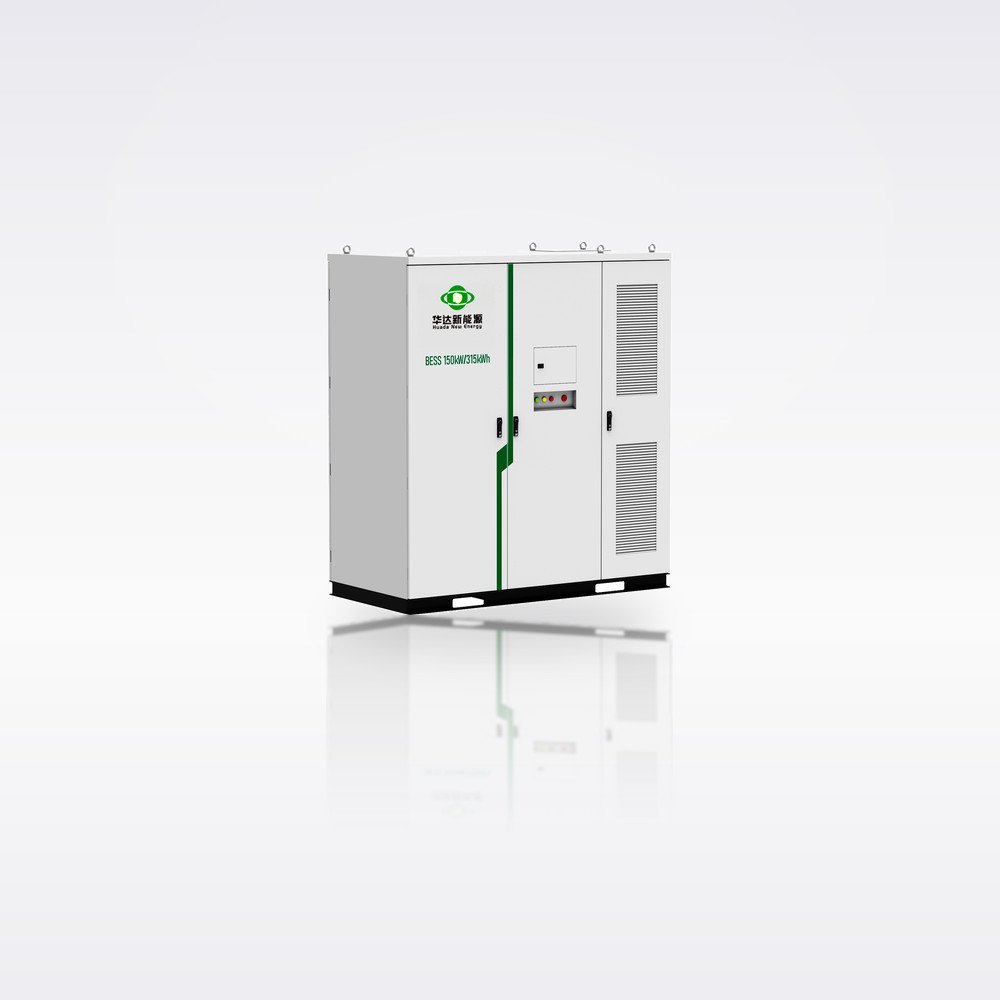
A ESS en gabinete de 315 kWh is the practical middle ground for sites that need demand-charge control and backup but cannot justify a shipping-container project. The huadaenergy H098-315kWh packs 316.4 kWh of LiFePO4 storage, a 150 kW bidirectional PCS, a 240 kW PV input and an energy management system into one IP55 outdoor cabinet measuring 2,153 × 1,297 × 2,414 mm. It installs in days rather than weeks, with no civil works and no secondary integration. This article covers the five scenarios where the cabinet earns its keep, the numbers that matter on site, the 2026 fire-safety context, and the documents buyers should request.
What Is a 315kWh Cabinet ESS and Who Is It For?
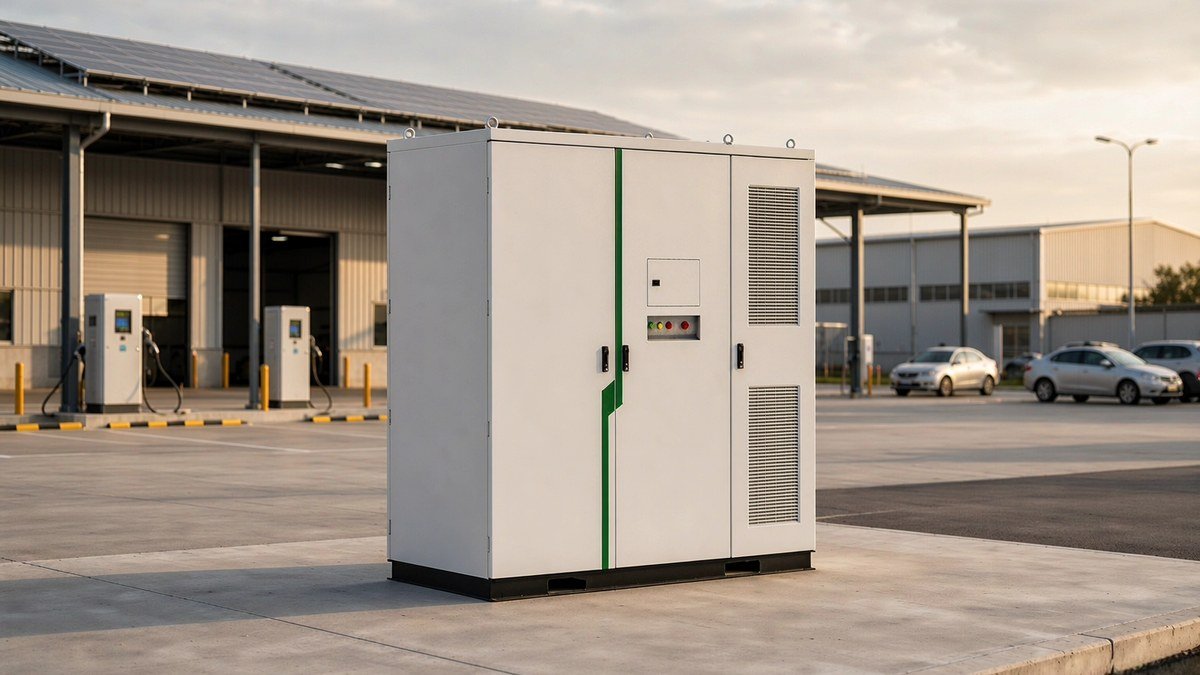
A 315kWh cabinet ESS is a factory-assembled, ground-installed battery system that integrates cells, power conversion, solar input and energy management in one outdoor enclosure. The huadaenergy H098-315kWh tops a platform spanning 50 to 315 kWh, so a buyer who outgrows a smaller unit keeps the same footprint and control logic. It targets facilities where electricity is a major cost line: shift factories, cold stores, EV charging plazas and industrial parks.
One cabinet, four connections
The cabinet has four connections: solar in, grid in, loads out and data to the cloud. The built-in MPPT accepts up to 240 kW of PV with an 850 V maximum and a 200–950 V working range, so rooftop arrays connect without a separate controller. The AC side is 3P+N+PE at 400 V, 50/60 Hz, with 276 A rated output; local communication is RS485 or CAN, with cloud reporting. The energy management system decides when to charge, discharge and hold reserve, based on tariff windows and demand targets.
Why C&I Buyers Are Adding Cabinet Storage in 2026
Cabinet storage is growing because it addresses two costs at once: the off-peak to peak price spread, and the monthly demand charge set by the highest short interval. BloombergNEF’s H2 2026 outlook (October 2026) put global storage additions at 188 GW / 535 GWh in 2026, up 45% on 2025’s 112 GW / 307 GWh, with 209 GW / 638 GWh forecast for 2027. BNEF expected China, the United States and Australia to supply about 62% of 2026 additions, and judged LFP likely to remain the dominant chemistry for the next decade.
The demand-charge line is the dependable saving
Arbitrage savings shrink as more storage flattens the same peak, but a demand charge is billed on the site’s own maximum draw. In Malaysia, the TNB RP4 medium-voltage tariff effective 1 July 2025 sets a capacity charge of about RM 97.06 per kW per month on a 30-minute window, so one uncontrolled half-hour can set a month of cost. A cabinet discharging across that window cuts the recorded maximum. Check the figure against the local supply agreement before use.
Five Scenarios Where a 315kWh Cabinet ESS Pays Off
A 315kWh cabinet ESS fits five industrial scenarios: shift factories, cold storage, EV charging plazas, rooftop solar and weak-grid sites. In each case value comes from shifting energy into cheaper hours or keeping critical loads alive, not from nameplate capacity alone.
Two- and three-shift factories
A plant running around the clock rarely falls below its contract capacity. Charging at night and discharging across the morning ramp cuts both the energy rate and the recorded maximum demand. At 150 kW, a full 316.4 kWh cabinet supports roughly two hours of output before recharge — enough to cover the highest-cost window rather than an entire shift.
Cold storage and logistics
Refrigeration compressors cannot be switched off when prices rise. A cabinet beside the distribution room absorbs the peak while the cold chain runs, and its IP55 enclosure tolerates the dust of a logistics yard. Discharge is rated from −20 °C to 55 °C, within a cold store’s outdoor envelope.
Plazas de carga de VE
Fast chargers create sharp demand spikes that trigger charges and stress a transformer. A 315kWh cabinet on the AC side buffers that draw: it charges during quiet hours and feeds the site while vehicles plug in. BNEF tracked US behind-the-meter data-centre storage rising from 0.5 GW / 1.4 GWh in 2025 to a forecast 6.3 GW / 8.4 GWh in 2027, showing how quickly large loads are paired with local storage.
Solar comercial en azotea
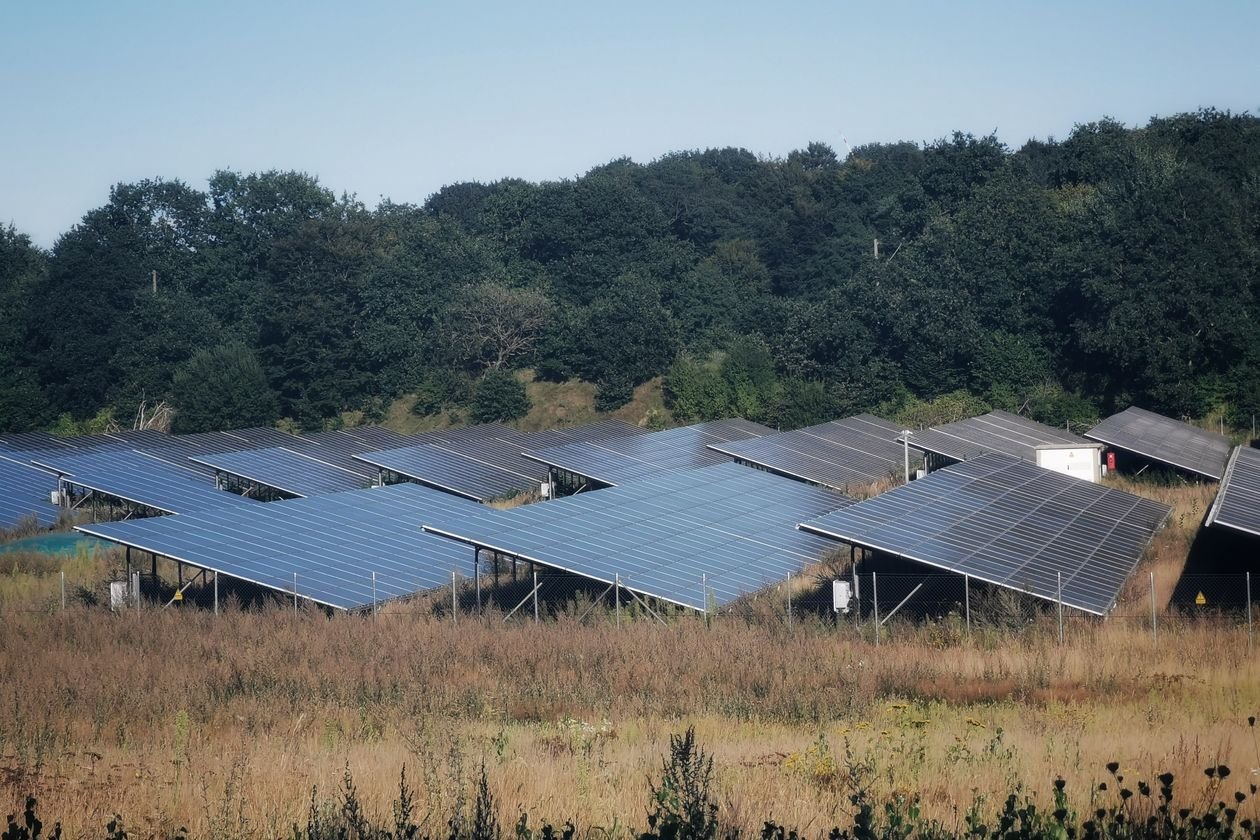
With 240 kW of PV input and an 850 V maximum, the cabinet accepts a rooftop array directly. Solar that would be exported at a low feed-in price is stored for the evening peak. The 200–950 V MPPT range gives installers room to design string layouts without a separate inverter.
Weak grids and industrial parks
Where supply is unstable, the cabinet buffers production equipment, air conditioning and lighting. Industrial parks use several for centralised demand management, easing transformer pressure without a new substation. The unit arrives factory-tested, so site work is a prepared pad, cabling, grid connection and cloud onboarding.
Key Capabilities That Matter on Site
The four decisive numbers on a 315kWh cabinet ESS are 316.4 kWh of rated energy, 150 kW of continuous power, a 240 kW PV input and IP55 air cooling. They define how long the unit carries a peak, how much solar it absorbs and what the site must build.
| Artículo | H098-315 kWh | What it means on site |
|---|---|---|
| Energía nominal | 316,4 kWh | About two hours at full 150 kW output |
| Potencia nominal | 150 kW, 276 A, 3P+N+PE AC400 V | Covers a substantial factory peak without a separate PCS cabinet |
| Entrada fotovoltaica | 240 kW max, 850 V max, MPPT 200–950 V | Rooftop solar connects directly |
| Plataforma de batería | 768 V DC, 412 Ah, 672–864 V | DC platform behind the 316.4 kWh rating |
| Gestión térmica | Refrigeración por aire | No coolant loop, no top-up, no leak risk |
| Protección | IP55 | Sealed outdoor enclosure for ground installation |
| Temperatura | Charge 0–50 °C; discharge −20–55 °C | Suited to outdoor yards in most climates |
| Size and weight | 2,153 × 1,297 × 2,414 mm; 3,500 kg | Same envelope as the 215 kWh model |
| Comunicación | RS485 / CAN, cloud platform | Local integration plus remote monitoring |
### Reading the 150 kW and 316.4 kWh pairing
Dividing 316.4 kWh by 150 kW gives just over two hours at full output, which is the correct way to judge a cabinet: power sets how much peak it can shave, energy sets how long it can hold. For longer duration or higher power, the 500kWh containerized BESS and larger serie de contenedores platforms take over.
Fire Safety in 2026: Installation-Level Testing and a Passive Coating Layer
In 2026, fire safety moved from cell-level certificates toward installation-level scenarios, and a passive intumescent coating is one layer designers now review alongside system testing. Two cabinets placed close together behave differently from one tested alone.
What changed in UL 9540A Edition 6
The sixth edition of ANSI/CAN/UL 9540A, published 13 March 2026, made the large-scale fire test mandatory, evaluating thermal runaway under stated cabinet spacing, ceiling height and suppression conditions rather than at module level only. Industry reporting from RE+ 2026 (Las Vegas, 17–19 November) described UL awarding certificates under Edition 6 at the show, with several manufacturers publishing site-scale fire tests. UL 9540A is a test method referenced by NFPA 855, not a product certificate the H098-315kWh claims. Ask which edition and installation configuration a supplier’s report covers.
What the coating documents report
The coating huadaenergy is applying is MARC-01, a two-component intumescent material that expands into an insulating char under heat. Its third-party documents report: a 2.5 mm coated steel plate facing an 800–850 °C flame for 30 minutes without burn-through and a back-face peak of 154.8 °C against a 300 °C criterion (YJ2025060240); cross-cut adhesion grade 0 to GB/T 31586-2015 (EMT02R000171C01); 256 mg/kg lead against a 1,000 mg/kg limit with conformity to EU 2011/65/EU and (EU) 2015/863 (A2260349272101001C); and a REACH 2020/878 safety data sheet (XG26165519) that does not classify the product as dangerous goods under IMDG, IATA or ADR.
Those figures describe the tested samples only, and the reports are issued to developer-group companies Changsha Dingcai Technology and Hunan Yingsuo Technology — not held by huadaenergy. Hunan Yingsuo is described as the core operating company of TopMaterial Tech’s “AI + New Materials” business, drawing on research from the State Key Laboratory of Powder Metallurgy at Central South University. huadaenergy’s role is application: specifying the material for storage enclosures, as detailed in the fire-resistant coating article.
Cabinet ESS vs Container BESS vs Diesel Backup
A 315kWh cabinet ESS installs faster than a container BESS and runs without fuel, while a diesel generator still wins for very long outages. Most industrial sites do not choose one permanently; they use storage for frequent short events and keep a generator for extended events.
| Opción | Función típica | Constraint |
|---|---|---|
| ESS en gabinete de 315 kWh | Daily peak shaving, PV self-consumption, short backup | About two hours at full 150 kW output |
| Container BESS (500 kWh–3 MWh) | Longer duration, larger power, utility-scale sites | Requires pad, lifting and more site work |
| Diesel generator | Multi-day outage coverage | Fuel logistics, noise, start delay and emissions |
### Where a container becomes the better choice
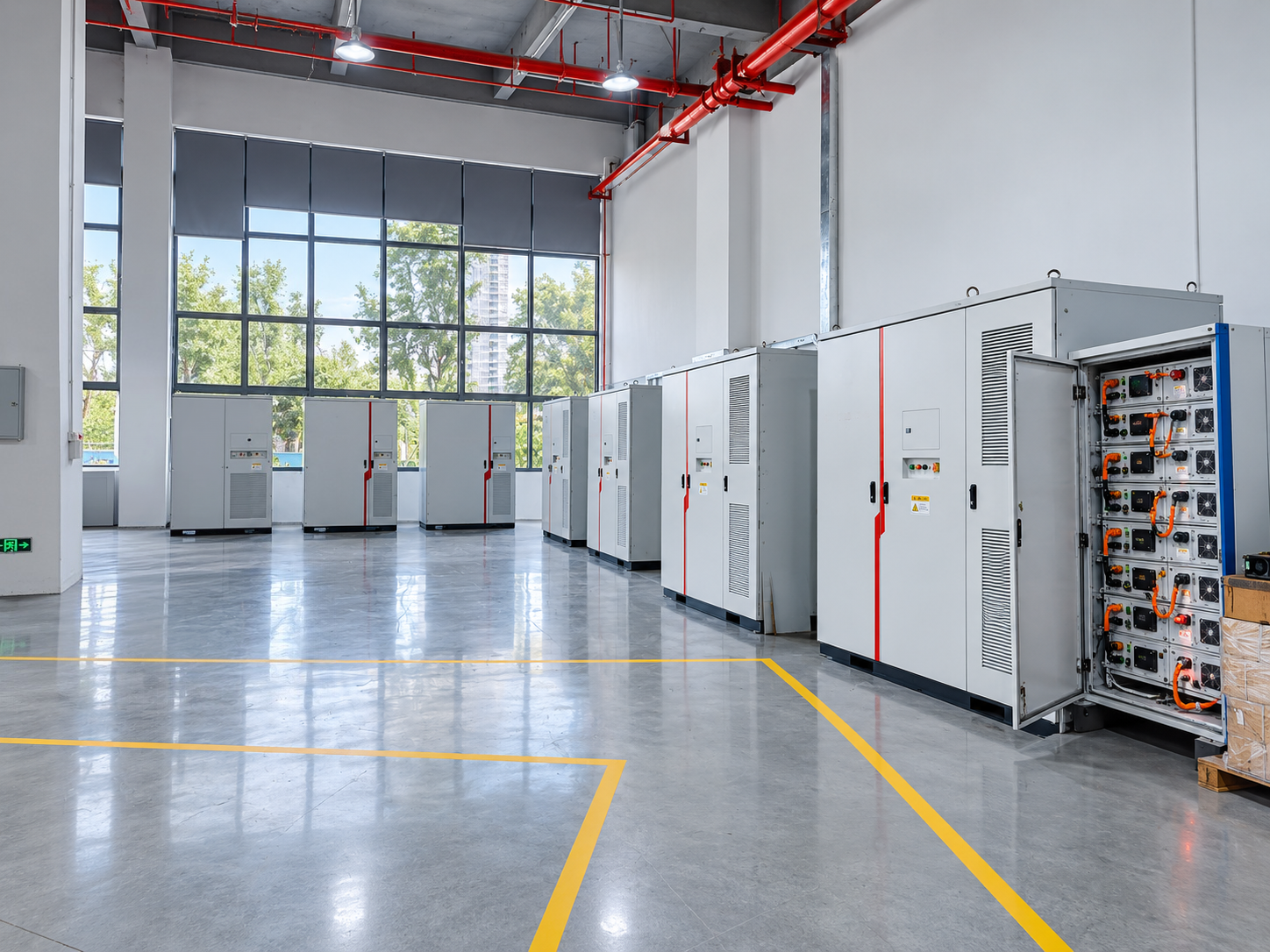
If the load profile needs more than roughly two hours at high power, or the project is measured in megawatt-hours rather than hundreds of kilowatt-hours, a container platform is the more economical route. The cabinet’s advantage is speed and simplicity on sites where the peak is short and predictable.
Cómo elegir el gabinete ESS adecuado
Choose a cabinet ESS by matching load profile, tariff structure, PV capacity and available documentation, not by nameplate capacity alone. Four checks remove most of the risk before comparing quotations.
– Load profile. Collect 12 months of bills and identify the half-hour setting the demand charge. – Tariff structure. Confirm the peak/off-peak spread and the 15- or 30-minute demand window. – PV plan. Size the array against the 240 kW input and 200–950 V MPPT range. – Envolvente del sitio. Check the pad, transformer capacity, cable run and IP55 air cooling. – Documents. Ask for stamped datasheets, test reports and the exact certificate list.
Questions to send a supplier
Ask which edition of UL 9540A and NFPA 855 the target market requires, whether the cabinet was tested in a multi-unit installation, and the end-of-warranty state-of-health commitment. An OEM/ODM partner should also state which parameters it can customise and what development support it offers.
Certifications Explained: What the H098-315kWh Lists
The H098-315kWh product page lists IEC 63056, IEC 62477-1, IEC 62933-5-2:2020, IEC 62933-2-1:2017, EN 61000-6, RoHS 2.0, UN38.3, MSDS and Malaysian SIRIM with the MyHIJAU Mark. These are the standards the supplier publishes for the cabinet; they should be checked against the destination market before a tender.
| Listing | What it generally covers | Nota para el comprador |
|---|---|---|
| IEC 63056 | Safety of battery energy storage systems | Ask for the test report and scope |
| IEC 62477-1 | Power electronic converter safety | Relates to the 150 kW PCS |
| IEC 62933-5-2:2020, 62933-2-1:2017 | ESS system and installation aspects | Check the edition required locally |
| EN 61000-6 | Compatibilidad electromagnética | Ask for the emission and immunity report |
| RoHS 2.0 | Restricted substances | Request the declaration for the supplied batch |
| UN38.3 and MSDS | Transport classification and safety data | Needed for shipping documentation |
| SIRIM / MyHIJAU | Malaysian market listing | Useful for Southeast Asian projects |
### Documents to request before tender
Product-page listings are not the same as a stamped, project-specific certificate. Request current test reports, the declaration of conformity, a datasheet bearing the model number and shipping documents for the exact configuration. The smaller 215kWh cabinet ESS shares the platform and documentation path.
Preguntas frecuentes
¿Cuánto tiempo puede funcionar a plena potencia un ESS de armario de 315 kWh?
Con la salida nominal de 150 kW, el armario de 316,4 kWh entrega un poco más de dos horas antes de la recarga. La duración real depende del perfil de carga, las pérdidas de conversión y la profundidad de descarga utilizable acordada en el contrato.
¿Puede el H098-315kWh conectarse a la energía solar en la azotea sin otro inversor?
Yes. The PV input module is integrated, accepting up to 240 kW with an 850 V maximum and a 200–950 V MPPT working range. The cabinet connects to the facility through 3P+N+PE AC400V wiring.
Is a cabinet ESS faster to install than a container system?
Yes. The IP55 cabinet arrives factory-assembled and tested, so the site needs a prepared pad, cabling, grid connection and cloud onboarding rather than civil works and secondary integration.
What fire-safety documents should I request in 2026?
Ask for the battery and system test reports, the edition of UL 9540A used and whether testing covered the intended cabinet spacing. A passive coating document describes the material only and does not replace system-level fire evidence.
Does huadaenergy hold UL 9540A certification for this cabinet?
No claim is made here. UL 9540A is a test method; the H098-315kWh product page lists IEC, EN, RoHS, UN38.3, MSDS and SIRIM items. Ask for the current reports matching the market requirements.
Do you support OEM, ODM and custom system design?
Yes. As a source factory, huadaenergy customises capacity, PCS power, enclosure branding, communication protocols and packaging, and supports development against a customer’s system design. Factory visits are welcome.
Acerca de huadaenergy
huadaenergy is a source factory for LiFePO4 energy storage, producing portable power stations, golf-cart batteries, home storage, C&I cabinets and containerised systems. The company builds to order for its own brand and for OEM/ODM partners, supports custom system design and develops configurations against customer requirements, with full-function testing before every shipment. To discuss a 315kWh cabinet project, request a stamped datasheet or arrange a factory visit, use the página de contacto de huadaenergy o envíe un correo electrónico a sales@huadaenergy.com.
Built to order, tested before shipment
Each cabinet is configured to the confirmed load profile, with batch records and full-function factory testing before export packing — ready for cabling and grid connection on arrival.
Last updated: 2026-11-20