15kWh Heimbatterie | LiFePO4-Speicher | huadaenergy
Last updated: 2026-10-23
A 15kWh home energy storage battery is the practical upgrade for households whose evening consumption has outgrown a starter pack: the H096-15kWh from huadaenergy stores 14.33 kWh of usable energy in a floor-standing cabinet of only 460 x 245 x 760 mm, delivers more than 5,000 LiFePO4 cycles, and expands in parallel steps up to 16 units. If you are an installer, distributor or homeowner weighing lead-acid against lithium, or a 10 kWh pack against a 15 kWh one, this guide compares the numbers that actually matter — usable capacity, cycle life, footprint and lifetime energy throughput — so you can size the battery correctly before you buy.
What Is the H096 15kWh Home Energy Storage Battery?
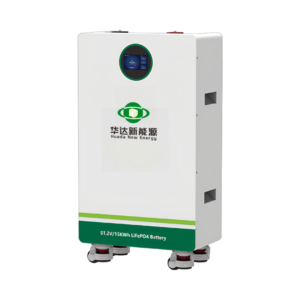
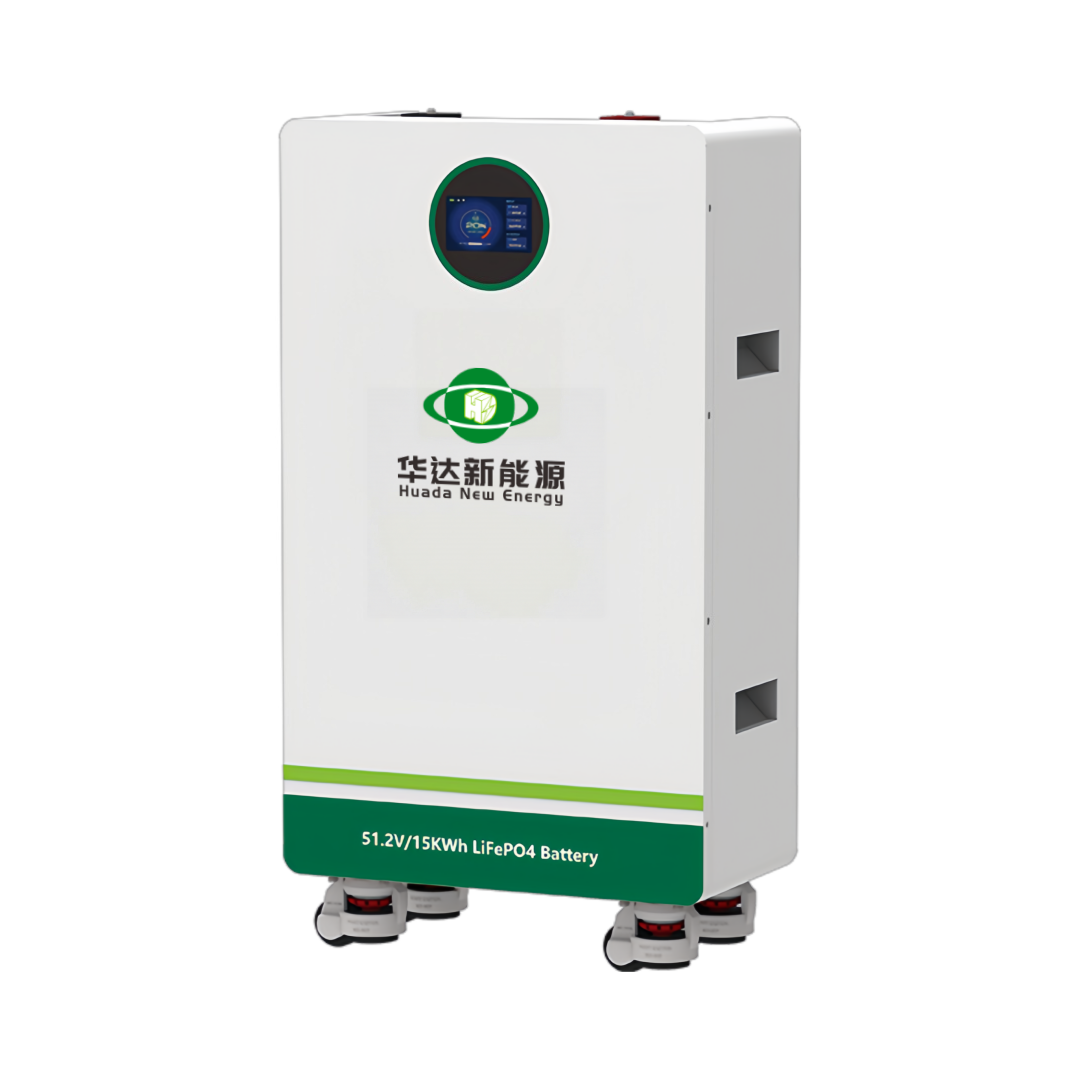
The H096-15kWh is a floor-standing residential battery that packs a 280Ah / 51.2V LiFePO4 cell stack rated at 14.33 kWh of usable capacity into a cabinet occupying roughly 0.11 square metres of floor area. It is the largest model in the H096 classic home series, sitting above the 10kWh floor-standing home battery and the compact 51.2V 5.12kWh starter unit.
Three design choices define the product:
- LFP chemistry for longevity. The lithium iron phosphate (LiFePO4) cells are rated for more than 5,000 cycles while retaining over 80% of capacity, with a service life of up to 12 years under normal daily cycling.
- A built-in smart BMS. The battery management system monitors every cell group continuously and protects against over-charge, over-discharge, over-current, abnormal temperature and load short circuits.
- Connectivity without extra hardware. Communication runs over RS485/CAN to the inverter, while a WiFi and Bluetooth mobile app reports state of charge, voltage and status — no separate gateway is needed. An LCD readout on the cabinet gives local status at a glance.
The unit carries CE, FCC and RoHS markings, is rated IP20 for indoor installation, and uses plug-and-play cabling so a qualified installer can integrate it into an existing home solar system without bespoke wiring.
Why 15 kWh Is Becoming the New Baseline for Home Solar Storage
Households are buying larger home batteries because solar-heavy electricity grids pay little for midday exports, and the average residential system keeps growing every year. The market data points in one direction:
- Global storage additions are at record levels. BloombergNEF’s latest outlook (2026) projects roughly 188 GW / 535 GWh of new energy storage worldwide in 2026 — about 45% annual growth in gigawatts — and expects lithium iron phosphate (LFP) to remain the dominant storage chemistry through the next decade.
- Home batteries are getting bigger. In Germany, the largest home-storage market in Europe, around 366,000 home storage systems above 1 kW were installed in 2025, and average capacity per system rose 8% to 10.3 kWh, according to ISEA RWTH Aachen’s Battery Charts platform (2026). A 10 kWh average means a large share of homes already need more than a 5 kWh starter battery.
- Policy is pushing residential storage. Australia’s Cheaper Home Batteries Program supported about 400,000 home batteries and 11.2 GWh of capacity within its first year (BloombergNEF data, 2026), and roughly half of new US residential solar installations in Q1 2026 were paired with a battery, up from 38% a year earlier (ACP and Wood Mackenzie, 2026).
For buyers, the takeaway is straightforward: a system sized for yesterday’s consumption will be undersized once an EV, a heat pump or simply a growing evening load arrives. A 15 kWh class battery leaves headroom that a 5–10 kWh pack does not.

Wichtige Spezifikationen und ihre Bedeutung
The table below lists the H096-15kWh specifications and explains why each one matters to a residential buyer.
| Parameter | Wert | What it means for buyers |
|---|---|---|
| Nutzbare Kapazität | 14.33 kWh | Covers a full evening-plus-overnight cycle for most households, not just critical loads |
| Zellkonfiguration | 280Ah / 51.2V LiFePO4 | Thermally stable LFP chemistry; standard 51.2V bus matches common hybrid inverters |
| Lebensdauer des Zyklus | 5,000+ cycles, over 80% capacity retained | More than 13 years of daily full cycling by cycle count; rated service life up to 12 years |
| Lebensdauer | Up to 12 years | Matches the typical ownership horizon of a rooftop solar system |
| Footprint / weight | 460 x 245 x 760 mm, 120 kg | About 0.11 m² of floor area — fits a garage or utility room corner |
| Erweiterung | Parallel connection, up to 16 units | Capacity can grow to about 229 kWh usable as household demand rises |
| Kommunikation | RS485 / CAN; WiFi + Bluetooth app | Inverter integration plus phone monitoring without a separate gateway |
| Protection / marking | Built-in BMS; IP20; CE, FCC, RoHS | Indoor-rated enclosure with cell-level electrical protection |
| Einrichtung | Plug-and-play wiring | Shorter on-site time for the installer; straightforward retrofit to existing PV |
Two of these figures deserve emphasis. First, usable capacity: 14.33 kWh is what the BMS actually releases to your loads, which is the number to compare against your evening consumption — nominal ratings flatter lead-acid systems in particular. Second, expansion: because units connect in parallel up to 16, a household can start with one cabinet and add capacity in 14.33 kWh steps later, rather than replacing an undersized battery outright.
H096 15kWh LiFePO4 vs Lead-Acid and Smaller Lithium Packs
The H096-15kWh wins on lifetime energy throughput, not on sticker capacity alone — and that is the comparison that determines cost over ownership. To deliver the same 14.33 kWh per cycle, a lead-acid bank needs roughly twice the nominal capacity because deep-cycle lead-acid should not regularly discharge below about 50%. The table contrasts the three realistic options.
| Faktor | H096 15kWh (LiFePO4) | Lead-acid bank sized for 14.3 kWh usable | 10 kWh LFP floor-standing |
|---|---|---|---|
| Nutzbare Energie pro Zyklus | 14.33 kWh | ~14.3 kWh (at 50% depth of discharge) | ~9–10 kWh |
| Nominal capacity needed | 14.33 kWh | ~28–30 kWh | ~10 kWh |
| Lebensdauer des Zyklus | 5.000+ Zyklen | Typically 500–1,200 cycles (deep-cycle ratings) | 5.000+ Zyklen |
| Energiedurchsatz über die gesamte Lebensdauer | ~72 MWh | ~7–17 MWh | ~30 MWh |
| Wartung | Keine | Ventilation, watering (flooded types), terminal checks | Keine |
| Überwachung | Cell-level BMS + app | Basic voltage reading only | BMS + app |
| Floor area for this usable capacity | ~0.11 m² | Roughly 2–3x larger | Smaller, but less capacity |
Illustrative calculation, based on assumptions: multiplying 14.33 kWh of usable capacity by 5,000 cycles gives about 72 MWh of lifetime energy throughput for the H096-15kWh. A lead-acid bank rated 500–1,200 cycles and limited to 50% depth of discharge delivers roughly 7–17 MWh over its life. At a comparable installed cost per usable kilowatt-hour, the LFP system therefore delivers around 4x or more of the total energy before replacement — and avoids at least one replacement cycle, its labour and its downtime. Actual economics depend on your installed price, tariff and usage profile, so treat these as order-of-magnitude figures rather than a quote.
Anwendungen in der realen Welt
A 15 kWh home battery covers three common household situations particularly well.
Evening self-consumption under dynamic tariffs
Since January 2025, German energy suppliers have been required to offer dynamic electricity tariffs under the Energy Industry Act (EnWG). Under such tariffs, midday solar power is cheap and evening power is expensive, so a battery that shifts 14.33 kWh from noon to the evening directly cuts the bill. Households without a battery face the worst of both worlds: near-zero export value at midday and full retail prices after dark.
Whole-home backup for higher-demand households
Fourteen kWh runs a typical evening — lighting, refrigeration, cooking, television, internet and a heat pump cycling — through the night and into the next morning. For homes where an outage means lost work or discomfort, the H096-15kWh covers materially more of the house than a starter battery, and the built-in BMS plus app monitoring lets the owner verify state of charge before a storm hits.
EV-ready households
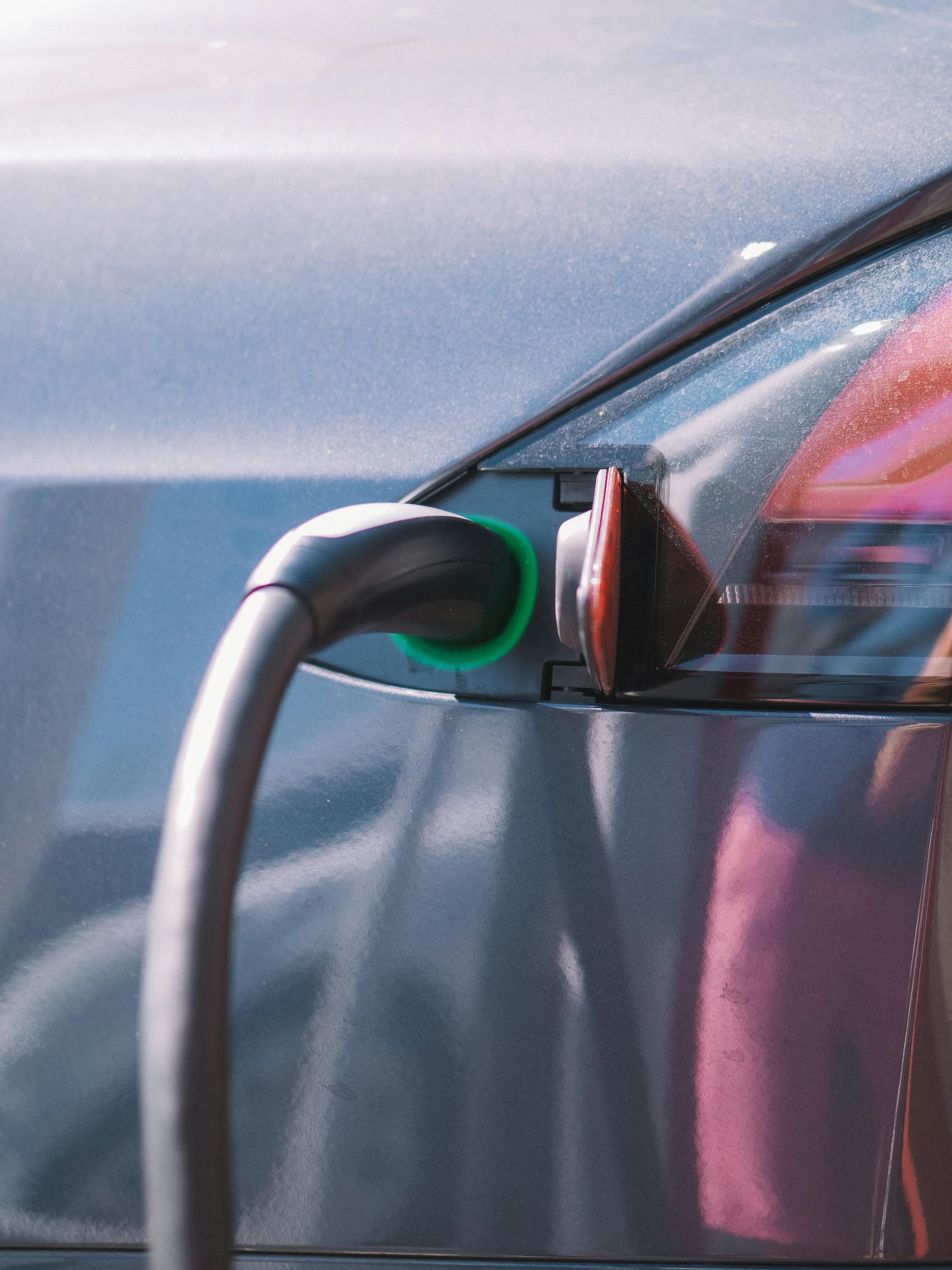
Charging an electric car at home in the evening adds a load that quickly exhausts a small battery. With 14.33 kWh available, a household can supply the evening base load from the battery while the EV draws from the grid or from daytime solar surplus — or use the battery to avoid expensive evening EV charging altogether.
How to Choose the Right 15kWh Home Battery
Use this checklist before committing to any 15 kWh class battery, including the H096-15kWh:
- Size on usable capacity, not nominal. Compare your measured evening consumption with the 14.33 kWh usable figure, not a nominal rating.
- Confirm inverter compatibility. The H096-15kWh communicates over RS485/CAN — check the protocol list against your hybrid inverter before ordering.
- Read the cycle-life terms. Ask how many cycles to what retention (here: 5,000+ cycles at over 80% retention) and what the warranty actually covers.
- Plan the expansion path. If an EV or heat pump is likely, confirm the parallel limit (16 units for this model) and how cabling and busbars are extended.
- Check certifications for your market. CE, FCC and RoHS cover many markets, but confirm local grid-code and interconnection requirements with your installer.
- Plan the physical placement. The cabinet weighs 120 kg, is rated IP20 for indoors, and needs a level floor and clearance — about 0.11 m² of footprint plus service space.
- Verify monitoring. Native WiFi/Bluetooth app monitoring avoids buying a separate gateway and makes fault diagnosis faster.
Häufig gestellte Fragen
Wie viele Solarmodule benötige ich, um eine 15-kWh-Batterie zu laden?
Es hängt von der Größe und dem Standort Ihrer Anlage ab. Zur Veranschaulichung: Eine 5-kW-Dachanlage, die an einem guten Sommertag etwa 20 kWh erzeugt, könnte nach Deckung des tagsüber anfallenden Haushaltsverbrauchs 14,33 kWh nachladen, während dieselbe Anlage im Winter möglicherweise zwei Tage benötigt. Dimensionieren Sie die PV-Anlage anhand Ihrer lokalen Ertragsdaten, nicht allein anhand der Modulanzahl.
Is a 15kWh battery enough to run a house overnight?
For most households, yes for the evening and overnight hours. Typical European homes consume roughly 10 kWh of electricity per day, so 14.33 kWh of usable capacity covers an evening, a night and part of the next morning. Homes with large heat-pump or EV loads should model their own consumption first or plan to expand in parallel units.
How long does the H096 15kWh battery last?
The LiFePO4 cells are rated for more than 5,000 cycles while retaining over 80% of capacity, which by cycle count supports more than 13 years of daily full cycling, while the rated calendar service life of up to 12 years under normal conditions is typically the limiting factor. Calendar ageing and operating temperature affect the final figure, so install it in a cool, dry indoor location.
Can I expand the system later if my consumption grows?
Yes. The H096-15kWh connects in parallel with up to 16 units, taking the system to about 229 kWh of usable capacity. Because each added cabinet is a complete 14.33 kWh module, you can grow capacity in steps that follow your actual demand instead of replacing an undersized battery.
Will the H096-15kWh work with my existing hybrid inverter?
In most cases, yes. The battery communicates over the RS485 and CAN protocols used by a wide range of hybrid inverters, and its plug-and-play cabling is designed for retrofit into existing home solar systems. Send your inverter model to the supplier for a compatibility confirmation before ordering.
Über huadaenergy
huadaenergy (Huada New Energy) manufactures LiFePO4 batteries for residential and light-commercial energy storage, including the H096 home series from 5.12 kWh to 20 kWh — the 15kWh home energy storage battery covered here, the 10kWh all-in-one home battery with integrated inverter und die 20kWh stackable all-in-one system — alongside 12V/24V deep-cycle batteries, golf cart batteries, portable power stations, and cabinet and container ESS from 100 kW to megawatt scale. OEM and ODM customization is available for distributors and installers. Explore the product pages above or contact the sales team for sizing support and a quotation.