For a charging-network operator, EPC contractor or distributor buying a Chargeur rapide DC CCS2 in late 2026, the power rating is no longer the decisive document. AFIR raises the minimum TEN-T recharging pool to 600 kW by 31 December 2027, and the EU Cyber Resilience Act (CRA) has required vulnerability reporting for connected products since 11 September 2026. The huadaenergy JS-DC is listed at 60-240 kW with 200-1000 V DC output, IP55 / IK10 enclosure and CCS2, CCS1, CHAdeMO or GB/T connectors. This guide covers those rules, the standards the product page cites and the documents to request.
What Is a CCS2 DC Fast Charger?
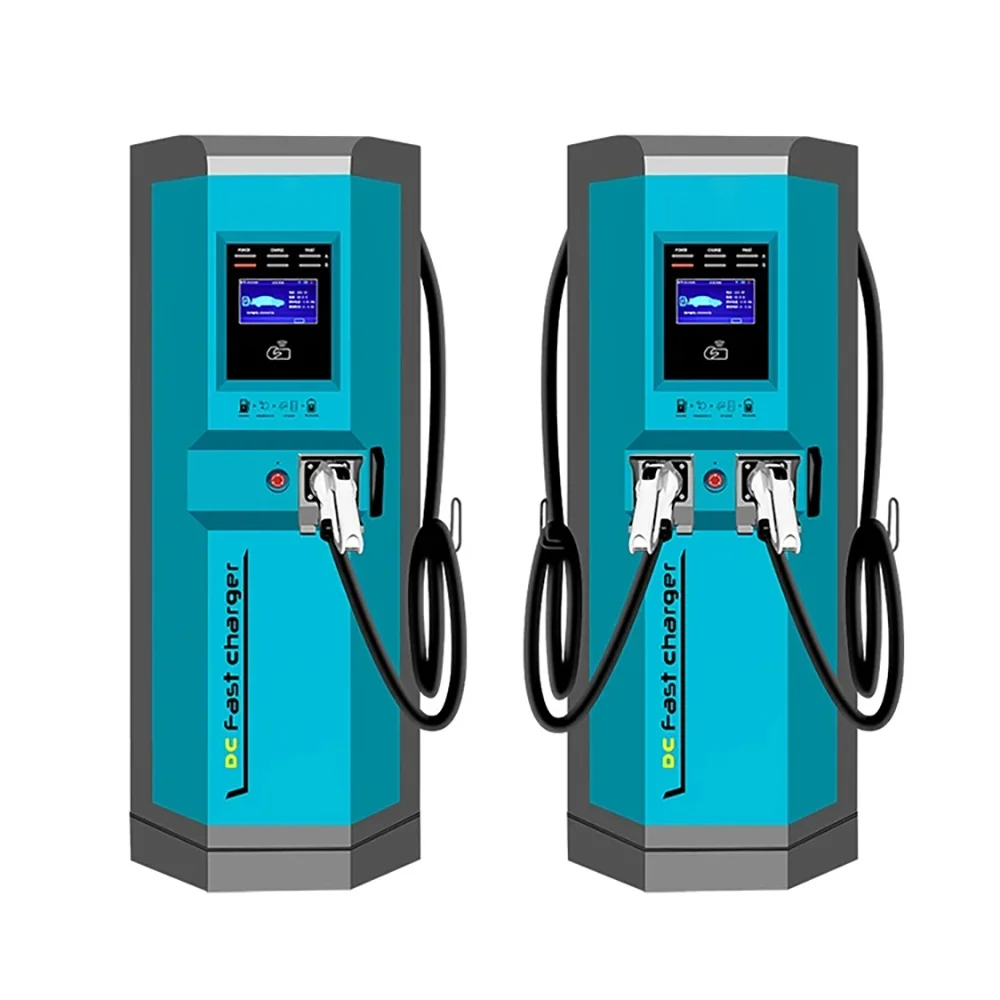
A CCS2 DC fast charger converts three-phase AC grid power into regulated DC inside the cabinet and delivers it straight to the battery, bypassing the onboard AC charger. That is why a 60-240 kW unit adds range in minutes: the vehicle’s own 7-22 kW rectifier is no longer the bottleneck. The huadaenergy JS-DC DC fast charging station serves public networks, parking, highway areas and fleet depots.
How the AC-to-DC conversion works
The JS-DC accepts three-phase 260-530 Vac at 50/60 Hz and outputs 200-1000 Vdc at 0-200 Adc, per the product page spec table. Internal modules rectify the supply while the vehicle negotiates voltage and current over the CCS2 control pilot. A 1000 V ceiling covers 400 V and 800 V platforms.
Connector options by destination market
The page lists CCS2 for Europe, CCS1 for North America, CHAdeMO for Japan and GB/T for China, with single or dual ports per order. Guns and firmware are set before shipment, so state the market in the RFQ.
Why 2026 Changed the Buying Criteria
Two EU rules tightening in 2026-2027 turn documented conformity and cybersecurity into purchase conditions while installed capacity keeps growing. Buyers now verify power, payment behaviour and software support before ordering a cabinet.
AFIR 2027: 600 kW pools and per-kWh pricing
Regulation (EU) 2023/1804 (AFIR) required 400 kW pools every 60 km per direction on the TEN-T core network by 31 December 2025, with one 150 kW point; by 31 December 2027 each pool must deliver 600 kW with two 150 kW points, and half the comprehensive network needs 300 kW pools (European Parliament, 2023; ZEVI, 2026). Points of 50 kW and above must price by kWh, display prices on site and accept ad-hoc card payment. Every JS-DC variant exceeds that threshold, so payment hardware and backend protocol belong in the specification.
EU CRA: connected chargers are in scope
Regulation (EU) 2024/2847 (CRA) has required reporting of actively exploited vulnerabilities and severe incidents since 11 September 2026, with an early warning within 24 hours and full notification within 72 hours via the ENISA platform; main obligations apply from 11 December 2027 (European Commission, 2026). The JS-DC ships with Ethernet, WiFi, 4G, OTA updates, RFID, QR and VIN authentication, so it is a product with digital elements. Request the vulnerability process, security-update support period and software bill of materials alongside electrical test reports.
Market pull: seven million public points
IEA Global EV Outlook 2026 estimates the global public charging stock above 7 million points at end-2025 after nearly 1.8 million additions, up over 33 percent; fast and ultra-fast points rose 40 percent to about 2.2 million (IEA, 2026). EAFO counted 1,157,551 EU27 public points in August 2026 against 632,423 at end-2023 (EAFO, 2026). Average public power stays near 50 kW.
Certifications Explained: What the JS-DC Product Page Actually Lists
The JS-DC page cites EN 61851-1, -21 and -22, UL 2202, UL 2231 and CSA C22.2 counterparts, but publishes no certificate numbers, so treat the list as a conformance checklist and request the underlying documents. Citing a standard and holding a third-party certification mark are different claims in a tender.
European reference: the EN 61851 series
The page says the platform complies with EN 61851-1 / -21 / -22 and names the 2001 editions. Those predate the current framework: IEC 61851-1:2017, adopted as EN IEC 61851-1:2019, replaced the 2010 edition and absorbed IEC 61851-22 content, while EMC moved to IEC 61851-21-2 (national standards bodies, 2019-2020). Ask which edition the test report follows and request the EU declaration of conformity.
North American reference: UL 2202, UL 2231 and CSA C22.2
The spec table lists UL 2202 and UL 2231 with CSA-C22.2 No. 107.1-16 and CSA C22.2 No. 281. ANSI/UL 2202 covers AC-to-DC charging equipment, while ANSI/UL 2231-1 and -2 cover personnel protection for EV supply circuits (UL Solutions, 2026). For North America, request the NRTL listing number, model coverage and permitted field configurations; a module listing does not automatically cover the complete dispenser.
IP55 / IK10 and what they do not cover
IP55 denotes dust-protected, water-jet-resistant enclosure performance under IEC 60529, and IK10 impact protection under IEC 62262. Both are enclosure ratings; neither evidences electrical safety, EMC, metering, payment compliance or cybersecurity.
| Reference on the product page | Ce qu'elle couvre | Ce qu'il ne couvre pas | Document à demander |
|---|---|---|---|
| EN 61851-1 / -21 / -22 (2001 editions named in spec table) | EV conductive charging system safety and EMC framework | No evidence of a third-party certificate | Test report naming the current edition; EU declaration of conformity |
| UL 2202 | AC-to-DC EV charging system equipment safety | Not a certification mark by itself | NRTL listing number and model coverage |
| UL 2231, CSA C22.2 No. 281 | Personnel protection systems for EV supply circuits | Does not replace an equipment-level listing | Protection-system evaluation within the listing scope |
| CSA C22.2 No. 107.1-16 | Canadian counterpart equipment requirements | Does not cover field installation approval | Canadian certification evidence and local AHJ acceptance |
| IP55 / IK10 | Enclosure ingress and impact ratings (IEC 60529 / IEC 62262) | No electrical, EMC, metering or cyber scope | Enclosure test records |
| CRA (EU) 2024/2847 | Cybersecurity duties for connected products from 2026 and 2027 | Not a product certificate shown on the page | Vulnerability process, update support period, software bill of materials |
Spécifications clés et leur signification
The JS-DC spec table lists 60, 120, 160 and 240 kW, 200-1000 V DC output, 0-200 A DC and three-phase 260-530 Vac at 50/60 Hz. These figures set vehicle compatibility, cable sizing and grid connection.
| Paramètres | Value on the product page | Ce que cela signifie pour un acheteur |
|---|---|---|
| Puissance nominale | 60 / 120 / 160 / 240 kW (spec table) | Match bay power to grid capacity and AFIR pool targets |
| Entrée AC | 3-phase 260-530 Vac, 50/60 Hz | Standard commercial supply in most markets |
| Tension de sortie CC | 200-1000 Vdc | Couvre les plateformes véhicules 400 V et 800 V |
| Courant de sortie CC | 0-200 Adc | Sets cable, connector and thermal limits |
| Connectors | CCS2 / CCS1 / CHAdeMO / GB/T, single or dual port | Specify per destination market |
| Protection de l'environnement | IP55 / IK10 | Outdoor dust, water-jet and impact resistance |
| Dimensions | 650 x 700 x 1700 mm | Plan bollards, cable sweep and accessibility clearances |
| Poids | 230-260 kg | Foundation and handling requirements |
| Networking | Ethernet / WiFi / 4G | Remote status, pricing and OTA; also brings CRA scope |
The 200-1000 V window and 800 V platforms
A 1000 V ceiling covers 400 V and 800 V passenger EVs, while the 200 V floor supports lower-voltage commercial vehicles. Check the vehicle’s maximum charge voltage against the cabinet range, not nominal pack voltage. With 0-200 Adc, a 240 kW unit reaches rated power only near the upper voltage region, so power tapers at low pack voltages.
Power variants and footprint
The spec table lists 60/120/160/240 kW, while the overview and FAQ describe 30/60/120 kW; the lists disagree, so confirm the rated model on the quotation. The table gives 650 x 700 x 1700 mm and 230-260 kg, while the overview quotes a 70 x 170 cm footprint. Ethernet, WiFi and 4G handle status, pricing and OTA updates.
Applications dans le monde réel
A 60-240 kW DC fast charger fits four site types: highway service areas, commercial parking, fleet depots and solar-plus-storage hubs. Power, dwell time and grid capacity decide which applies.
Highway service areas and TEN-T corridors
Corridor sites need high power per bay and short dwell times. Two 240 kW cabinets can form the 600 kW pool AFIR requires on the TEN-T core network by end-2027. The utility connection and transformer upgrade often set the real schedule.
Commercial parking and fleet depots
Malls, hotels and office car parks typically run 60-120 kW units with 30-90 minute dwell times, while logistics fleets return on predictable overnight schedules. Scheduled charging and per-kWh tariffs steer sessions off-peak, and VIN identification removes manual check-in.
Solar-plus-storage charging hubs
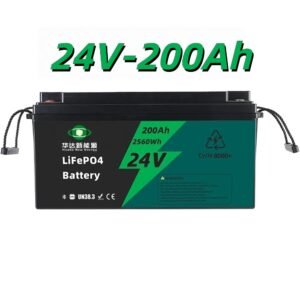
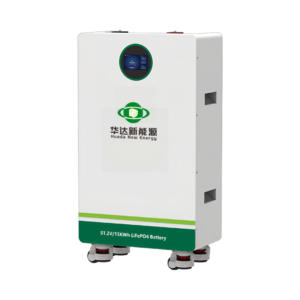
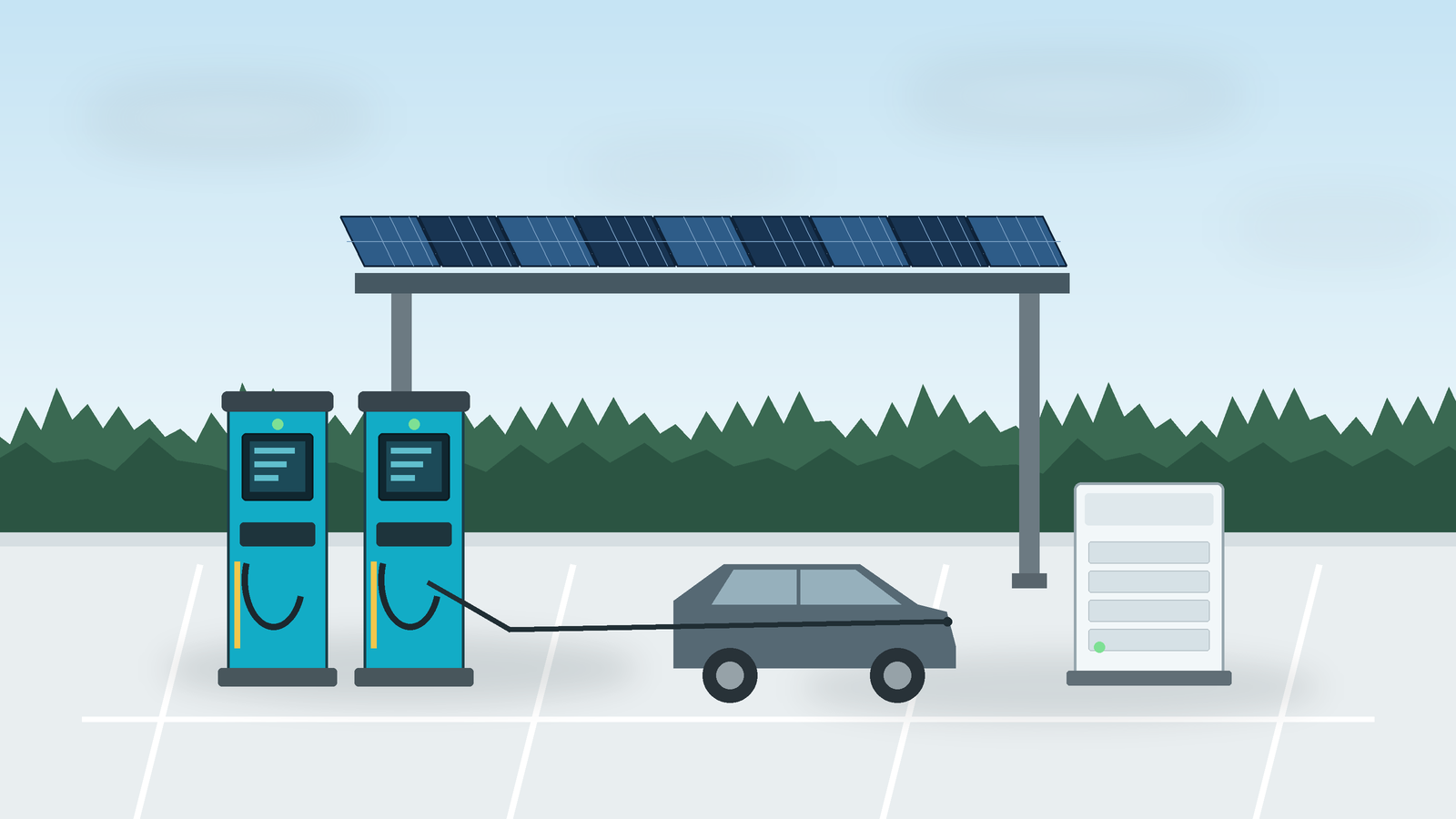
Where the grid connection is constrained, a buffer battery charges slowly and discharges into the vehicle. huadaenergy lists a 193 kWh off-grid EV charging station, 100 kW / 215 kWh et 150 kW / 315 kWh cabinets and a 250 kW / 500 kWh containerised ESS alongside the JS-DC. The JS-DC has no PV input, so solar couples through separate equipment.
CCS2 DC Fast Charger vs AC Charging and Lower-Power DC
Un chargeur rapide DC contourne le chargeur AC embarqué, donc sa sortie n'est pas plafonnée par le redresseur de 7-22 kW ; une borne AC ne peut pas délivrer du DC directement à la batterie. Le tableau ci-dessous est illustratif et basé sur des hypothèses, non sur un engagement de performance.
D'où provient la différence de temps
Pour une batterie de 60 kWh chargée de 10 à 80 pour cent, environ 42 kWh doivent être délivrés : environ 3,8 heures à un débit AC soutenu de 11 kW, ou 21 minutes à 120 kW DC. Ces chiffres supposent une puissance constante et aucun déclassement ; les sessions réelles prennent plus de temps.
| Méthode de charge | Puissance soutenue typique | Temps pour délivrer 42 kWh (illustratif) | Facteur limitant |
|---|---|---|---|
| Chargeur AC embarqué | 7-22 kW | Environ 1,9-6,0 h | Redresseur embarqué du véhicule |
| Chargeur rapide DC, 60 kW | Jusqu'à 60 kW | Environ 42 min | Acceptation par le véhicule et courant du câble |
| Chargeur rapide DC, 120 kW | Jusqu'à 120 kW | Environ 21 min | Atténuation de la courbe de charge et température des cellules |
| Chargeur rapide DC, 240 kW | Jusqu'à 240 kW | Environ 11 min | Plateforme du véhicule et raccordement au réseau |
Comment choisir le bon chargeur rapide DC CCS2
Sélectionnez sur cinq éléments vérifiables : raccordement au réseau, norme du connecteur, plage de tension et de courant de sortie, conformité de paiement et de tarification AFIR, et dossier de documentation de conformité. Une offre répondant à ces cinq points est comparable entre fournisseurs.
Vérifications du réseau et du site
- Confirmez une alimentation triphasée de 260-530 Vac et la capacité approuvée par le distributeur avant de choisir 160 kW ou 240 kW.
- Précisez le connecteur, le nombre de ports et la longueur de câble par commande.
- Vérifiez l'empreinte au sol, la masse de 230-260 kg et les dégagements d'accessibilité.
Liste de contrôle documentation et cybersécurité
- Rapports d'essai nommant l'édition de la norme, plus la déclaration UE de conformité lorsque le marquage CE est revendiqué.
- Pour l'Amérique du Nord, le numéro d'homologation NRTL et la couverture des modèles.
- Processus de gestion des vulnérabilités, période de support des mises à jour et nomenclature logicielle (SBOM) pour le CRA.
- Preuves du terminal de paiement et affichage du tarif par kWh.
- Registres d'essais en usine et conditions de garantie.
Questions fréquemment posées
Quelle est la différence entre CCS2 et CCS1 ?
CCS2 est la norme de charge combinée européenne et CCS1 la variante nord-américaine ; les prises ne sont pas interchangeables. La page JS-DC liste les deux, ainsi que CHAdeMO et GB/T, selon commande. Précisez le marché dans la demande de devis.
À quelle vitesse un chargeur rapide DC CCS2 de 120 kW peut-il charger un véhicule électrique ?
Une unité de 120 kW peut ajouter environ 200-400 km d'autonomie en 20-30 minutes, selon la FAQ de la page produit, à condition que le véhicule accepte cette puissance. Pour un pack de 60 kWh de 10 à 80 pour cent, 42 kWh à 120 kW représentent environ 21 minutes avant atténuation, sur la base d'hypothèses. Le temps réel dépend de la température des cellules et de la courbe de charge.
Le JS-DC dispose-t-il d'une certification CE ou UL ?
La page produit cite les normes EN 61851, UL 2202, UL 2231 et CSA C22.2, mais ne publie aucun numéro de certificat ni marquage. Considérez-les comme des normes que la conception est déclarée suivre, et demandez les rapports d'essai, la déclaration UE de conformité et toute homologation NRTL.
Ai-je besoin d'un buffer de batterie pour un site de recharge rapide en courant continu ?
Une batterie tampon est utile lorsque le raccordement au réseau ne peut pas fournir la puissance de pointe ou que les frais de demande dominent la facture. huadaenergy liste des BESS en armoire et conteneurisés aux côtés du JS-DC. Le JS-DC n'a pas d'entrée PV, donc le solaire ou le stockage se couple via un équipement séparé.
Puis-je gérer plusieurs stations à distance ?
Yes. Ethernet, WiFi and 4G link each unit to the backend for status, pricing control, OTA updates and authentication, so one operator can manage a network from one dashboard. Since CRA reporting duties applied from September 2026, confirm the security-update support period.
Quelles normes dois-je demander avant de passer une commande ?
Ask for a test report against the current EN IEC 61851-1 edition, the IEC 61851-21-2 EMC report, any NRTL listing to UL 2202 and UL 2231, and IP55 / IK10 records. Add the EU declaration of conformity and CRA vulnerability documentation. Confirm the rated model, since the page lists two power ranges.
À propos de huadaenergy
huadaenergy (Huizhou Huada Technology Co., Ltd.) manufactures from Huizhou Daya Bay: portable power stations, lead-acid replacement LiFePO4 batteries, golf cart batteries, home storage, commercial cabinets and containerised BESS, plus DC fast chargers. Each JS-DC undergoes full-function testing and multi-round inspection before export packing; OEM/ODM covers power ratings, connectors, branding and backend protocols. Send your market and rated power to request a quotation.
Last updated: 2026-11-15